
Dental fillings in Palma de Mallorca
A dental filling removes decay from a tooth and fills the cavity with composite, a tooth-coloured resin. It is the most common treatment to stop decay and keep the tooth, as long as the damage has not reached the nerve.
It is done in a single session, with local anaesthetic if needed, and is practically invisible. We carry out fillings at Udemax Miramar and Emardental, in Palma, and your first visit is free.
Usually 20 to 60 minutes
Tooth-coloured composite
With local anaesthetic if needed
First visit and diagnosis
Think you have a cavity? Book an appointment
We check your teeth, tell you whether you need a filling or another treatment and give you a detailed quote.
Leave us your details and we will call you back within three hours.
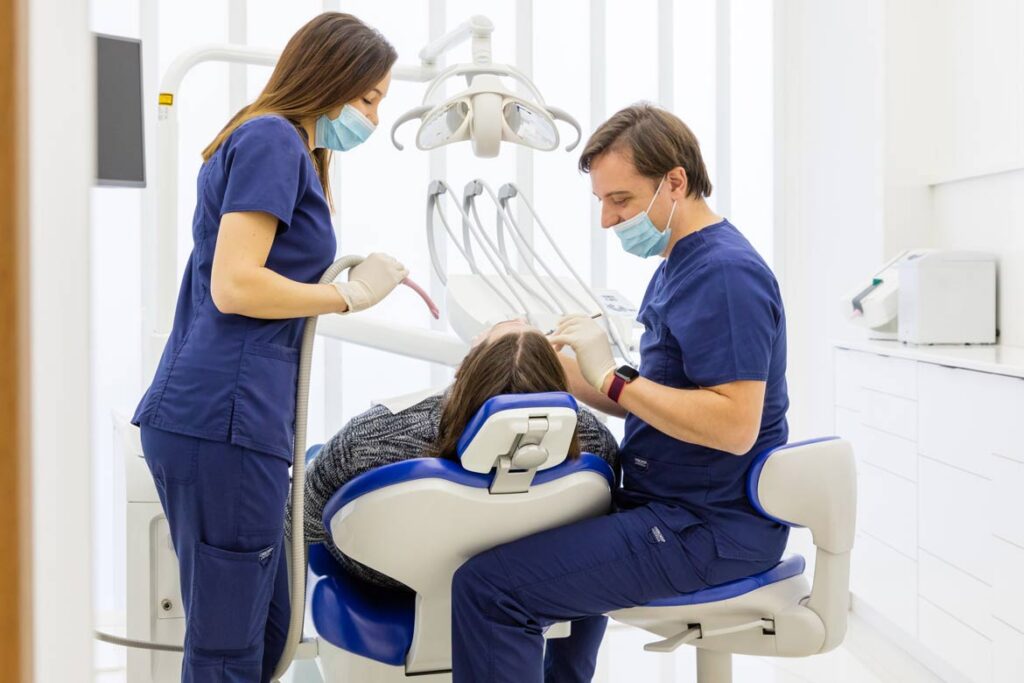
What is a dental filling?

It is the treatment that removes decay, the part of the tooth destroyed by bacteria, and fills the cavity to restore its shape and function. This stops the decay and prevents it reaching the nerve, which is when severe pain appears and more complex treatment is needed.
Today fillings are made with composite, which bonds to the tooth and is matched to its colour. Silver amalgam, the grey filling of the past, is no longer used: it has been banned in the European Union since 2025, except in exceptional medical cases.
When do you need a filling?
These signs may indicate decay:
- Sensitivity to cold, heat or sweets.
- Discomfort when chewing in a particular area.
- A dark spot or hole in the tooth.
- Food that always gets stuck in the same place.
- An old filling that is broken, worn or leaking.
- Decay seen at a check-up or on an X-ray, even if it doesn't hurt.
Many cavities don't hurt at first, which is why regular check-ups are the best way to catch them early.
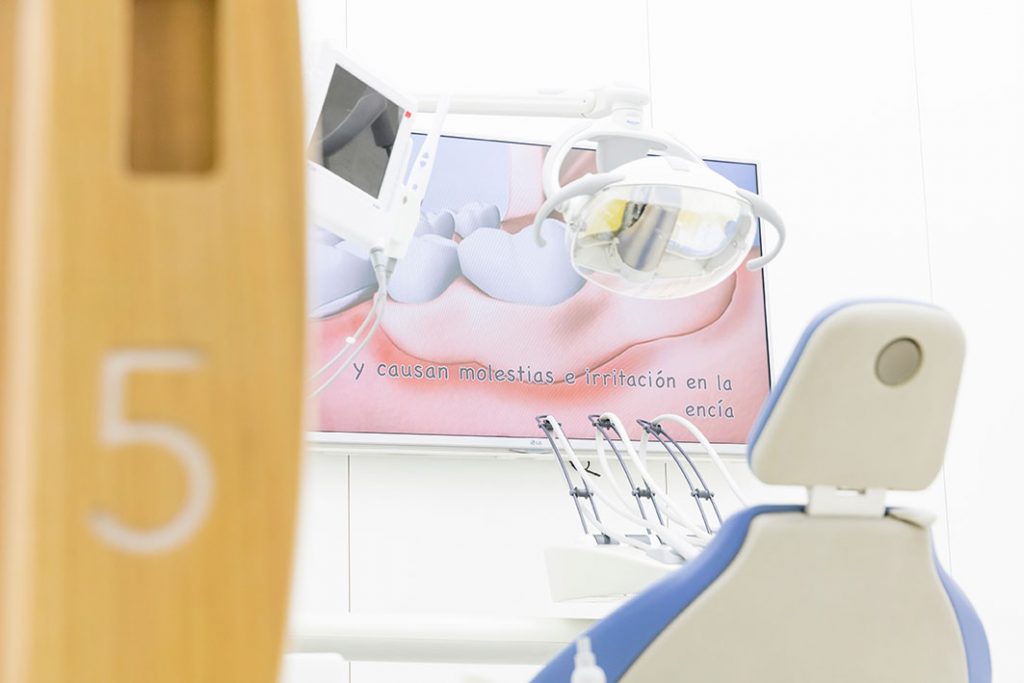
Filling, restoration or root canal
Depending on how deep and extensive the decay is:
Filling
For small or medium cavities that have not reached the nerve. Done in a single session.
Restoration
When, as well as decay, a larger part of the tooth is missing, such as an edge or corner.
Dental restorationRoot canal
If decay has reached the nerve, it must first be treated with a root canal and the tooth then rebuilt.
Root canal treatmentFilling materials
Composite
The one we use: a tooth-coloured resin, strong and practically invisible.
Glass ionomer
Used mainly in baby teeth because it releases fluoride. We use it at Arcdental, our children's clinic.
Silver amalgam
The traditional grey filling. It is no longer placed: it has been banned in the European Union since 2025.
Replacing old fillings
Existing amalgam fillings can be replaced with composite if they are worn or for aesthetic reasons.
If the damage is large
When a lot of tooth is missing, a laboratory-made inlay can last longer than a filling.
Worth bearing in mind
Composite can stain or wear over the years, and should be checked to catch any leakage early.
How is a filling done?
Anaesthetic and cleaning
If the decay is superficial, sometimes no anaesthetic is needed. If it is deeper, we apply local anaesthetic. Then we remove the decay and clean the tooth.
Filling with composite
We prepare the surface with a gel and adhesive so the composite bonds well, and place it in layers, hardening each one with a special light.
Polishing and bite
We check the bite with articulating paper, remove any high spots and polish the filling so it is smooth and blends in.
How to look after your fillings
To make them last many years:
- Wait until the anaesthetic wears off before eating, so you don't bite yourself.
- Brush twice a day with fluoride toothpaste.
- Use floss or interdental brushes every day.
- Cut down on sugary and acidic foods.
- If you clench or grind your teeth, wear a night guard.
- Attend your check-ups to catch leakage or wear early.
What about children?
Decay in baby teeth also needs treating, because it can hurt, become infected and affect the permanent teeth. At Arcdental, our children's dental clinic, we treat it with techniques adapted to each age.
More information on our children's cavity treatment page.
Our dental filling specialists
Fillings are carried out by the dentists at Clínicas Udemax, who assess each cavity to choose the most conservative treatment possible.




Where we carry out fillings
We carry out dental fillings at two of our clinics in Palma: Udemax Miramar and Emardental.
Conservative dentistry
Udemax Miramar
Outpatient department, Hospital Juaneda Miramar
Camí de la Vileta, 30 · 07011 Palma
- Monday to Thursday
- 9:00–13:00 · 16:00–20:00
- Friday
- 9:00–20:00
By car
Paid parking at the Hospital Juaneda Miramar car park, a one-minute walk away, plus street parking. There is also free parking on Camí de la Vileta, about a 10-minute walk away.
Go to the car parkBy bus
EMT bus routes 6, 8 and 29, stopping at "Policlínica", in front of the hospital.
View bus routeBy taxi
Taxi ranks at Camí de la Vileta, 51 and Carrer de Pasqual Ribot, 1.
Conservative dentistry
Emardental
Carrer d’Alfons el Magnànim, 2, ground floor
Bons Aires · 07004 Palma
- Monday to Thursday
- 9:00–13:00 · 16:00–20:00
- Friday
- 9:00–13:00
By car
Street parking and the Santa Pagesa underground pay car park (Carrer d’Ausiàs March, 26), a 4-minute walk away. There is also a pay car park at s’Escorxador, about a 5-minute walk away.
Go to the car parkBy bus
EMT bus routes 12, 20, 24 and 40, stopping at "Pl. d’Abú Yahya", "Alfons el Magnànim" or "31 de desembre".
View bus routeBy taxi
Taxi rank at Plaça d’Abú Yahya, 2.
Frequently asked questions about dental fillings
Does a filling hurt?
No. If the decay is deep we use local anaesthetic, and if it is superficial it is often not even needed.
How long does a filling take?
Usually 20 to 60 minutes, depending on the size of the cavity and the tooth. It is done in a single session.
How long does a composite filling last?
Many years if well cared for. It depends on the size, the area, hygiene, diet and whether you clench your teeth. Check-ups allow it to be renewed before it fails.
Is it normal to have sensitivity afterwards?
Yes, there may be some sensitivity to cold or when chewing for a few days, especially with deep cavities. If it lasts more than a week or two or gets worse, call us.
What should I do if a filling falls out?
Book an appointment as soon as possible and, in the meantime, chew on the other side and keep the area clean. A tooth without its filling is more vulnerable to new decay and fractures.
Can amalgam fillings be replaced?
Yes. If they are worn or you want a more aesthetic result, we replace them with tooth-coloured composite.
Filling or root canal?
If the decay has not reached the nerve, a filling is enough. If it has and there is severe pain or infection, a root canal is needed before rebuilding the tooth.
How much does a filling cost in Palma?
It depends on the size of the cavity. At your free first visit we check your teeth and give you a detailed quote.