Interceptive orthodontics in Palma
Interceptive orthodontics treats bite and jaw growth problems in children aged 6 to 12, while the bones are still growing. This is when that growth can be guided, something that is no longer possible in an adult.
Treating in time can stop the problem getting worse and simplify or shorten any orthodontic treatment your child may need later. At Clínicas Udemax we provide it at Arcdental, our children's dental clinic in Palma, together with our paediatric dentistry team. The first check-up is free.
Years old, the stage it works on
Recommended age for the first check-up
Usual length of treatment
First check-up and diagnosis
Book your child’s free first orthodontic check-up
We check your child’s bite and growth and explain whether they need treatment or just regular monitoring.
Leave us your details and we will call you back within three hours.
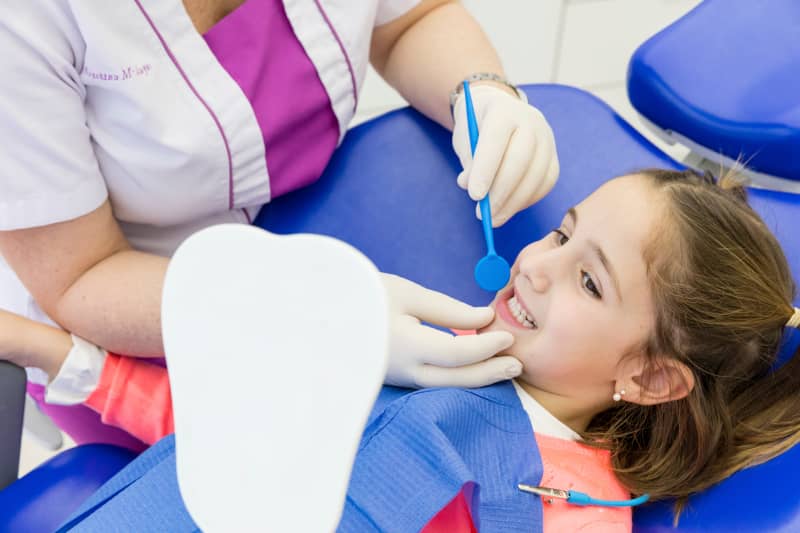
What does interceptive orthodontics correct?
Between the ages of 6 and 12, baby teeth and permanent teeth are present together and the jaws are still growing. At this stage we can correct:
- Crossbite, when the upper teeth bite inside the lower teeth.
- A narrow palate or upper jaw.
- A retruded lower jaw (Class II), with very prominent upper teeth.
- A protruding lower jaw (Class III), with the lower teeth in front of the upper teeth.
- Lack of space for the permanent teeth to come through.
- Open bite and habits that change the shape of the mouth, such as thumb sucking, prolonged dummy use, mouth breathing or tongue thrusting when swallowing.
After the age of 12 or 13, jaw growth is almost complete and orthodontics can only move the teeth. Bone problems that are not treated in time may later need longer treatment or even orthognathic surgery.
How do you know if your child needs a check-up?
We recommend a first orthodontic check-up at around age 7, even if you don't notice anything unusual. Book sooner if you notice that your child:
- Bites with the lower teeth in front of the upper teeth, or to one side.
- Has very prominent upper teeth or a very retruded chin.
- Breathes through the mouth, snores or sleeps with the mouth open.
- Still sucks their thumb or uses a dummy after the age of 3 or 4.
- Has lost baby teeth very early, or the permanent teeth have no room to come through.
Where to find Arcdental
Our children's dental clinic
Arcdental
Carrer de Sevilla, 8, ground floor
Son Dameto · 07013 Palma
- Monday and Wednesday
- 16:00–20:00
- Tuesday
- 9:00–13:00 · 16:00–20:00
- Thursday
- 13:00–19:00
- Friday
- 15:00–19:00
By car
Street parking and the pay car park at Hospital Juaneda Miramar, a 3-minute walk away. There is also free parking on Camí de la Vileta, about a 10-minute walk away.
Go to the car parkBy taxi
Taxi ranks at Carrer de Son Espanyolet, 58 and Carrer de Pasqual Ribot, 1.
Interceptive orthodontic appliances
The appliance depends on the problem to be corrected and the child's age. Some are fixed and others removable; removable ones only work if they are worn for the hours the orthodontist recommends.
Narrow palate or crossbite
Palatal expanders, which widen the upper jaw. Depending on the case we use a McNamara expander, with an acrylic splint bonded over the back teeth; a Hass expander, with bands on the molars and support on the palate; or a Hyrax expander, with bands and a metal framework.
Retruded lower jaw (Class II)
Functional appliances that encourage the lower jaw forward, such as the removable Bionator or the fixed Herbst appliance. In some cases headgear is used to slow the growth of the upper jaw.
Protruding lower jaw (Class III)
A facemask, combined with a palatal expander to encourage the upper jaw to grow forward.
Lack of space
Space maintainers when a baby tooth is lost early, and appliances that guide the permanent teeth as they come through.
Harmful habits
Appliances that help children stop habits such as thumb sucking or tongue thrusting, when these are affecting the shape of the mouth.
Getting used to it
For the first few days it is normal to notice the appliance when talking or eating. With fixed appliances, it is best to avoid hard or sticky foods.
What does treatment involve?
Check-up and diagnosis
We assess the bite, the position of the teeth and the growth of the jaws, with photographs and X-rays.
If treatment is not needed yet, we carry out regular check-ups so we can step in at the best time.
Treatment
We fit the right appliance and adjust it at regular check-ups. Treatment usually lasts a few months, depending on the problem and the appliance.
Follow-up
Once treatment ends, we monitor your child's development until the permanent teeth come through. If they later need straightening, this is done with corrective orthodontics, which is usually simpler and shorter.
Will it avoid braces later on?
Not always. Interceptive orthodontics corrects bone and bite problems while it is still possible, but many children later need a second phase to straighten their permanent teeth.
The difference is that this second phase is usually simpler and shorter, and more complex treatment in adulthood can be avoided. At the check-up we explain what to expect in your child's case.
Frequently asked questions about interceptive orthodontics
At what age is interceptive orthodontics done?
Between the ages of 6 and 12, when baby and permanent teeth are present together and the jaws are still growing. We recommend a first check-up at around age 7 to decide whether and when treatment is needed.
How long does treatment take?
It usually lasts a few months, although it depends on the problem and the appliance. This is followed by a monitoring period until the permanent teeth come through.
Does it hurt?
No. For the first few days your child will notice the appliance and may feel some pressure, especially with expanders, but they adapt quickly.
Will my child need braces afterwards?
Possibly. Many children need a second phase of orthodontics to straighten the permanent teeth, but it is usually simpler and shorter thanks to the earlier treatment.
How much does interceptive orthodontics cost?
It depends on the appliance and the length of treatment. At the free first check-up we give you a detailed quote, and you can finance your treatment.
What is the difference from corrective orthodontics?
Interceptive orthodontics works on jaw growth in children aged 6 to 12. Corrective orthodontics straightens the permanent teeth from the age of 12, when growth is almost complete.
Who will treat you
Interceptive orthodontics is led by Dr Cristina Martínez-Almoyna Rifá and Dr Ana Ledesma Pavón, working together with our paediatric dentistry team.