
Treatment for receding gums in Palma
Receding gums, or gingival recession, occur when the edge of the gum moves down and exposes part of the root of the tooth. The teeth look longer, may hurt with cold and, if recession progresses, the tooth loses protection.
Gums don't grow back on their own, but they can be treated: first by correcting the cause and, when needed, restoring the gum with minor surgery. We do this at Udemax Miramar and Emardental, in Palma, and your first visit is free.
But they can be treated and restored
If it is not corrected, recession continues
For surgery to restore the gum
First visit and diagnosis
Are your gums receding? Book an appointment
We measure the recession, find the cause and explain which treatment you need to stop it and restore the gum.
Leave us your details and we will call you back within three hours.
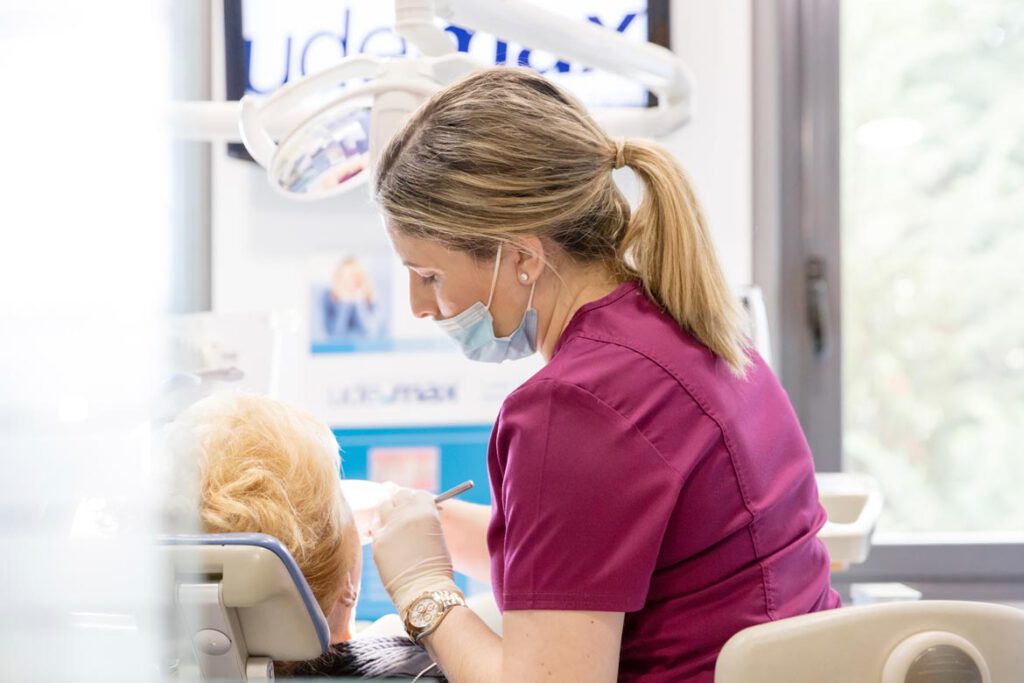
What are receding gums?
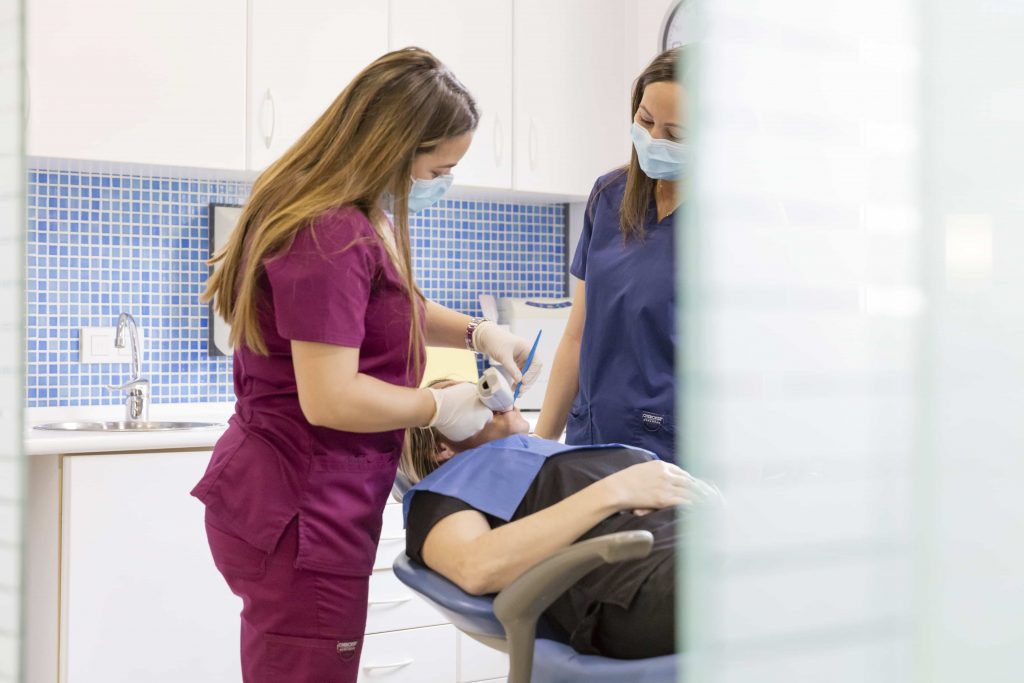
It is the loss of gum at the neck of the tooth. The gum line drops and exposes the root, which is more sensitive and less resistant than enamel to decay and wear.
It can affect a single tooth or several, and usually progresses gradually. The sooner the cause is treated, the easier it is to stop it and restore the lost gum.
How can you tell if your gums are receding?
These are the most common signs:
- Teeth that look longer than before.
- Sensitivity to cold, heat or brushing.
- A yellowish area or a notch next to the gum.
- Dark gaps between the teeth.
- Gums that bleed or are swollen.
- Loose teeth, in advanced cases.
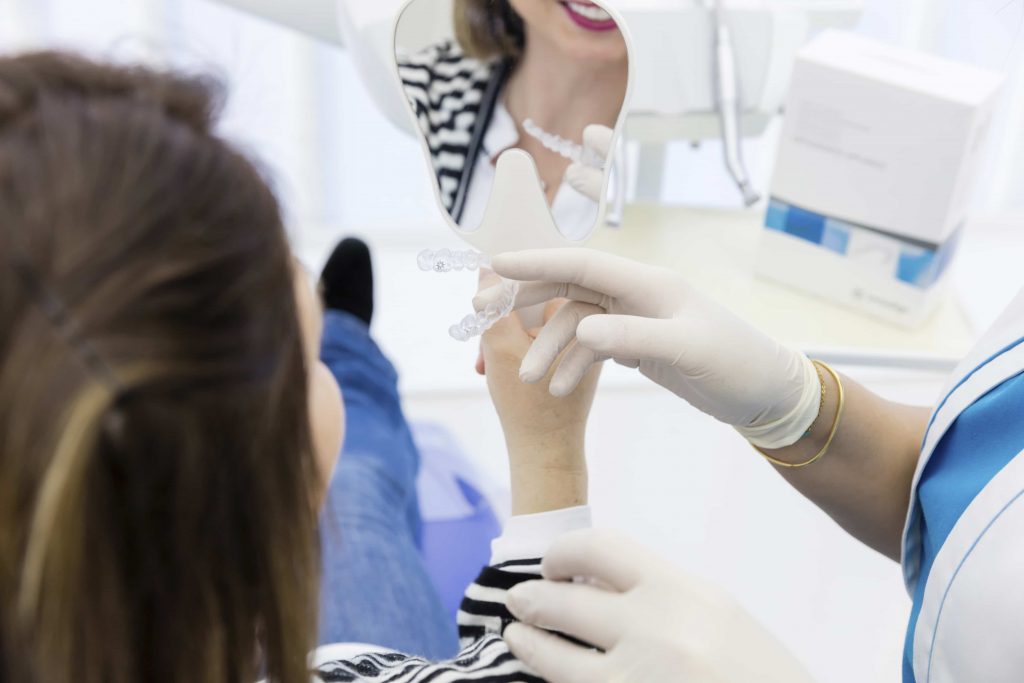
Treatments for receding gums
Treatment depends on the cause and how much gum has been lost:
Correct the cause
This is the first step, and sometimes the only one. If the cause is not corrected, any treatment will fail.
- Teaching you to brush without damaging the gum
- Treating inflammation or periodontitis
- A night guard if you clench your teeth
- Reviewing fillings, crowns or orthodontics that damage the gum
Gum advancement
Technically a coronally advanced flap: the gum next to the recession is moved over to cover the root. It is used for mild or moderate recession, often combined with a graft.
Gum graft
A small piece of tissue, usually from the palate, is placed over the exposed root. It is the most predictable technique for covering the root and thickening the gum.
Gum graftingWhy do gums recede?
Aggressive brushing
Brushing very hard or with a hard toothbrush wears the gum down over the years.
Gum disease
Inflammation and bacteria destroy the tissues that hold the tooth in place.
Thin gums
Some people are born with thin gums that are more prone to recession.
Clenching
Bruxism puts excessive pressure on teeth and gums.
Orthodontics and restorations
Some orthodontic movements, or poorly fitting fillings and crowns, can damage the gum.
Smoking and piercings
Smoking harms gum health, and lip or tongue piercings rub against the gum constantly.
How do we treat receding gums?
Diagnosis
We measure the recession and gum thickness, check the bone with X-rays and look for the cause. From this we decide on the treatment.
Treat the cause
We correct whatever is causing the recession: brushing technique, inflammation, bruxism or restorations. In many cases this alone stops the recession.
Restore the gum
If the root needs covering or the gum needs thickening, we carry out a gum advancement or a gum graft under local anaesthetic. Then regular check-ups maintain the result.
How to stop your gums receding further
A few simple habits help stop recession:
- Use a soft-bristled toothbrush and don't scrub hard.
- Brush from the gum towards the tooth, with short, gentle strokes.
- Use floss or interdental brushes every day.
- If you clench or grind your teeth, wear a night guard.
- Don't smoke.
- Attend your regular check-ups and cleanings.
Do gums grow back on their own?
No. Once the gum has receded, it does not grow back on its own, and no toothpaste or mouthwash can regenerate it. What can be done is to stop the recession by correcting the cause and, if needed, restore the gum with surgery.
Gum and sensitivity toothpastes do help relieve discomfort and keep the gum healthy, but they don't cover the root.
Who will treat you
Gum surgery is carried out by Dr Emilio Martínez-Almoyna Rifá, specialist in periodontics and mucogingival surgery, with support from our hygienists for diagnosis and maintenance.



Where we treat receding gums
We treat receding gums at two of our clinics in Palma: Udemax Miramar and Emardental.
Periodontics
Udemax Miramar
Outpatient department, Hospital Juaneda Miramar
Camí de la Vileta, 30 · 07011 Palma
- Monday to Thursday
- 9:00–13:00 · 16:00–20:00
- Friday
- 9:00–20:00
By car
Paid parking at the Hospital Juaneda Miramar car park, a one-minute walk away, plus street parking. There is also free parking on Camí de la Vileta, about a 10-minute walk away.
Go to the car parkBy bus
EMT bus routes 6, 8 and 29, stopping at "Policlínica", in front of the hospital.
View bus routeBy taxi
Taxi ranks at Camí de la Vileta, 51 and Carrer de Pasqual Ribot, 1.
Periodontics
Emardental
Carrer d’Alfons el Magnànim, 2, ground floor
Bons Aires · 07004 Palma
- Monday to Thursday
- 9:00–13:00 · 16:00–20:00
- Friday
- 9:00–13:00
By car
Street parking and the Santa Pagesa underground pay car park (Carrer d’Ausiàs March, 26), a 4-minute walk away. There is also a pay car park at s’Escorxador, about a 5-minute walk away.
Go to the car parkBy bus
EMT bus routes 12, 20, 24 and 40, stopping at "Pl. d’Abú Yahya", "Alfons el Magnànim" or "31 de desembre".
View bus routeBy taxi
Taxi rank at Plaça d’Abú Yahya, 2.
Frequently asked questions about receding gums
Can receding gums be restored?
Yes, in many cases. With a gum advancement or a gum graft, the root can be fully or partly covered, depending on the bone between the teeth.
What is gum advancement?
It is a technique, known as a coronally advanced flap, in which the nearby gum is moved over to cover the exposed root. It is often combined with a graft of tissue from the palate.
What is a gum implant?
It is a name sometimes used for a gum graft: tissue, usually from the palate, is placed over the receded area to restore the gum.
Does surgery for receding gums hurt?
Not during surgery, as it is done under local anaesthetic. Afterwards there may be some discomfort for a few days, especially if tissue is taken from the palate, which is managed with painkillers.
When can I see the result?
The gum heals in two to three weeks, and the final result is visible after a few months, once the tissue has settled.
Can I stop recession without surgery?
Yes, if it is caught early: by correcting your brushing technique, treating inflammation or using a night guard. What cannot be done is to restore lost gum without surgery.
How much does treatment for receding gums cost in Palma?
It depends on the cause, the technique and the number of teeth. At your free first visit we give you a detailed quote, and you can finance your treatment.