
Maxillary sinus lift in Palma
If you have been told there is not enough bone for implants in your upper back teeth, the answer is most likely a sinus lift. It is a procedure that gains bone height at the back of the upper jaw, in the premolar and molar area, so the implant has something to hold on to. It is a well-established technique and, in many cases, the implant is placed in the same surgery.
At Clínicas Udemax it is carried out by maxillofacial surgeons at Udemax Miramar, in the outpatient clinics of Hospital Juaneda Miramar in Palma, with a 3D scan beforehand and the option of conscious sedation with an anaesthetist. We see patients from all over Mallorca, including residents and visitors to the island. It is one of the dental bone grafting techniques we offer as part of our dental implantology service in Mallorca.
Bone and sinus measured before any decision
Lateral window or crestal, depending on remaining bone
Graft integration, depending on the case
Surgery at Hospital Juaneda Miramar
Do you need a dental implant?
Ask us for an appointment with free check-up and diagnosis
Whether you want to start treatment or request information, you are in the right place. Leave us your details and we will contact you within three hours.

What is a maxillary sinus lift?
The maxillary sinus is an air-filled space inside the upper jawbone, just above the roots of the upper premolars and molars. It is lined by a thin membrane, the Schneiderian membrane.
When those back teeth are lost, two things happen: the bone that held them resorbs, and the sinus tends to expand downwards, a process called pneumatisation. The result is that very little bone, sometimes only a few millimetres, is left between the gum and the sinus, and an implant has nothing to anchor into.
In a sinus lift, the membrane is gently raised and graft material is placed in the space beneath it. Over the following months, the body turns it into your own bone and the area gains the height needed for the implant. Nothing changes on the outside, and the sinus continues to work normally.
When is a sinus lift needed?
The 3D scan decides, measuring the available bone height and the shape of the sinus. It is usually indicated when:
- You lost upper back teeth years ago and they were not replaced, so the bone has resorbed.
- Your sinus is large or sits low because of your anatomy, even if the tooth loss is recent.
- You wear a removable upper denture and want fixed teeth on implants.
- Periodontitis, infections or cysts destroyed bone in the area. Your gums must first be healthy with periodontics.
It is not always necessary. With limited bone height, a sinus lift can sometimes be avoided with short implants or with tilted implants that bypass the sinus, as in full-arch implants in one day. We explain your options with your 3D scan in front of you.
Open (lateral window) and closed (crestal) sinus lift
Open sinus lift
Also called the lateral window technique. The sinus is reached through a small window in the side wall of the jaw, the membrane is lifted and the space is filled with graft material.
- For when very little bone is left.
- Allows a large gain in height.
- A somewhat more intense recovery, with more swelling in the first few days.
- The implant goes in at the same time or in a second surgery, depending on the bone.
Closed or crestal sinus lift
Also called transcrestal or atraumatic. It is done through the same opening where the implant will go: special instruments gently push up the sinus floor and a small amount of graft material is added.
- For when only a little height is missing.
- Less invasive, with a quicker recovery.
- The implant is usually placed in the same procedure.
- The bone gain is more limited.
Sinus lift with implant: at the same time or in two stages?
In the same surgery
If the remaining bone allows the implant to be stable, the sinus is lifted and the implant placed in the same procedure. This is usual with the crestal technique and in many lateral window lifts. It saves a surgery and several months.
In two stages
If very little bone is left, the sinus lift is done first and the implant is placed once the graft has matured. It takes longer, but it is the safe option when the implant would not be stable.
The decision is made with the 3D scan and confirmed during surgery. Either way, the final crown or prosthesis is fitted once the implant has integrated with the bone.
Graft materials
Animal-derived
Usually bovine and treated to remove its organic content. It resorbs slowly and holds volume well inside the sinus.
Your own bone
Taken from another area of the mouth. It speeds up bone formation and is often mixed with other materials.
Donor bone
Human bone processed and sterilised by tissue banks.
Synthetic
Calcium phosphates and similar materials, if you prefer to avoid human or animal sources.
Bone graftingThe treatment step by step
3D scan and plan
We review your medical history, examine your mouth and take a 3D scan to measure the bone, see the shape of the sinus, any internal septa and the condition of the membrane. If there is sinusitis or another sinus problem, it is treated first. The first consultation is free.
Surgery
Under local anaesthesia and, if you prefer, conscious sedation with an anaesthetist. The sinus is reached with the chosen technique, the membrane is lifted, the graft is placed and, if the bone allows, so is the implant. It finishes with a few stitches.
Integration
The graft takes 4 to 9 months to turn into bone, depending on the technique, the material and the amount. During this time we carry out check-ups and X-rays.
Implant and final tooth
If it was not placed earlier, the implant goes in. Once it has integrated, the final crown or prosthesis is fitted.
Side effects and risks
Normal side effects
- Swelling of the cheek, peaking at around 48 hours.
- Some bruising on the cheek or under the eye.
- A feeling of pressure or nasal congestion for the first few days.
- A small nosebleed on the first or second day.
Possible complications
- A tear in the membrane during surgery, usually repaired at the time.
- Sinusitis after the procedure.
- Infection of the graft.
- Partial loss of the graft, which may need to be repeated.
Who is not a good candidate, or needs to prepare first: people with chronic sinusitis or untreated sinus problems, heavy smokers, and those with poorly controlled diabetes or taking bisphosphonates for osteoporosis. We review all of this at the first visit.
Does it hurt? Recovery and aftercare
It does not hurt during surgery, which is done under local anaesthesia and, if you wish, sedation. Afterwards, most patients describe a feeling of pressure and moderate discomfort that is controlled with the prescribed medication and eases over the first week.
Protect the sinus
Do not blow your nose hard and sneeze with your mouth open for the first few weeks, so you do not put pressure on the membrane. Avoid diving, and check with us before flying or doing contact sports.
Swelling and food
Apply cold to the cheek on the first day and sleep with your head slightly raised. Eat soft, lukewarm food without chewing on the treated side. No smoking or alcohol while it heals.
Hygiene and check-ups
Brush gently, avoiding the stitches at first, and use the mouthwash we recommend. The gum heals within a few weeks; the graft needs months, which is why check-ups matter.
Call us if you notice fever, pain that does not ease with medication, heavy bleeding from the mouth or nose, a bad smell or persistent nasal discharge, or graft granules coming out of the nose. Udemax Miramar: +34 971 76 75 22.
Sinus lift specialists in Palma
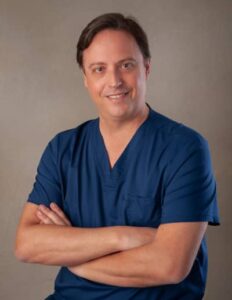
Sinus lifts are carried out by Dr Ángel Cabanes, a specialist in maxillofacial surgery, advanced oral surgery and implantology, and Dr Emilio Martínez-Almoyna Rifá.

Where we carry out sinus lifts
Sinus lifts are carried out at Udemax Miramar, in the outpatient clinics of Hospital Juaneda Miramar in Palma, with parking and a bus stop one minute away. We see patients from all over Mallorca.
Implantology Centre
Udemax Miramar
Consultas Externas del Hospital Juaneda Miramar
Camí de la Vileta, 30 · 07011 Palma
- Monday to Thursday
- 9:00–13:00 · 16:00–20:00
- Friday
- 9:00–20:00
By car
Paid car park at Juaneda Miramar Hospital, a one-minute walk away. There is also free parking on Camí de la Vileta, about a 10-minute walk away.
Go to parkingBy bus
MT bus routes 6, 8 and 29, stopping at ‘Policlínica’, in front of the hospital.
View bus routeBy taxi
Taxi ranks at Camí de la Vileta, 51, and Carrer de Pasqual Ribot, 1.
Frequently asked questions about the maxillary sinus lift
Does a sinus lift hurt?
Not during the procedure, which is done under local anaesthesia, and at Udemax Miramar conscious sedation with an anaesthetist can be added. Afterwards, pressure, swelling and moderate discomfort for a few days are normal and are controlled with painkillers.
How long does a sinus lift take to heal?
The gum and the swelling recover within one or two weeks. The graft needs 4 to 9 months to become solid bone, depending on the technique and the material. That is the time before the implant can be loaded.
Will I need time off work?
After a crestal sinus lift, most patients are back at work within a day or two. After a lateral window lift it is worth planning a few more days, especially if your job is physical. We will advise you based on your surgery.
Can the implant be placed at the same time as the sinus lift?
Yes, when the remaining bone allows the implant to be stable. This is usual with the crestal technique. If very little bone is left, the sinus lift is done first and the implant is placed once the graft has matured.
What are the side effects?
Cheek swelling, some bruising, nasal congestion and sometimes a small nosebleed in the first few days are normal. Complications such as sinusitis or graft infection are uncommon and are treated if they occur.
Can I fly after a sinus lift?
Changes in pressure can affect the newly lifted membrane, so flying is usually not recommended for the first few days. If you have a trip planned, let us know and we will plan the date of surgery around it.
Can a sinus lift cause sinusitis?
It is one of the possible complications, although uncommon. That is why we assess the sinus on the 3D scan before surgery and, if there is existing sinusitis, it is treated first.
Who cannot have a sinus lift?
It is not advisable with untreated sinusitis or other sinus problems, or with poorly controlled diabetes. Smoking and bisphosphonates increase the risk, and we assess them beforehand. In some cases there are alternatives, such as short or tilted implants.