
Root canal treatment in Palma de Mallorca
Root canal treatment, or endodontics, saves a tooth when the nerve inside it has become inflamed or infected, usually from deep decay or a knock. The inside of the tooth is cleaned, disinfected and sealed, so you can keep it instead of having it extracted.
It is done under local anaesthetic, so it doesn't hurt, and usually in one or two sessions. We carry it out at Udemax Miramar and Emardental, in Palma, and your first visit is free.
Under local anaesthetic
Usually, depending on the tooth
The alternative to extraction
First visit and diagnosis
Have toothache? Book an appointment
We examine the tooth, take an X-ray and explain whether you need a root canal or whether another treatment is enough.
Leave us your details and we will call you back within three hours.
What is a root canal?
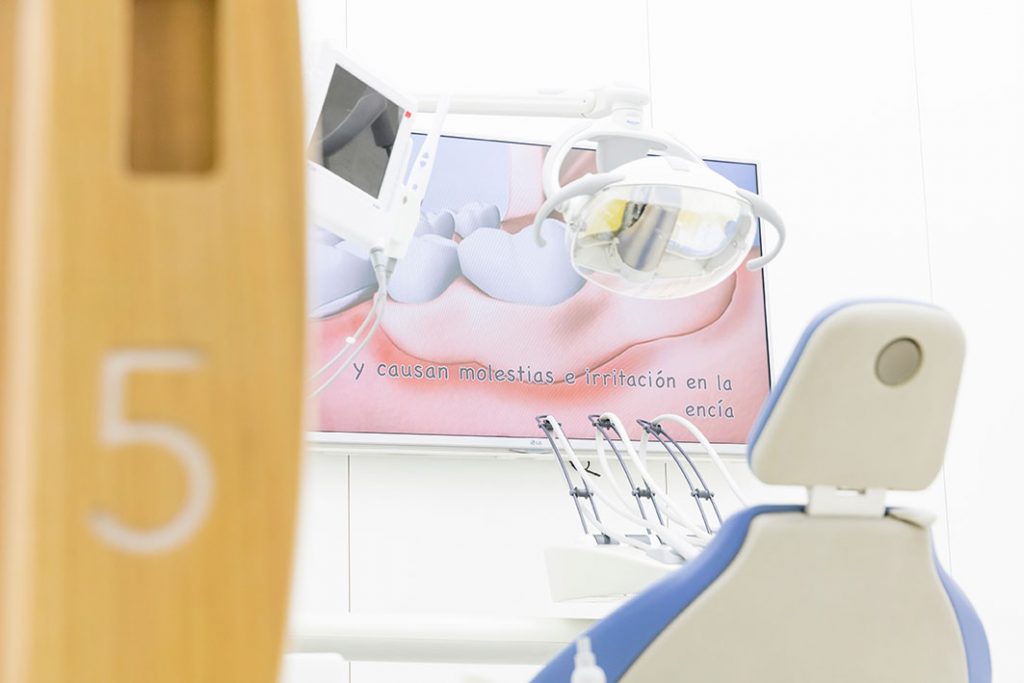
Every tooth has the pulp inside it, a tissue with nerves and blood vessels. When deep decay, a fracture or a knock reaches it, it becomes inflamed or infected and cannot recover.
In a root canal, the damaged pulp is removed, the root canals are cleaned and disinfected, and then filled and sealed. The tooth stays in place and keeps working. Many people call it "killing the nerve", although what is actually removed is tissue that is already diseased.
When is it needed?
These signs usually mean the nerve is damaged:
- Intense pain or pain that comes on by itself, especially at night.
- Sensitivity to cold or heat that lasts long after the stimulus is removed.
- Pain when chewing or touching the tooth.
- An abscess or a small bump on the gum next to the tooth.
- A tooth that has darkened after a knock.
- Very deep decay seen on an X-ray.
After the root canal: how the tooth is restored
A tooth with a root canal is more fragile, so it needs to be properly rebuilt to last. Depending on how much tooth remains:
Restoration
If enough healthy tooth remains, it is rebuilt with composite at the clinic.
Dental restorationInlay or onlay
If a significant part is missing, a laboratory-made inlay or onlay strengthens it while preserving more tooth than a crown.
Dental inlaysCrown
For molars or badly damaged teeth, a crown covers the tooth and protects it from fracture.
Dental crownsBenefits of root canal treatment
You keep your tooth
Keeping your natural tooth is always better than extracting and replacing it.
Relieves pain
Removing the inflamed nerve makes the pain go away.
Clears infection
It stops the infection spreading to the bone or other teeth.
Painless
It is done under local anaesthetic, like a slightly longer filling.
Long-lasting
Done well and properly restored, a root canal lasts many years.
Worth bearing in mind
The tooth becomes more fragile and often needs a crown or onlay. In some cases the infection can return and the treatment has to be repeated.
How is a root canal carried out?
Diagnosis
We examine the tooth and take an X-ray to see the decay, the roots and whether there is infection in the bone.
Root canal treatment
Under local anaesthetic, we isolate the tooth with a rubber dam, make a small opening and clean the canals with fine files and disinfecting irrigation. Then we fill them with a sealing material, gutta-percha. If you are very anxious, at Udemax Miramar we can do it under conscious sedation.
Restoration
We close the tooth with a restoration and, if needed, plan an onlay or crown to protect it.
Aftercare following a root canal
To help the tooth recover well:
- Wait until the anaesthetic wears off before eating.
- It is normal to feel some discomfort when chewing for two or three days: take the painkiller we recommend.
- Don't chew hard foods on that tooth until it is fully restored.
- If you have a temporary filling, look after it until your final appointment.
- Brush and floss as normal.
- Call us if the pain gets worse or swelling appears.
What if the root canal fails?
Most root canals work for many years. If the infection returns over time, the treatment can usually be repeated, known as re-treatment.
If that is not possible, minor surgery at the tip of the root, an apicoectomy, can save the tooth. And if it cannot be kept, we consider extraction and replacing it with an implant.
Who will treat you
Root canals are carried out by the dentists at Clínicas Udemax, who assess each case with an X-ray to decide on the best treatment and subsequent restoration.




Where we carry out root canals
We carry out root canal treatment at two of our clinics in Palma: Udemax Miramar and Emardental.
Conservative dentistry
Udemax Miramar
Outpatient department, Hospital Juaneda Miramar
Camí de la Vileta, 30 · 07011 Palma
- Monday to Thursday
- 9:00–13:00 · 16:00–20:00
- Friday
- 9:00–20:00
By car
Paid parking at the Hospital Juaneda Miramar car park, a one-minute walk away, plus street parking. There is also free parking on Camí de la Vileta, about a 10-minute walk away.
Go to the car parkBy bus
EMT bus routes 6, 8 and 29, stopping at "Policlínica", in front of the hospital.
View bus routeBy taxi
Taxi ranks at Camí de la Vileta, 51 and Carrer de Pasqual Ribot, 1.
Conservative dentistry
Emardental
Carrer d’Alfons el Magnànim, 2, ground floor
Bons Aires · 07004 Palma
- Monday to Thursday
- 9:00–13:00 · 16:00–20:00
- Friday
- 9:00–13:00
By car
Street parking and the Santa Pagesa underground pay car park (Carrer d’Ausiàs March, 26), a 4-minute walk away. There is also a pay car park at s’Escorxador, about a 5-minute walk away.
Go to the car parkBy bus
EMT bus routes 12, 20, 24 and 40, stopping at "Pl. d’Abú Yahya", "Alfons el Magnànim" or "31 de desembre".
View bus routeBy taxi
Taxi rank at Plaça d’Abú Yahya, 2.
Frequently asked questions about root canal treatment
Does a root canal hurt?
Not during treatment, as it is done under local anaesthetic. In fact, it relieves the pain caused by the inflamed nerve. Afterwards, mild discomfort for two or three days is normal.
How long does a root canal take?
Usually 45 to 90 minutes, in one or two sessions. Molars, which have more canals, usually take longer than front teeth.
Is it true that the nerve is ‘killed’?
The pulp, the tissue containing the nerve, which is already inflamed or infected, is removed. The tooth stays anchored in the bone and works normally.
Is it normal for it to hurt afterwards?
Yes, it is normal to feel some discomfort when chewing for a few days. If the pain gets worse or swelling appears, call us.
How long does a tooth with a root canal last?
Properly treated and restored, many years. The most important thing is to protect it with a good restoration, often a crown on molars.
Will I need a crown afterwards?
Not always. For front teeth with little damage, a restoration is usually enough. For molars or badly damaged teeth, a crown or onlay prevents fractures.
Root canal or extraction?
Whenever the tooth can be saved, a root canal is better: you keep your natural tooth. Extraction is reserved for when it cannot be saved.
How much does a root canal cost in Palma?
It depends on the tooth and how many canals it has. At your free first visit we give you a detailed quote, and you can finance your treatment.