Tetracycline Teeth Whitening: For Tetracycline Stains
Tooth discolouration caused by tetracyclines is one of the most complex cases in cosmetic dentistry. Several generations, especially those born in the 1960s and 1970s, were affected by the use of tetracyclines during their childhood. This problem affects many people and can have a negative impact on self-esteem and daily life, as the appearance of one’s smile influences personal confidence. If you or someone close to you has experienced this problem, it is important to know that there are solutions.
However, today there are advanced teeth whitening systems for tetracyclines that can significantly improve tooth colour, even when the stains are deep. Tetracyclines are a broad-spectrum antibiotic used to treat a variety of infections, such as respiratory, urinary, or stomach infections. The effect of tetracyclines on teeth is due to their affinity for calcium, which causes internal staining and permanent discolouration as side effects, especially when administered during tooth development.
At Clínicas Udemax, in Palma de Mallorca, we perform teeth whitening treatments for patients from all over Mallorca using specialised protocols to treat this type of dental staining.
Why do tetracyclines stain teeth?
Tetracyclines are a type of antibiotic that, when administered during tooth formation (pregnancy, breastfeeding or childhood), have an affinity for the calcium present in developing teeth, causing the drug to be incorporated into the tooth structure and the appearance of stains on the teeth. For example, administering tetracyclines to pregnant women can affect their children during tooth formation, as can exposing young children to the antibiotic. Both children and adults can experience this problem, as it was common in the past to prescribe tetracyclines at different stages of life.
The amount of antibiotic administered and the degree of exposure determine the severity of the problem, with varying degrees of staining on the teeth: from mild to severe, depending on the dose and the timing of tooth formation.
This can cause different types of tooth discolouration:
- yellowish stains
- greyish or brownish colours
- dark bands on the teeth
- profound colour changes in the dentine
Unlike other dental stains, those caused by tetracyclines are not only found on the surface, but are integrated into the internal structure of the tooth. For this reason, many conventional whitening systems do not offer good results in these cases.
Is it possible to whiten teeth that have been stained by tetracyclines?
Yes. Although these are one of the most difficult types of stains to treat, there are now advanced teeth whitening systems for teeth stained by tetracyclines that can significantly improve tooth colour. Tetracycline was used for years to treat a number of conditions, which explains why these types of stains are so commonly seen in dental practices.
The success of the treatment depends on several factors:
- intensity of the stain
- staining depth
- type of tetracycline ingested
- exposure time to the antibiotic
Therefore, it is essential to attend a personalised consultation before starting any teeth whitening treatment, in order to carry out a preliminary diagnosis and determine the prognosis of the treatment according to the individual needs of each patient.
Advanced teeth whitening for tetracycline stains
In cases of deep staining, it is necessary to use whitening systems with greater penetration capacity into the dentine, capable of acting on the pigments responsible for the discolouration.
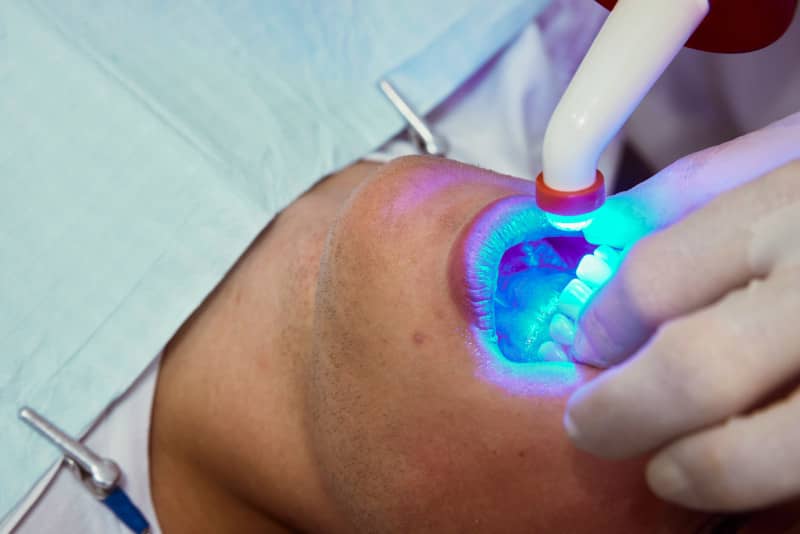
At our clinic, we use the KöR Whitening system, an advanced, safe and effective teeth whitening protocol in Mallorca designed to treat even complex stains, such as those caused by tetracyclines.
This system stands out for:
- greater penetration of the whitening gel
- ability to treat deep stains
- more stable results over time
- tooth sensitivity control
Thanks to its combined protocol of home treatment and clinical sessions, it is possible to achieve significant improvements in teeth with stubborn stains.
How is teeth whitening performed for tetracyclines?
The treatment is personalised and usually involves several stages. In the initial stage, a specialised material is used both in the manufacture of the splints and in the application of the whitening gel, ensuring a better fit and greater effectiveness of the procedure.
1. Study and diagnosis
During the first visit, a comprehensive assessment of the case is carried out to analyse the type of tooth staining and establish a treatment plan.
2. Custom splints
Customised splints are manufactured using digital scanning to ensure uniform application of the whitening gel.
3. Supervised home phase
The patient applies the whitening gel at night, following the specialist’s instructions. This phase may last for several weeks, depending on the intensity of the stain.
4. Clinical reinforcement sessions
In some cases, additional sessions are carried out at the clinic to enhance the final result and achieve a more even tone.
How much can teeth improve with tetracyclines?
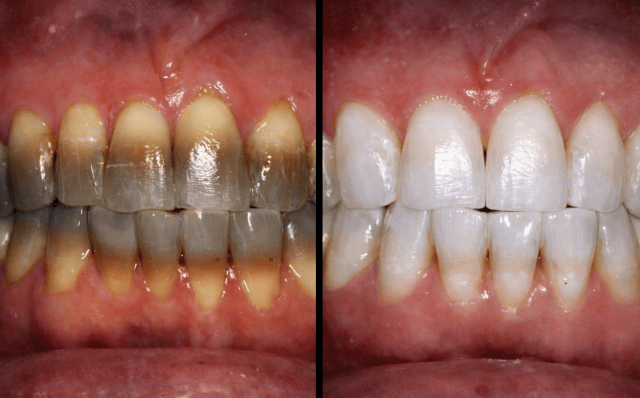
Results vary depending on each patient, but in many cases it is possible to achieve very significant improvements in tooth colour, even in cases of deep staining. Teeth whitening can change the colour of teeth affected by tetracycline, lightening and evening out the colour of the enamel to improve dental aesthetics.
Stains caused by tetracyclines can appear in different colours, such as yellow, brown or grey, which significantly affects the appearance of the smile. The treatment aims to improve the appearance of the teeth by restoring a more uniform and natural colour.
Although in some very severe cases it may be necessary to combine whitening with other cosmetic treatments, teeth whitening is usually the first option because it is conservative and minimally invasive.
Advantages of teeth whitening over veneers
Where possible, teeth whitening offers several advantages over restorative treatments:
- preserves the natural tooth
- avoid chipping the enamel
- it is a reversible treatment
- allows for gradual improvement in aesthetics
However, in cases of severe tetracycline staining on teeth, where whitening is not sufficient, porcelain dental veneers can be used. These veneers, made of porcelain, offer a long-lasting and natural-looking solution for restoring affected teeth.
For this reason, many specialists recommend trying tetracycline tooth whitening first before resorting to more invasive treatments.
Post-treatment maintenance and care
After undergoing teeth whitening treatment to remove tetracycline stains, it is essential to adopt a proper maintenance routine to preserve the results and enjoy a healthy smile for longer. Long-term success depends not only on the initial treatment, but also on daily care and regular check-ups.
The first step is to maintain rigorous oral hygiene. It is recommended to brush your teeth at least twice a day with a soft toothbrush and fluoride toothpaste, paying special attention to all tooth surfaces to protect the enamel and prevent new stains from appearing. Daily flossing helps remove food debris and plaque between teeth, which helps maintain the colour and health of your teeth.
Regular visits to the dentist are essential to monitor the progress of teeth whitening and detect any signs of discolouration or changes in shade. In some cases, the specialist may recommend touch-up sessions to maintain the desired colour, especially in patients with a history of tetracycline staining, as these can be more resistant and require closer monitoring.
In addition, it is important to take care of your diet and daily habits. Limiting your consumption of foods and beverages that tend to stain your teeth, such as coffee, tea, red wine, or dark fruits, helps preserve the shade achieved after treatment. Similarly, avoiding tobacco is key, as smoke can cause discolouration and negatively affect both the colour and overall health of your teeth.
To protect the enamel and prolong the results, it is advisable to reduce your intake of sugars and acids, which can weaken the tooth structure and promote the appearance of new stains. Every patient is different, so it is essential to consult your dentist to tailor the maintenance plan to your individual needs and ensure a radiant, long-lasting smile.
In short, maintenance and post-treatment care are essential for those who have treated tetracycline stains. By following these tips, complemented by professional dental cleaning in Mallorca and regular check-ups, you can enjoy the benefits of teeth whitening and maintain a bright, healthy smile over time.
Treatment of tetracycline stains in Mallorca
At Clínicas Udemax in Palma de Mallorca, we perform aesthetic dental treatments in Mallorca for patients from all over the island who have deep dental stains. Our team of medical specialists in dentistry and orthodontics has extensive experience in treating tetracycline stains.
Each case is studied individually to determine the most appropriate treatment and the results that can be achieved for each patient. We invite you to read this article for detailed information on tetracycline teeth whitening and to learn about all the benefits of the procedure.