Cold Light Teeth Whitening Mallorca: Is it Better than LED?
En este artículo
- What is cold light or LED teeth whitening?
- In which cases can LED teeth whitening be used?
- How is cold light teeth whitening performed?
- Advantages of cold light teeth whitening
- Limitations of cold light whitening
- Side effects of teeth whitening
- Maintenance and care after LED teeth whitening
- Price and availability of teeth whitening with light
- The importance of personalised diagnosis
- Conclusion
Teeth whitening is one of the most sought-after cosmetic treatments in dentistry. Among the various techniques available, cold light or LED teeth whitening has become popular because it offers visible results in a short time and is performed entirely in the clinic. The aim of cold light or LED teeth whitening is to restore the natural colour of the teeth and achieve a more attractive smile in a conservative manner.
In this article, we explain what LED whitening is, how it works, in which cases it may be recommended, and what its advantages and limitations are. We also discuss how it can be integrated into other cosmetic dental treatments in Mallorca, so that you can assess whether it is the most appropriate option for each situation.
What is cold light or LED teeth whitening?
Cold light teeth whitening, also known as LED whitening, is a procedure that uses a low-temperature LED light source to activate a whitening gel applied to the surface of the teeth.
This gel usually contains hydrogen peroxide or carbamide peroxide, substances that penetrate the tooth enamel and help break down the pigments responsible for tooth discolouration. The principle behind all professional whitening treatments is the same: to lighten the teeth through a chemical reaction without damaging their structure.
The function of the LED lamp is not to whiten by itself, but to emit cold radiation that activates the photoactivation process of the whitening gel. The cold light stimulates the molecules in the gel, accelerating the release of the hydrogen peroxide whitening molecules and thus facilitating rapid and effective tooth whitening. It is essential to perform the procedure safely and under professional supervision to avoid side effects.
In which cases can LED teeth whitening be used?
Cold light whitening may be recommended for patients with external or superficial stains, such as those caused by:
- Regular consumption of coffee, tea or red wine
- Tobacco
- Mild pigmentation associated with the passage of time
- Foods with high colouring power
The use of this type of cold light teeth whitening must be supervised by a professional to ensure the safety and effectiveness of the treatment.
It is important to note that not all stains respond equally to this type of whitening. Deep stains, structural alterations to the enamel or those caused by certain medications may require the treatment to be carried out more than once or the use of other more advanced systems.
How is cold light teeth whitening performed?
Although the protocol may vary slightly depending on the clinic, the procedure usually follows these steps:
1. Preliminary assessment
Before starting treatment, the dentist performs a thorough examination of the teeth and gums to check for cavities, gum inflammation or other problems that need to be treated first.
2. Protection of gums and soft tissues
Protective barriers are placed on the gums and lips to prevent the whitening gel from coming into contact with soft tissue.
3. Application of the whitening gel
The whitening gel is applied evenly over the surface of the teeth.
4. Activation by LED light
The cold LED light is directed towards the teeth for a specific amount of time to activate the gel and accelerate the whitening process.
5. Evaluation of results
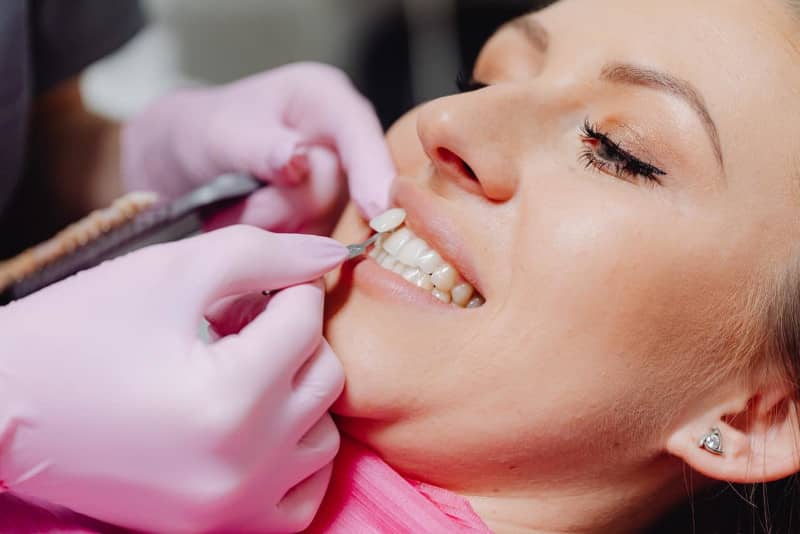
Once the session is complete, the change in shade achieved is evaluated, as cold light or LED teeth whitening can lighten teeth by between 2 and 8 shades, and an assessment is made as to whether an additional session is necessary.
Advantages of cold light teeth whitening
Among the main benefits of this technique are:
- Quick procedure, performed in one or a few sessions
- Controlled clinical treatment, always under professional supervision
- Painless method in most cases
- Visible improvement in tooth colour for superficial stains
Limitations of cold light whitening
Although it is a safe and effective technique in certain cases, it also has limitations that should be noted:
- Variable results: not all patients respond in the same way
- Non-permanent effect: the colour may darken over time if proper habits are not maintained.
- Possible temporary sensitivity after treatment
- Less effective on deep or complex stains
For this reason, LED whitening is not always the most suitable option when seeking very stable results or in cases of severe staining.
Side effects of teeth whitening
LED light teeth whitening is a safe procedure widely used in dental clinics, but like any treatment, it can have some mild and temporary side effects. One of the most common is tooth sensitivity, which usually appears after the whitening session. This sensitivity occurs because the whitening gel, activated by the LED light, penetrates the enamel and can stimulate the nerves in the teeth, causing discomfort when consuming hot or cold foods or drinks.
In addition, in some cases, there may be slight irritation of the gums if the gel comes into contact with soft tissue, although this is minimised by the protection placed by the dentist before starting the procedure. Occasionally, patients may experience mild discomfort in the mouth or toothache, but these side effects usually disappear on their own within a day or two.
To reduce sensitivity and discomfort after LED teeth whitening, it is essential to follow your dentist’s recommendations, maintain good oral hygiene, and avoid very hot or cold foods and drinks for the first few hours after treatment. If sensitivity persists or becomes bothersome, your dentist may recommend specific products for sensitive teeth or additional care guidelines. Remember that these side effects are temporary and are part of the normal LED light teeth whitening process.
Maintenance and care after LED teeth whitening
After undergoing LED light teeth whitening, it is essential to adopt a care routine that helps maintain the results and health of your teeth. One of the most important recommendations is to avoid foods and drinks that can cause staining, such as coffee, tea, red wine, and other products with intense colourings, during the first few days. These can affect the new shade achieved and reduce the duration of the whitening effect.
Oral hygiene plays a key role: brush your teeth at least twice a day with a soft toothbrush and suitable toothpaste, and use dental floss to remove food debris between your teeth. Maintaining rigorous cleaning helps prevent the build-up of stains and preserves the whiteness achieved with the treatment.
It is also advisable to avoid tobacco, as smoking can cause persistent stains and negatively affect both aesthetics and oral health. Regular visits to the dentist will allow you to monitor the condition of your teeth and gums and assess whether any touch-ups or maintenance sessions are necessary. By following these tips, you can enjoy a whiter, healthier smile for longer after your LED light teeth whitening treatment.
Price and availability of teeth whitening with light
The price of LED light teeth whitening can vary depending on the clinic, the dentist, the type of treatment performed, the number of sessions required, and the individual characteristics of each patient. It is advisable to request detailed information from several clinics and compare prices, always taking into account the experience and specialisation of the teeth whitening professional.
LED teeth whitening is widely available, as it is a highly sought-after treatment offered by most specialist dental clinics. Before making your decision, consult reviews and opinions from other patients and seek recommendations to ensure you choose the clinic and dentist that best suit your needs and expectations.
Remember that price should not be the only factor to consider: the quality of treatment, safety and personalised care are essential for achieving the best results and looking after your oral health. If you have any doubts about the type of light-based teeth whitening that is most suitable for you, do not hesitate to request a professional assessment and get answers to all your questions before starting the procedure.
The importance of personalised diagnosis
In cosmetic dentistry, there is no single treatment that is suitable for all patients. The choice of whitening system should always be based on a prior diagnosis, taking into account:
- The origin of tooth discolouration
- The condition of the enamel
- Gum and tooth health
- The patient’s realistic expectations
There are now more advanced professional whitening systems that combine in-clinic treatment with at-home treatment, offering more predictable, personalised and long-lasting results.
At our dental clinic in Mallorca, we use KÖR teeth whitening, a professionally supervised system that allows even complex cases of tooth staining to be treated with greater long-term stability.
Conclusion
Cold light or LED teeth whitening can be a valid option in specific cases, especially when dealing with superficial stains and seeking a quick treatment at the clinic.
However, it is not the most effective technique for all patients, nor does it offer the most lasting results. Therefore, before starting any cosmetic dental treatment, it is essential to have a professional assessment to choose the safest and most appropriate option for each case.