Saliva in babies and children: drooling, dry mouth and dental health

En este artículo
- The essential points
- What saliva does in children’s mouths
- Drooling in babies: why does my baby drool so much?
- Excess saliva in older children
- Dry mouth in children: when there is not enough saliva
- How to look after your child’s saliva and teeth
- Frequently asked questions about saliva in babies and children
Saliva is one of the best defences your child’s teeth have: it cleans the mouth, neutralises the acids that cause tooth decay and helps repair enamel. In babies, it is also at the centre of a stage that worries many parents: drooling. We explain what is normal, when there is too much or too little saliva, and when to seek advice.
The essential points
- Saliva cleans the mouth, neutralises acids, supplies calcium and phosphate to the enamel and keeps bacteria in check.
- It is normal for babies to drool a lot: it starts at around 2-3 months and usually decreases between 18 and 24 months.
- If heavy drooling continues after age 4, or appears suddenly with fever or difficulty swallowing, seek advice.
- A dry mouth in children increases the risk of decay and is usually due to mouth breathing, not drinking enough water or certain medicines.
What saliva does in children’s mouths
- Cleaning: it washes away food debris and reduces the plaque that builds up on the teeth.
- Neutralises acids: it contains bicarbonate and phosphate, which offset the acids bacteria produce after eating. This protects against tooth decay in children.
- Repairs enamel: it supplies calcium and phosphate that help remineralise areas that are starting to demineralise.
- Defence against germs: it contains enzymes such as lysozyme and antibodies that limit the growth of bacteria and fungi.
- Eating and speaking: it lubricates the mouth, helps form food into a bolus and swallow it, and starts the digestion of starches.
Drooling in babies: why does my baby drool so much?
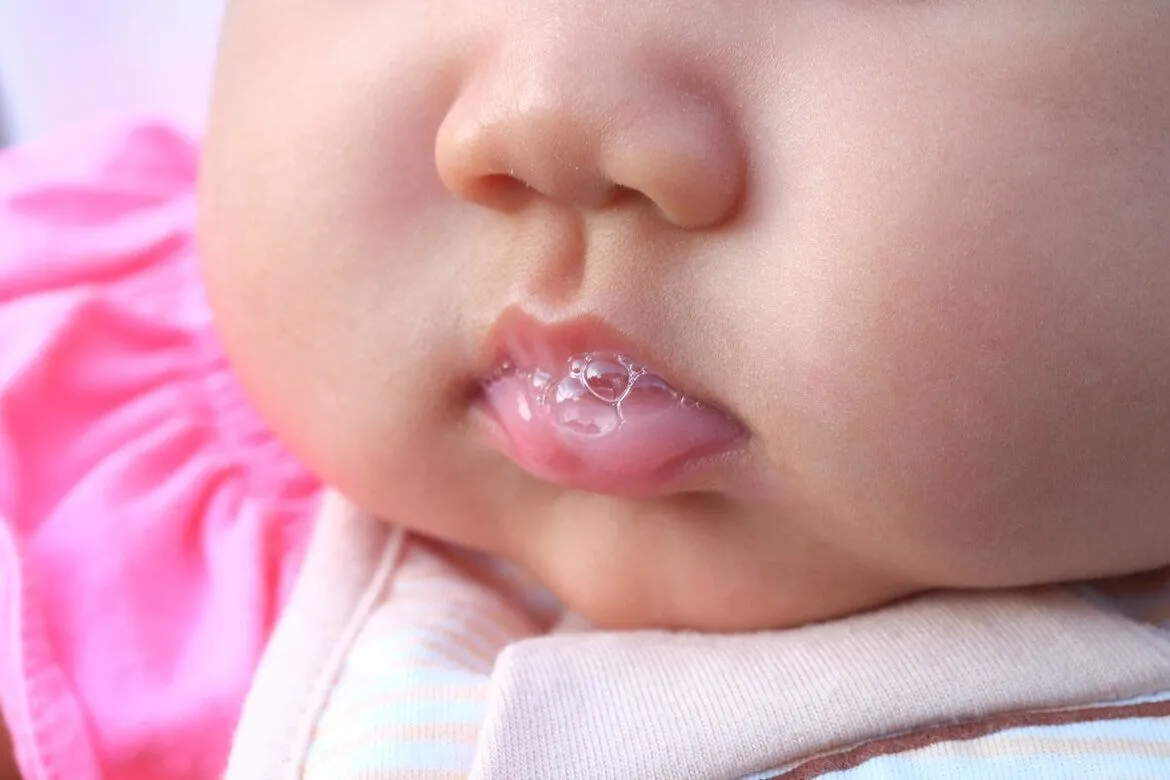
Drooling is normal in babies. At around 2-3 months the salivary glands start producing more saliva, but the baby cannot yet swallow it properly or keep their lips closed, so it spills out. As swallowing and mouth control mature, drooling gradually decreases.
| Age | What is normal | When to seek advice |
|---|---|---|
| 2 to 6 months | Drooling starts; the baby cannot yet swallow saliva well | If they drool and also struggle to feed or swallow |
| 6 to 24 months | Frequent drooling, which increases when teeth are coming through | If drooling appears suddenly with fever, severe irritability or difficulty swallowing |
| 2 to 4 years | Occasional drooling: when concentrating, sleeping or eating | If it is still heavy during the day |
| Over 4 years | There should be no drooling during the day | Always: have it assessed by the paediatrician |
Drooling and teething
Many parents link drooling with teething. Teething can increase drooling, but babies start drooling months before the first tooth, which usually appears at around 6 months. To find out more, read our article on baby teething.
Our adviceLook after the skin around the mouth
Excess saliva in older children
When a child is still drooling a lot after age 4, it is called sialorrhoea. It can be due to difficulty closing the mouth, mouth breathing (for example, because of enlarged adenoids), the position of the teeth or jaw, or problems with muscle control. It is common in children with some neurological conditions, such as cerebral palsy, and in these cases care is coordinated by the paediatrician together with speech therapy and other specialists.
Dry mouth in children: when there is not enough saliva
The opposite problem, having too little saliva (hyposalivation), is less common in children but has more consequences for the teeth:
- More tooth decay, because acids are not neutralised and the mouth is not cleaned properly.
- More plaque and inflamed gums.
- Bad breath. Read more about bad breath in children.
- Difficulty swallowing dry foods or speaking fluently.
Why might a child have a dry mouth?
- Mouth breathing, especially at night, due to adenoids, allergies or a blocked nose.
- Not drinking enough water, or dehydration from fever, vomiting or diarrhoea.
- Some medicines, such as antihistamines or those used for ADHD.
- General health conditions, such as diabetes, or cancer treatments. These causes are uncommon but worth bearing in mind.
If you notice your child often has a dry mouth, mention it to the paediatrician and at the dental check-up: the paediatric dentist can step up prevention with fluoride to make up for the lack of saliva.
How to look after your child’s saliva and teeth
- Water as their usual drink, especially between meals.
- Less sugary snacking: every time they eat something sweet, saliva needs time to neutralise the acid.
- Hygiene from the first tooth, with fluoride toothpaste in the right amount for their age. Here are our tips for cleaning a baby’s first teeth.
- No bottle of milk or juice at bedtime: less saliva is produced at night and the sugar stays on the teeth.
- First dental visit when the first tooth appears or before their first birthday, with our baby dentistry service.
Questions about your baby's mouth? We check it free of charge at Arcdental
Book your free first visitFrequently asked questions about saliva in babies and children
Is it normal for my baby to drool so much?
Yes. Between 3 months and 18-24 months it is normal to drool a lot, because they produce more saliva and cannot yet swallow it well. It decreases as they develop.
Does drooling mean my baby is teething?
Not necessarily. Teething can increase drooling, but babies start drooling months before the first tooth comes through.
Until what age is drooling normal?
Frequently, until 18-24 months; occasionally, until age 4. If a child is still drooling a lot during the day after that age, it is worth having it checked.
What should I do if my child has a dry mouth?
Make sure they drink water often and check whether they breathe through their mouth or take any medicine that dries it out. If it keeps happening, mention it to the paediatrician and the paediatric dentist, because it increases the risk of decay.
Does saliva protect against tooth decay?
Yes. It neutralises acids, cleans the mouth and supplies minerals to the enamel. That is why snacking between meals or having a bottle at night increases the risk of decay: saliva does not have time to do its job.