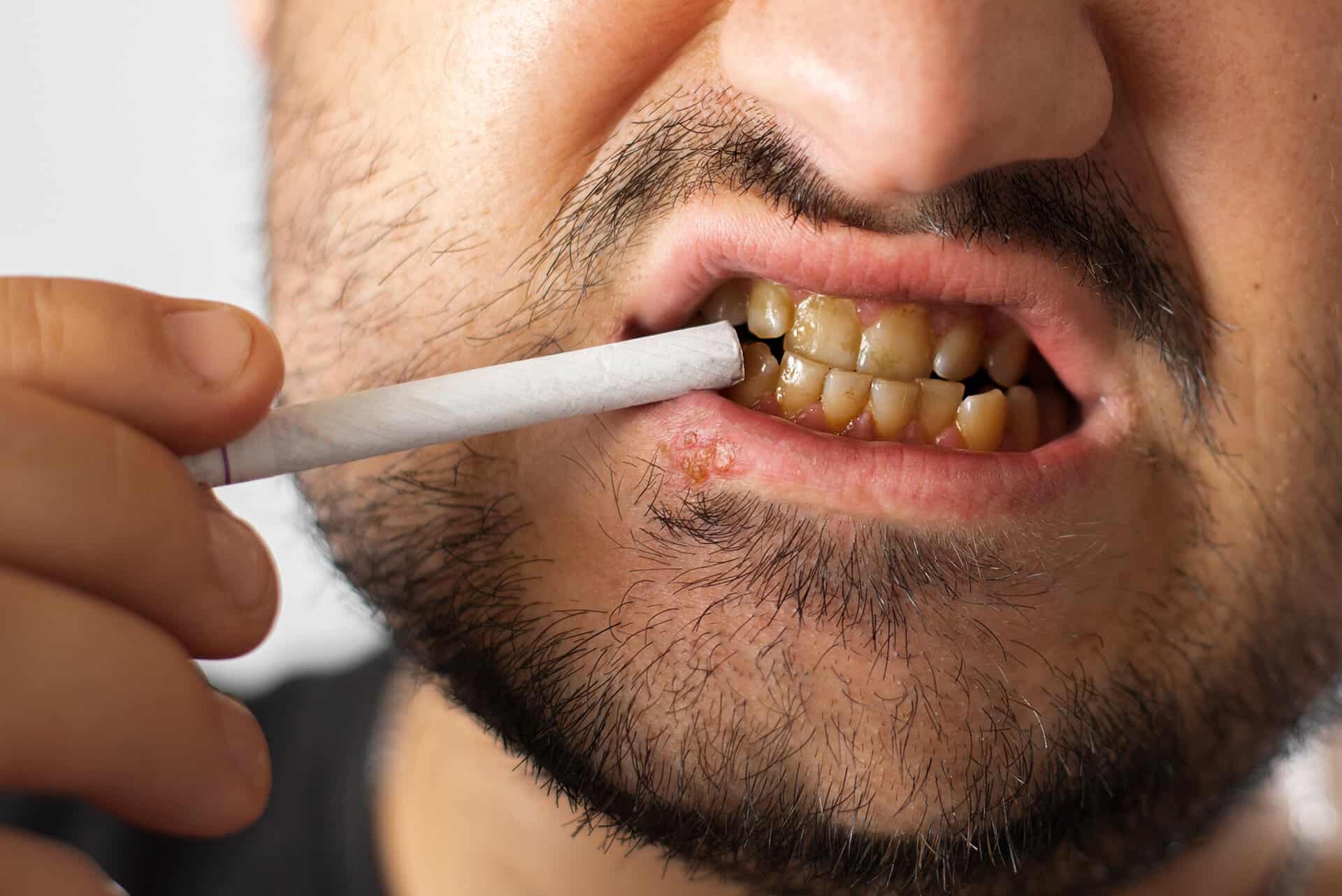
Teeth stains: real causes, types, and effective treatments
En este artículo
In this article, we offer you an informative guide on teeth stains, explaining what they are, their types, and how to remove them. We’ve all been there: looking in the mirror and discovering a stain on a tooth that we hadn’t seen before. It may be yellow, brown, white, or even a stranger color, and the first thing we ask ourselves is whether it is something serious and whether it can be removed.
Stains on teeth not only affect aesthetics; sometimes they are also an early sign of an oral health problem. This situation can become a concern for many people, as it impacts both confidence and personal image. That is why it is important to understand where they come from, what they mean, and what the appropriate treatment is in each case.
Why do stains appear on teeth?
We can divide them into two main groups: those that form on the surface of the tooth and those that develop inside.
Superficial stains—the most common—appear when certain foods, drinks, or habits pigment the enamel. Coffee, tea, red wine, and tobacco are the most well-known culprits. They can also appear when plaque or tartar builds up, especially near the gums or between the teeth. In addition, aging is one of the factors that contribute to the appearance of extrinsic stains, as over the years the enamel wears down and becomes more susceptible to pigmentation.
Internal stains have a different origin. They are usually due to alterations in the structure of the enamel or dentin. Sometimes they arise from trauma to a tooth, other times from medications taken during childhood, from enamel decalcification, or from the onset of tooth decay that has not yet progressed enough to cause pain. In general, there are several factors that influence the formation of stains on teeth, both internal and external.
Different types of stains and what each one means
Not all stains convey the same message. Their color, the area where they appear, and their texture give us a lot of information.
Yellow stains
These are the most common and are usually related to enamel wear. When this layer becomes thinner, the dentin—which is naturally yellow—begins to show through. This often occurs in people who consume a lot of acidic foods, brush too hard, or clench their teeth due to bruxism. They can also appear due to excess plaque or tartar, as well as poor oral hygiene or a lack of certain nutrients, which gives the tooth a more generalized yellowish tone. In addition, some oral diseases may be associated with the presence of yellow stains.
Brown stains
These have a different origin and are usually related to external pigments. Tobacco, coffee, tea, or wine tend to darken the enamel, especially in areas that are difficult to reach when brushing. In addition, some medications taken during childhood, such as tetracyclines, can cause deep, difficult-to-treat brown stains on the teeth. When the stain appears in a groove or between two teeth and has a darker shade, it is important to have a dentist check whether it is early-stage tooth decay.

White spots
These white spots on the teeth often cause concern because, although they are sometimes harmless, others are an early sign of decalcification or tooth decay. Identifying the cause of white spots on the teeth is essential, as they can indicate problems such as fluorosis, incipient tooth decay, or alterations in the enamel.
White spots around braces, for example, appear when hygiene is insufficient and plaque builds up around the appliances. They can also be caused by mild fluorosis, caused by excess fluoride during childhood, or by a defect in enamel formation, especially if the stain has been present since childhood.
To prevent white spots from appearing on your teeth, it is essential to maintain thorough oral hygiene that includes everything: proper brushing after every meal, flossing, and regular checkups with your dentist.
Other colors
In rare cases, green, orange, or gray spots may appear. Their origin is usually related to specific bacteria, certain medications, metal debris under old crowns, or teeth that were knocked out years ago and have gradually darkened.
Is it a stain or tooth decay? How to tell the difference
Sometimes the difference is not obvious at first glance. A stain usually has a smooth surface and does not change much over time. A cavity, on the other hand, tends to have a matte, rough, or “shadow-like” appearance, especially in the grooves. It also commonly darkens or increases in size.
If there is sensitivity to cold, pain when biting, or the stain is in a deep groove, it is very likely that the problem is a cavity, even if it does not yet appear to be so externally. A dentist can confirm this in just a few minutes with an examination and, if necessary, an X-ray.
How to remove stains on teeth
Treatment depends entirely on the cause, so it is essential to diagnose the problem first.
Many superficial stains disappear with professional dental cleaning, which removes plaque and tartar build-up and restores the enamel to its original color. In cases where the pigmentation is deeply ingrained, techniques such as Airflow, which uses a jet of water and special powder, can remove stains without damaging the tooth.
When the color is inside the tooth or affects the enamel more deeply, other solutions such as internal tooth whitening can be used. To lighten the overall tone of the smile, teeth whitening in Mallorca is the most common treatment. For white stains caused by decalcification, microabrasion or resin infiltration offer excellent results without the need to “touch” the tooth aggressively. In cases where the stain is associated with cavities, severe wear, or structural alterations, cosmetic dental reconstructions or dental veneers can restore the original color and shape.
How to prevent them from reappearing
Prevention is just as important as treatment. Maintaining good daily hygiene, using dental floss or interdental brushes, and attending regular check-ups helps to prevent most external stains. Reducing your consumption of coffee, tea, dark soft drinks, and tobacco also makes a noticeable difference.
What should be avoided completely are abrasive home remedies, such as rubbing lemon, baking soda, or improvised whitening mixtures on your teeth. These methods erode the enamel and end up making the tooth even more yellow over time.
When should you see your dentist?
If a stain appears suddenly, changes color, or does not disappear after regular cleaning, it is advisable to have it checked. The same applies if you experience sensitivity to cold, pain when biting, or if the stain is located in a deep groove.
At Clinicas Udemax, we assess what type of stain it is, whether it is superficial or internal, and what is the most appropriate treatment to restore your smile to a healthy and natural appearance.
Tooth stains and their impact on health
Tooth stains not only affect the appearance of your smile, but can also be a reflection of your overall oral health. When brown stains appear on your teeth, for example, it is possible that the enamel is being affected by tartar buildup or poor hygiene, which can lead to more serious problems such as gingivitis or periodontitis. The presence of brown, white, or yellow stains on your teeth can alert you to changes in the tooth surface or even the existence of early-stage cavities.
The color of dental stains varies depending on their origin and can indicate different types of problems. White stains may be related to fluorosis or enamel demineralization, while yellow stains are usually associated with wear or plaque buildup. Brown stains, on the other hand, can be caused by frequent consumption of coffee, tea, or red wine, as well as by tartar buildup or poor hygiene. Identifying the type of stain is essential to determining the most appropriate solution and preventing the problem from progressing.
Prevention plays a key role in the appearance of dental stains. Maintaining a proper brushing routine, flossing, and regularly visiting the dentist for professional cleanings are essential habits for protecting enamel and preventing stains from forming. In addition, reducing consumption of foods and beverages that tend to stain teeth, such as coffee, tea, and red wine, helps maintain the natural color of your smile. If stains are already present, there are effective treatments such as hydrogen peroxide whitening or veneers, which can restore the aesthetics and health of your teeth.
In short, paying attention to the appearance of tooth stains is important not only for aesthetic reasons, but also because they can be the first sign of an oral health problem. Consulting your dentist about any changes in the color of your teeth and following a good hygiene routine are the best strategies for maintaining a healthy and bright smile over time.