Crooked teeth in children: causes, problems and solutions in Mallorca
En este artículo
- Parents’ concerns and a swift response from Udemax Clinics
- Is it normal for my child to have crooked teeth?
- Why do children’s teeth grow in crooked?
- What problems can crooked teeth cause in children?
- Early detection: at what age should my child visit the orthodontist?
- Treatments for crooked teeth in children
- Can crooked teeth in children be prevented?
- When to visit Udemax Clinics in Mallorca
Parents’ concerns and a swift response from Udemax Clinics
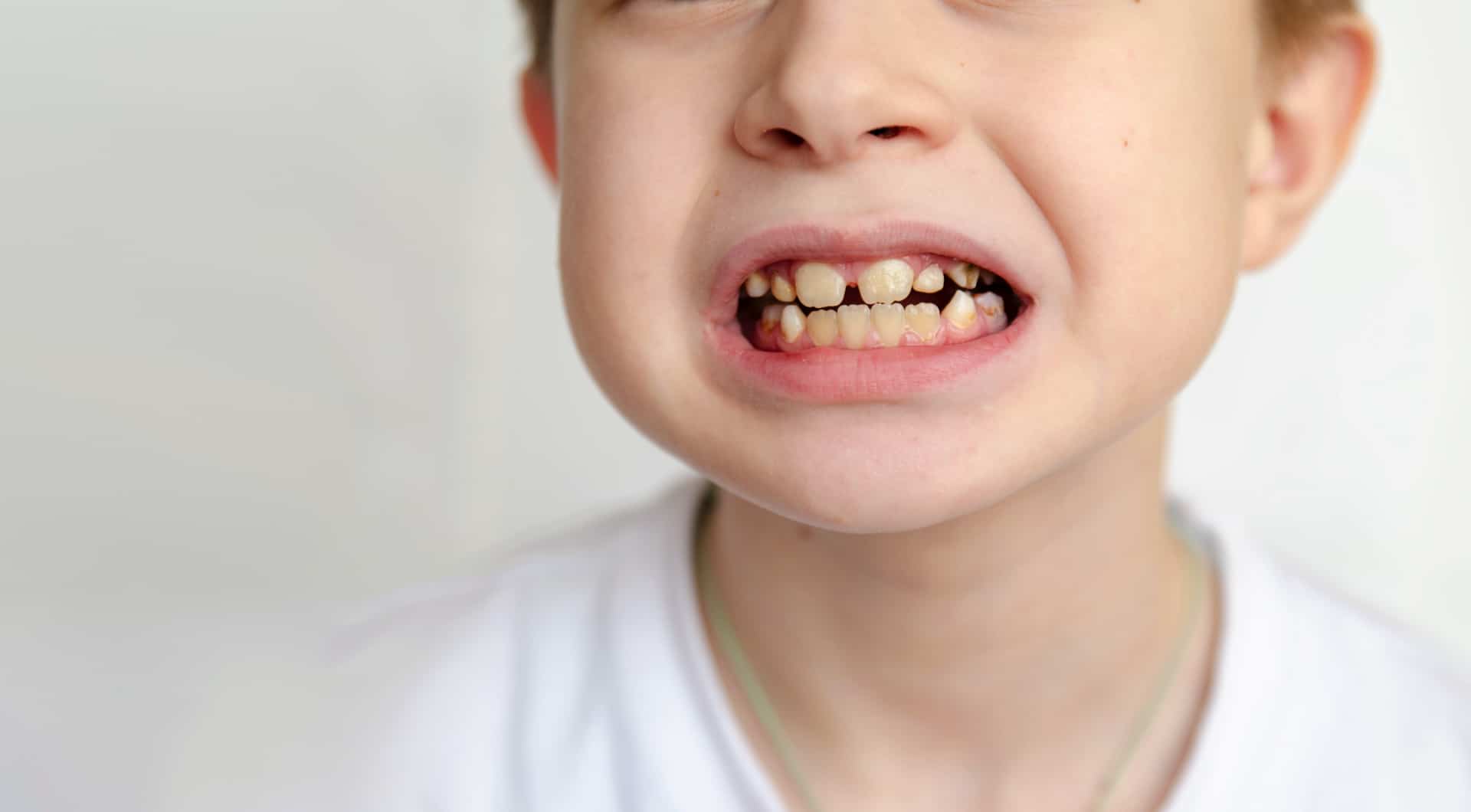
Many parents in Mallorca come to our clinic with a clear concern: they have noticed that their child’s teeth are not growing straight. This concern often arises even when the child is only 3 or 4 years old, and it is entirely understandable to want to take action as soon as possible.
At Udemax Clinics, with centres in Palma de Mallorca, we treat cases of crowded milk teeth and permanent teeth that are coming in out of position on a daily basis. The good news is that crooked teeth in children can almost always be corrected through paediatric orthodontics. The important thing is to seek treatment early, ideally before the age of 7, to take advantage of the child’s natural growth.
In this article, we’ll explain why teeth become crooked, what the consequences might be, how crooked teeth can be corrected, and when you should book an appointment. The initial orthodontic assessment at Udemax Clinics is simple, painless and will provide you with all the information you need to make informed decisions.
Is it normal for my child to have crooked teeth?
During the mixed dentition phase, typically between the ages of 6 and 12, it is relatively common to see baby teeth and permanent teeth that are slightly misaligned. The first permanent molars usually appear around the age of 6, whilst the permanent incisors erupt between the ages of 6 and 8. This process of tooth replacement can lead to temporary crowding, which often resolves itself.
However, there is an important difference between a common but manageable situation and a problem that requires early treatment. A slight, temporary overlap is not the same as severely crowded teeth, canines that protrude too far, or a noticeable crossbite.
At Udemax Clinics, we recommend an initial orthodontic check-up between the ages of 6 and 7. If parents notice anything unusual before that age, it is worth bringing the appointment forward and considering paediatric orthodontic treatment in Palma.
Warning signs that should prompt you to make an appointment:
- Teeth that are very crowded or overlapping
- A jaw that appears to be ‘protruding’ or very recessed
- Malocclusion: the upper and lower teeth do not align properly
- Habitual mouth breathing, snoring at night
Why do children’s teeth grow in crooked?
Crooked teeth are almost always the result of a combination of factors: genetics, the development of the jawbones, and oral habits. In the Balearic Islands, we also see cases linked to mouth breathing caused by seasonal allergies, which are common on the island, as well as the prolonged use of dummies or bottles beyond the recommended age.
Genetic influence and facial shape
Inheriting a small jaw from one parent and larger teeth from the other can lead to a lack of space and crowding. Studies suggest that malocclusions such as Class II or III bites have a heritability of 40–60%.
If both parents wore braces as teenagers, it is likely that their child will develop similar patterns. A typical example: parents with a history of orthodontic treatment notice that their 7-year-old child is starting to develop an overjet, mirroring the same misalignment they themselves had.
Oral habits: dummies, thumb-sucking, mouth-breathing and tongue-thrusting
Long-term habits can significantly distort the teeth:
Habit | Mouthfeel |
|---|---|
Thumb-sucking beyond the age of 3–4 | Moves the incisors forwards, opens the bite |
Use of a dummy after the age of 3 | It interferes with the development of the palate, increasing the risk of an open bite by two to three times |
Chronic mouth breathing | It narrows the palate due to the tongue being positioned low |
Lingual thrust | Pushes teeth outwards when swallowing or speaking |
Parents may recognise these signs: the child sleeps with their mouth open, snores or regularly drools on their pillow.
Premature loss of baby teeth and lack of space
Untreated tooth decay can lead to the extraction of a milk tooth at the age of 3–4, when it should normally remain in place until the age of 9–10. Without that tooth, the neighbouring teeth shift and close up the space intended for the permanent tooth, which will then come through crooked or become impacted.
Clinical data show that up to 80% of these cases develop moderate or severe crowding during adolescence if space maintainers are not fitted. For example, the loss of a primary first molar at the age of 5 requires that space to be maintained until the permanent premolar erupts at the age of 10–11.
Development of the dental arches and feeding
Very soft diets and an excess of processed foods reduce chewing strength, which can result in a 20–30% narrower dental arch. A narrow dental arch is associated with a crossbite in 40% of cases.
Chewing slightly harder foods — such as whole apples, raw carrots or crusty bread — stimulates the transverse growth of the upper and lower jaws. This simple change in habits at home can make a real difference to your child’s oral development.

What problems can crooked teeth cause in children?
Misaligned teeth are not just a matter of appearance. Crooked teeth affect a child’s ability to chew, their oral health and their emotional well-being. Let’s take a look at the most common consequences.
Difficulties with oral hygiene and the risk of tooth decay
With crowded teeth, the toothbrush cannot reach all surfaces effectively. Bacterial plaque builds up, increasing the risk of tooth decay by two to three times and the incidence of gingivitis by 60% compared to straight teeth. Common areas where plaque accumulates include crowded lower incisors and misaligned molars.
At every child’s check-up at Clínicas Udemax, within our paediatric dentistry unit in Mallorca, we teach both the child and their parents oral hygiene techniques tailored to their specific needs.
Problems with biting, chewing and digestion
A malocclusion makes it harder for a child to chew, causing them to swallow larger pieces of food and potentially leading to indigestion. Malocclusions such as crossbite, open bite or deep bite cause uneven wear on the gums and teeth.
A simple example: a child who only chews on one side because the other side ‘feels strange’ is putting too much strain on one side of their teeth.
Speech and voice disorders
Certain sounds, such as “s”, “z” or “r”, are affected when the front teeth protrude significantly or there is an open bite. Between 30% and 50% of severe malocclusions are associated with pronunciation difficulties. In specific cases, we refer patients to speech and language therapists in Mallorca or work in collaboration with them to improve both bite and pronunciation.
Muscle pain, bruxism and joint strain
Poor alignment can put strain on the jaw muscles, leading to bruxism (night-time teeth grinding), which affects 15–20% of children with misalignment. Parents may notice noises whilst their child is sleeping, morning headaches or premature tooth wear.
At Udemax Clinics, we also assess the temporomandibular joint in children with severely maloccluded bites.
Self-esteem, smiling and social interaction
From the age of 8 or 9, children become more self-conscious about their smile. Studies show that 40% of children with severe malocclusions report a decline in self-esteem due to comments from their peers. They may avoid sports or having their photo taken, or cover their mouth when speaking.
Improving alignment does more than just correct the bite: it helps children feel more confident and smile without any discomfort.
Early detection: at what age should my child visit the orthodontist?
The Spanish Society of Orthodontics (SEDO) recommends an initial assessment at around 6–7 years of age. At Udemax Clinics, we carry out assessments as early as 3–4 years of age if parents notice anything out of the ordinary.
Reasons to book an early appointment:
- Teeth that have erupted too high in the early stages
- An “overbite” or severely receding jaw
- A misaligned bite
- Habitual mouth breathing
What does a paediatric orthodontist check?
The first appointment lasts around 20–30 minutes and is completely painless. The specialist will assess:
- Growth of the upper and lower jaws
- Space available for the eruption of permanent teeth
- Type of bite and position of the teeth
- Habits: dummies, thumb-sucking, breathing, tongue position
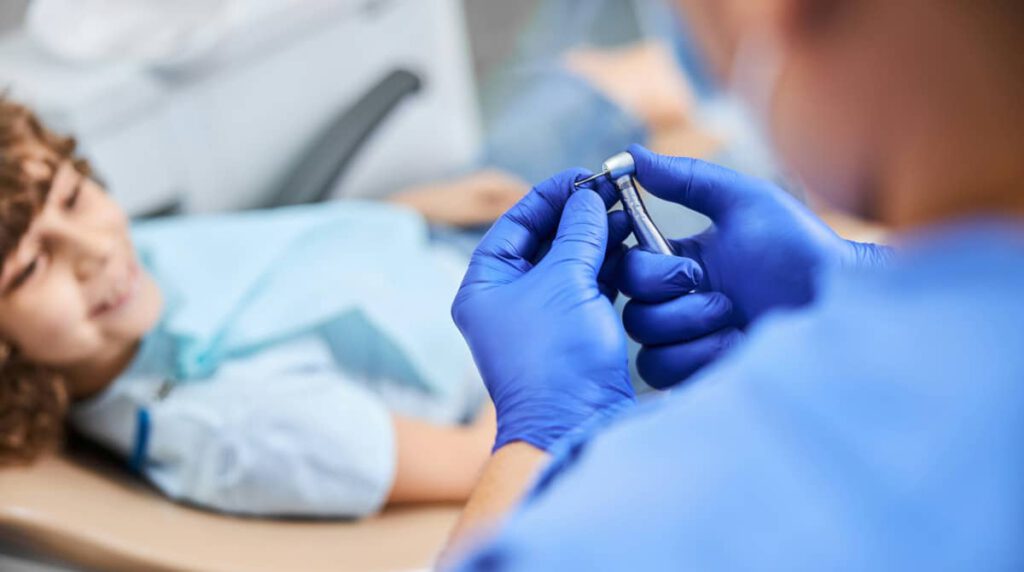
Intraoral photographs are taken and, in many cases, a panoramic X-ray is taken to visualise teeth that have not yet erupted. Parents are given a clear explanation of the current situation and the options available.
Treatments for crooked teeth in children
Treatment depends on the child’s age, the stage of tooth replacement and the cause of the problem. At Udemax Clinics, we divide paediatric orthodontics into three categories: preventive, interceptive and corrective.
Preventive and interceptive orthodontics in early childhood
- Preventive orthodontics: Regular check-ups from the age of 3–4, without braces, to monitor growth and habits.
- Interceptive orthodontics: Treatments for children aged 6–10 that guide bone growth and create space.
The interceptive appliances we use include palatal expanders (capable of widening the palate by 5–8 mm), functional appliances for mandibular advancement, and removable plates with expansion screws. These treatments take advantage of natural growth and are usually shorter in duration than orthodontic treatment for teenagers.
Metal and aesthetic braces for children
Traditional braces remain highly effective for crowding and moderate to severe malocclusions, with success rates exceeding 95%. Metal and aesthetic options (ceramic or sapphire) are available for those who prefer a more discreet solution.
The typical age for fitting braces is between 11 and 14, when most of the permanent teeth have already come through. At Udemax Clinics, we explain to the child how to look after their braces, which foods to avoid, and the correct brushing techniques.
Clear aligners for children and teenagers
Invisible braces are a modern alternative that is particularly popular with teenagers. The advantages are clear: they are almost invisible, can be removed for eating and brushing, and make oral hygiene easier.
Not every case is suitable. At Udemax Clinics, we assess each situation using digital models and 3D planning. The child’s cooperation—wearing the appliance for 18–22 hours a day—is key to success.
Space maintainers: preventing teeth from shifting out of position
When a milk molar is lost prematurely due to tooth decay or trauma, a space maintainer preserves the space for the permanent tooth. These can be fixed (cemented in place) or removable, and are made to measure.
Children get used to it quickly, and at Udemax Clinics we carry out regular check-ups to adjust or remove the braces when they are no longer needed.
Can crooked teeth in children be prevented?
We cannot change our genetics, but we can reduce many risk factors through good habits and regular check-ups. Prevention relies on proper oral hygiene, a diet that encourages chewing, limiting the use of dummies and thumb-sucking, and regular check-ups with the dentist.
Daily habits and diet
- Limit the use of a dummy until the age of 2 and stop using it completely before the age of 3
- Prevent thumb-sucking by offering alternatives (a soft toy, a transitional object)
- Introduce foods that require chewing from the age of 2–3: whole fruit, suitable raw vegetables, crusty bread
- Avoid using bottles for longer than the recommended age
Oral hygiene and regular check-ups in Mallorca
Brushing should begin as soon as the first tooth appears and become a regular habit twice a day from the age of 2. Use fluoride toothpaste in quantities appropriate for the child’s age (1000 ppm up to the age of 3, 1450 ppm thereafter).
Regular dental check-ups every 6–12 months enable the early detection of tooth decay, gaps in the teeth and oral diseases. At Udemax Clinics, we provide a child-friendly environment, with clear explanations and a warm, welcoming approach to ensure children feel at ease.
Coordination with other specialists (paediatrician, ENT specialist, speech therapist)
Some bite problems are linked to chronic mouth breathing, allergies or enlarged tonsils and adenoids. 25% of cases of a narrow palate are linked to these factors.
Where we deem it necessary, we recommend an assessment by a paediatrician or ENT specialist, and sometimes we work in collaboration with a speech and language therapist. This interdisciplinary approach improves the orthodontic outcome and the child’s overall health.
When to visit Udemax Clinics in Mallorca
Crooked teeth are common in children — up to 70–80% have some degree of misalignment — but there is almost always a solution. Timing is key: taking action during the growth stages leads to shorter treatment times and better results.
The key milestones are: the first dental check-up before the age of one, regular check-ups every 6–12 months, and the first orthodontic assessment between the ages of 6 and 7, or earlier if there are any warning signs.
If you have any concerns about your child’s teeth, there’s no point in waiting. Book an appointment at any of our Udemax clinics in Palma. During the consultation, we’ll address your specific concerns, explain the treatment options and map out a plan for a straight smile and a healthy mouth.
Your child deserves to smile with confidence. At Udemax Clinics, we’re here to help.