How do you floss?
En este artículo
- What is dental floss and what exactly does it do in your mouth?
- Types of dental floss: how to choose the right one
- How to floss, step by step
- When and how many times a day should you floss?
- Should you floss before or after brushing?
- How to floss if you have braces, implants or crowns
- Common mistakes and advice from our dentists in Mallorca
At Udemax Clinics, we see cases of interdental cavities and gingivitis caused by a failure to floss on a daily basis. The figures speak for themselves: over 30–40% of the tooth surface remains uncleaned if you only use a toothbrush. Flossing is just as important as brushing when it comes to preventing cavities, periodontal disease and bad breath.
In this article, we explain step by step how to floss, how many times a day, the different types available, and how to adapt your flossing routine if you have braces, implants or crowns. All our recommendations are based on our clinical experience in Mallorca and on up-to-date dental guidelines.
What is dental floss and what exactly does it do in your mouth?
Dental floss is a thin strand of nylon or PTFE designed to clean between teeth and below the gum line, areas that a toothbrush cannot reach.
Dental plaque is a sticky film of bacteria that forms within minutes after eating. It tends to build up in the narrow spaces between the teeth. Flossing breaks it up and removes it, along with any food debris trapped in those spaces.
Problems it helps to prevent:
- Tooth decay between the teeth
- Gingivitis and early-stage periodontitis
- Bad breath of interdental origin
- Tartar build-up
During routine check-ups at Udemax, we have noticed more bleeding and tartar build-up between the teeth in people who do not floss regularly.
Types of dental floss: how to choose the right one
There isn’t just one ‘best’ type of dental floss; rather, there is the most suitable one for each person’s mouth. Your dentist or dental hygienist at Udemax can recommend a specific type after assessing your interdental spaces, gums and dentures.
Classic dental floss (round)
A thin, round floss, the most common type found in pharmacies. It is available in waxed (which glides more easily between crowded teeth) and unwaxed (which removes more plaque due to its rough texture) varieties.
- Ideal for narrow interdental spaces
- Fluoride-containing versions strengthen tooth enamel
- Flavours such as mint help people stick to the habit
- Recommended as a starting point for adults without dentures
Dental floss (flat and wider)
A wider band that distributes pressure more evenly across the gum tissue. Particularly useful for:
- Wide interdental spaces
- Patients following periodontal treatment
- Sensitive gums that bleed at first
- Young people trying thread for the first time
It breaks less easily and removes more plaque with every stroke.
Special dental floss (such as Superfloss and similar products)
It consists of three sections: a rigid tip (like a needle), a spongy section and a conventional section.
Section | Function |
|---|---|
Rigid end | Passing under orthodontic arches or bridges |
Spongy part | Cleaning around implants |
Conventional thread | Standard interdental cleaning |
It reduces the risk of peri-implantitis and is essential in fixed orthodontics.
Things to consider when choosing dental floss
Personal preference plays an important role, as fresh flavours can make it easier to get into the habit of flossing. For very crowded teeth, it is recommended to use very fine, waxed floss to make it easier to manoeuvre between tight spaces. However, it is essential to emphasise that regularity and correct technique are more important than the type of dental floss used, especially in patients with periodontal disease and gum problems. To find the most suitable option, it is advisable to consult a professional at Udemax Clinics, where a hygienist can help you try out different alternatives and choose the one that best suits your needs.
How to floss, step by step
This is the main section. Follow these steps tonight in front of the mirror to complement your professional dental cleaning.
Preparing the thread: correct measurement and securing
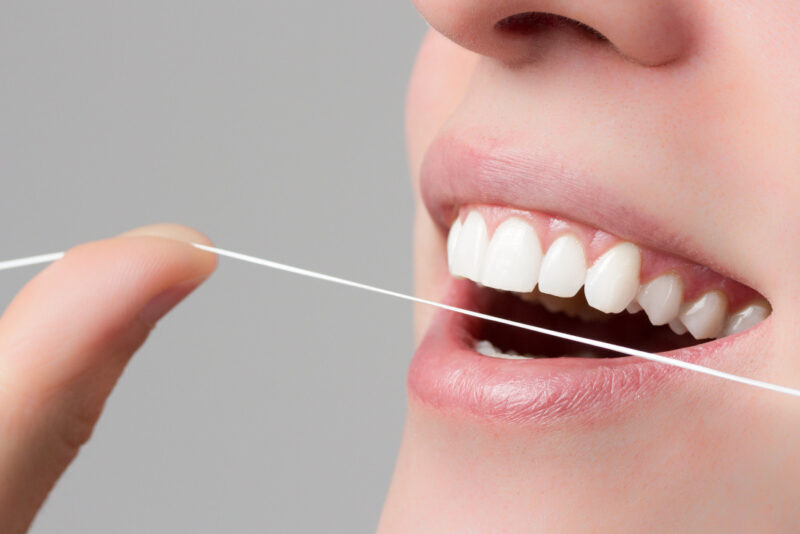
- Cut about 45 cm of thread (from the shoulders to the hand)
- Wrap most of it around the middle finger of one hand
- Wrap the rest around the middle finger of your other hand, leaving 3–5 cm free
- Tension using your thumbs and index fingers for precise control
- Clean hands before you start
Technique between the front teeth (incisors and canines)
Gently guide the floss back and forth until it passes the point of contact. Once inside, curve the floss into a ‘C’ shape so that it wraps around each tooth, and slide it up and down to the gum line. Gently slide it slightly beneath the gum line without forcing it, as if it gets caught, this may indicate that your fillings need checking.
How to clean your back teeth (molars and premolars) properly
Food particles tend to get stuck between your molars. Use your index fingers instead of your thumbs for better access.
- Wrap it around each molar in a “C” shape
- Cleans the inside and outside (two walls per space)
- Spend more time: here we see more interproximal caries in Udemax
Replace the section of thread and finish cleaning
As you go along, unroll a clean length of thread from one finger and wind the used thread around the other. Always using a clean section prevents the spread of bacteria.
The whole routine shouldn’t take more than 3–4 minutes. Rinse with water or mouthwash when you’re finished.
When and how many times a day should you floss?
Consistency is more important than frequency. We recommend using it at least once a day, preferably in the evening when saliva flow decreases. It is normal for the gums to bleed slightly for 3–7 days at the start. This improves with continued use in 80% of cases of gingivitis.
For patients undergoing orthodontic treatment, with dental implants or suffering from periodontal disease, daily use is essential as part of a good preventive dental care routine for a healthy smile.
Should you floss before or after brushing?
Many dental professionals recommend flossing before brushing. By flossing first, you remove plaque and debris that the toothbrush can then remove more effectively with toothpaste.
Suggested routine:
- Dental floss
- Brushing for 2 minutes
- Rinse with an alcohol-free mouthwash
The key is to establish a set routine to make it a habit.
How to floss if you have braces, implants or crowns
At Udemax, we treat many patients for whom traditional dental floss is not sufficient. Poor interdental hygiene increases the risk of tooth decay around braces and peri-implantitis.
Flossing with fixed braces
Braces trap up to five times more plaque. Use a floss threader or Superfloss:
- Pass the rigid end under the metal arch
- Pull until the thread is on both sides of the tooth
- Clean using a standard ‘C’ shape
- Do this after every meal, especially after a high-fibre meal
Use in combination with interdental brushes for larger areas.
Dental floss around implants, crowns and bridges
Dental implants require careful cleaning to prevent peri-implantitis. Floss with a spongy texture cleans more effectively around the neck of the implant.
- Run the rigid section under the bridge
- Run the spongy part along the base
- Avoid sudden movements involving excessive force
- Regular dental check-ups at Udemax Clinics assess the health of the tissue
Alternatives if you find flossing too difficult
If you have limited manual dexterity or vision problems:
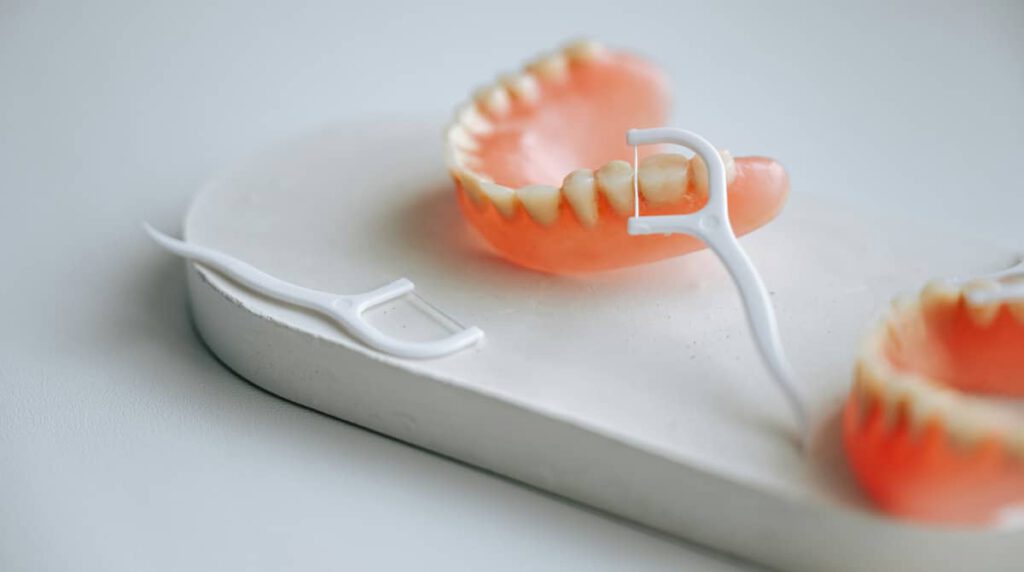
- Thread holders: plastic arches with integrated thread
- Interdental brushes: useful in wide spaces
- Oral irrigators: an excellent addition, but not a complete substitute
Check with Udemax to see which package suits your needs.
Common mistakes and advice from our dentists in Mallorca
Common mistake | Consequence | Solution |
|---|---|---|
Sudden side-to-side movement | Gum lesions | Gentle rocking motion |
Use the same piece of thread | Redistribute bacteria | Refresh clean segment |
Brush just a few teeth | 40% of the area overlooked | Cover the whole mouth |
Rolling it too tightly | Ischaemia in the fingers | Moderate tension |
Initial bleeding is usually caused by existing gingivitis, not by the floss itself. It improves within 1–2 weeks with the right technique.
Would you like to master the technique? Book a hygiene appointment at Udemax Clinics for a personalised demonstration. Looking after your smile is key to your daily oral health.