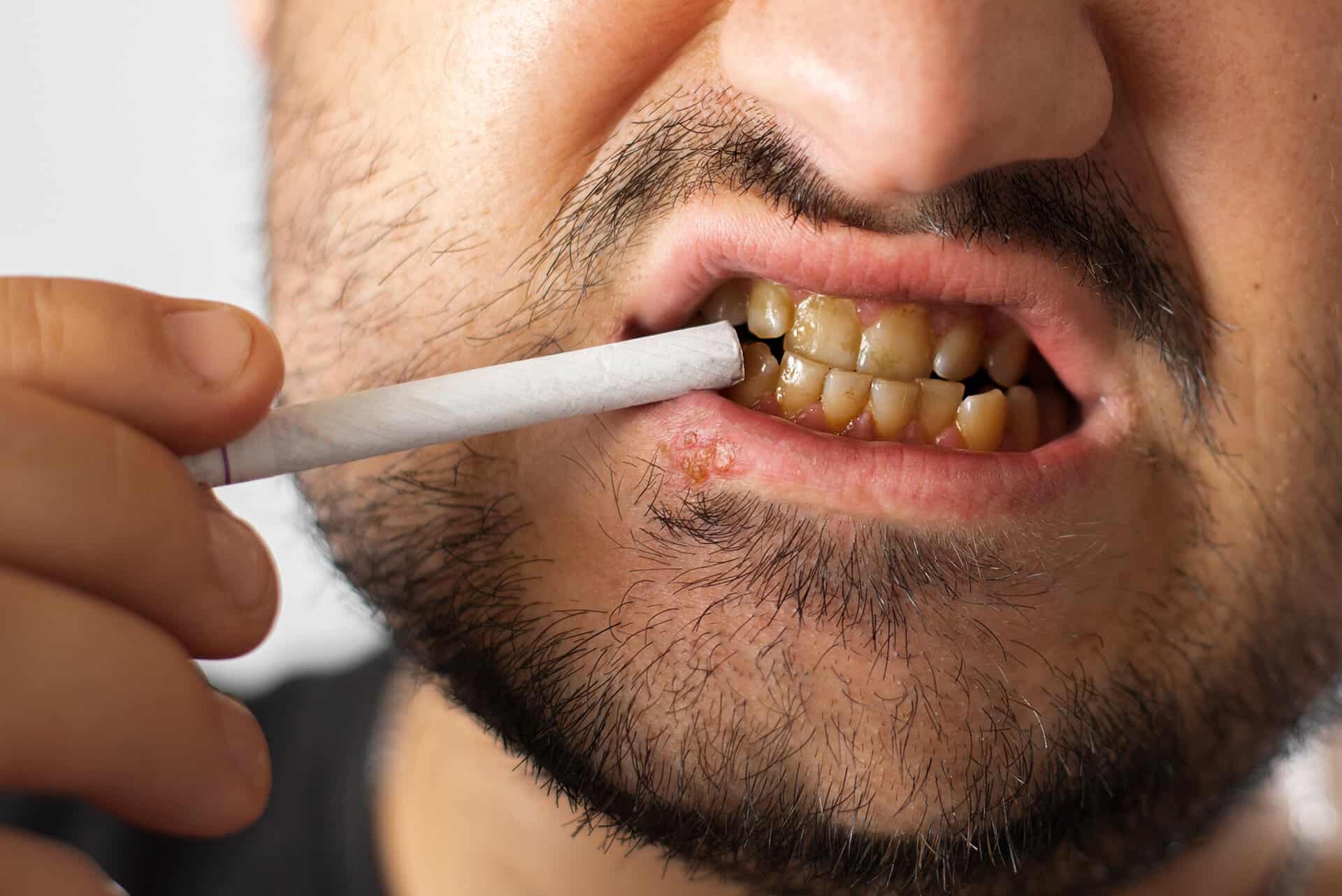
Do you really know how to brush your teeth?
En este artículo
- What is the correct way to brush your teeth?
- Modified Bass brushing technique: the one most recommended by dentists
- Other toothbrushing techniques: Stillman, Charters and Fones
- How to brush your teeth step by step (quick guide for patients)
- Toothbrushing for children: technique and parental support
- Manual or electric toothbrush: which one to choose and how to use it properly
- Habits that complement the technique of brushing your teeth
- Common mistakes when brushing your teeth (and how to avoid them)
- Your personalised brushing technique at Udemax Clinics
At Udemax Clinics in Palma de Mallorca, we see oral health problems every day that could be prevented with proper brushing technique. Bacterial plaque is the main cause of tooth decay, gingivitis and periodontal diseases such as gingivitis and periodontitis, and removing it depends more on how you brush than on how long you spend doing so. This article offers a practical guide to the techniques most recommended by our dental team.
What is the correct way to brush your teeth?
Brushing technique is defined as the set of specific movements of the toothbrush, combined with the angle at which the bristles are held, the duration of the procedure and the frequency of daily brushing, and is one of the cornerstones of preventive dentistry for maintaining a healthy smile. It is not enough simply to brush your teeth quickly: the way you move the brush makes all the difference to the health of your gums and teeth.
A good technique should clean:
- The tooth-gum junction (gingival line)
- The outer and inner sides
- The chewing surfaces
The ideal method varies depending on age, manual dexterity, and whether the patient has braces, implants or periodontal problems.
Modified Bass brushing technique: the one most recommended by dentists
The modified Bass technique is the gold standard in modern clinics such as Clínicas Udemax. It involves holding the toothbrush at a 45° angle to the tooth, with the bristles penetrating slightly into the gingival sulcus.
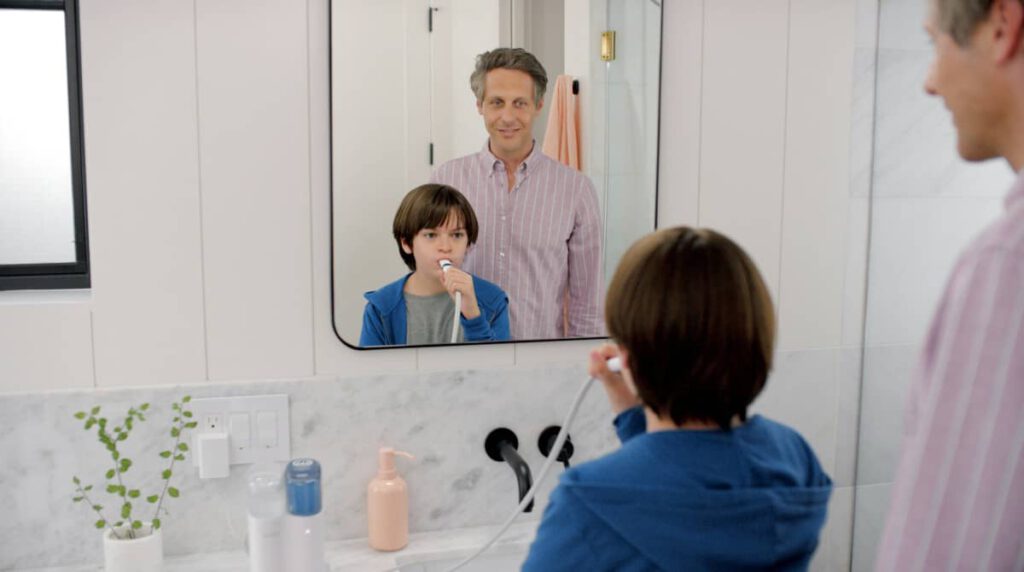
Steps for performing the modified Bass technique
- Hold the brush at a 45-degree angle towards the gums, covering two or three teeth
- Perform short vibrating movements (less than 1 mm) for 10–15 seconds
- It moves forward tooth by tooth without rubbing or dragging
- Brush the outer surfaces first, then the inner surfaces (holding the brush almost vertically for the incisors)
- Finish by chewing with back-and-forth movements
Total duration: 2–3 minutes, twice a day. The evening session is essential because saliva production drops by 70% whilst you sleep, and it is advisable to combine this with regular professional dental cleaning to keep your gums healthy.
Practise in front of the mirror to begin with, and ask your dentist at Clínicas Udemax to check your technique during your appointment.
Other toothbrushing techniques: Stillman, Charters and Fones
No single method works for everyone. During our regular check-ups, we tailor our approach to each individual case.
The Stillman brushing technique
Similar to Bass, but with the brush positioned 2 mm further up the gum line. It incorporates gentle vibrating pressure that massages the gum tissue. Ideal for people with healthy gums who are looking to prevent gum disease. The inner surfaces are cleaned by holding the brush almost vertically and using small circular movements.
Charters brushing technique
Useful for patients with fixed braces, bridges or wide gaps between teeth. The bristles are positioned at a 45° angle, pointing towards the crown. The vibrating motion allows the bristles to reach around brackets and into the spaces between teeth. It is often used in combination with interdental brushes.
Fones brushing technique (horizontal)
A simple technique for children and people with limited manual dexterity:
- Teeth in occlusion (biting)
- Perpendicular brush (90°)
- Wide circular or horizontal movements
- The mouth is divided into 6 zones, each with 10–15 movements
It is useful as a learning technique before moving on to modified bass.
How to brush your teeth step by step (quick guide for patients)
Divide your mouth into quadrants and spend about 30 seconds on each one:
Brushing of external and internal surfaces
- Start in the top right-hand corner
- External surfaces: short sweeping motion from the gum towards the tooth
- Internal surfaces: combine sweeping and vertical positioning on the incisors
- Light pressure: if the bristles bend, you’re pressing too hard
- Follow a set order so you don’t miss any areas
Brushing of molars and chewing surfaces
The back teeth are the most prone to tooth decay as they are difficult to reach. Use short back-and-forth strokes along the grooves, tilting the brush slightly to reach the inner surfaces of the lower molars.
Cleaning the tongue and hard-to-reach areas
The tongue accumulates bacteria that cause bad breath. Brush it from back to front without applying too much pressure. For patients with halitosis, at Udemax Clinics we recommend specific tongue cleaners to remove the whitish coating (tongue coating).
Toothbrushing for children: technique and parental support
Brushing should begin as soon as the first tooth appears. Until the age of 6–7, an adult should carry out or finish the brushing.

0–3 years: starting to get used to the toilet and finding a comfortable position
- Initial cleaning with a damp cloth or silicone cleaning tool
- Adult standing behind, child’s head resting on their lap
- Fones-style exercises to build positive habits
- Fluoride toothpaste: a “grain of rice”-sized amount (1000 ppm fluoride)
Ages 3 to 6: learning the technique through play
- Teaching circular movements in front of the mirror
- Adults always revise at the end
- Use 2-minute songs or hourglasses
- Toothpaste: a pea-sized amount
From 6–7 years old: supervised independence
Modified Bass brushing can be taught more effectively. Supervise evening toothbrushing until the age of 10–11. Ensure annual check-ups with the paediatric dentist and consider sealants for the first permanent molars.
Manual or electric toothbrush: which one to choose and how to use it properly
With the right technique, both are effective. According to Cochrane reviews, oscillating-rotating electric toothbrushes remove up to 21% more plaque, but it is essential to attend regular dental check-ups to ensure that your oral hygiene routine is truly effective.
How to use a manual toothbrush correctly
When choosing a suitable toothbrush, it is advisable to opt for soft or medium-firm bristles to avoid damaging the gums. The brush head should be small to allow easy access to all areas of the mouth. It is important to replace your toothbrush every three months to ensure it remains effective. Furthermore, the brush should be held at a 45° angle using the Bass technique to clean the area where the tooth meets the gum properly.
How to use an electric toothbrush correctly
The movement is controlled by the brush head. Simply guide it along the teeth without applying too much pressure. The built-in timers (30 seconds per quadrant) help you maintain a thorough brushing routine.
Habits that complement the technique of brushing your teeth
Brushing doesn’t reach every nook and cranny. Comprehensive prevention includes flossing and professional care.
Interdental cleaning: dental floss and interdental brushes
- Floss or dental floss daily, ideally in the evening
- Interdental brushes for wide spaces or periodontitis
- Insert gently and move back and forth without using force
Use of mouthwashes and fluoride products
Mouthwash complements but never replaces brushing. Do not rinse with water afterwards, so as not to dilute its effect. There are anti-caries and anti-plaque formulas, as well as alcohol-free options for sensitive gums.
Common mistakes when brushing your teeth (and how to avoid them)
Error | Consequence | Solution |
|---|---|---|
Brushing < 2 minutes | It leaves behind 40–70% of plaque | Use the timer |
Skip the evening | Doubles the risk of tooth decay | Prioritise the evening session |
Excessive pressure | Gingival abrasion and recession | Soft bristles, Bass technique |
Ignore the gum line | Build-up of debris and limescale | 45° angle towards the gum |
Do not change the brush | Reduces effectiveness by 50% | I change it every three months |
Bleeding gums are a sign of inflammation, not that the cleaning is causing any harm. Consult your dentist if it persists.
Your personalised brushing technique at Udemax Clinics
Your brushing technique is just as important as how often you brush and the type of toothbrush you use. We invite you to review your current brushing routine and ask for a personalised demonstration during your next visit to one of our Udemax clinics.
With good daily oral hygiene and regular professional check-ups, including treatments such as fillings to treat tooth decay at an early stage, most of the issues we deal with at the clinic can be prevented. If you’re in Mallorca, book an appointment for a check-up and advice on oral hygiene; we’re here to ensure your mouth is always in the best possible condition.