Baby teeth: when they come through and how to look after them
The eruption of baby teeth is a challenging process for a baby, and in this blog we provide everything parents need to know about baby teeth. It often causes irritability and other symptoms, but it is vital to pay attention to oral health from the very start, as the eruption of baby teeth is essential and necessary for their development. Therefore, to help them through this process, parents can learn about the importance of these teeth and how to soothe their little ones and help them maintain optimal oral health from such an early age; this blog answers all the frequently asked questions about the teething process and how to care for their teeth.
What you need to know about your child’s teething process
- When does teething start and how long does it last?
- What symptoms do babies experience during a rash?
- How can I relieve the discomfort caused by teething?
- What is the purpose of baby teeth?
- How should you look after your baby teeth properly?
- How many milk teeth does a child have, and how are they distributed in the mouth?
When does teething start and how long does it last?
The truth is that, although teeth begin to form in the womb between the 6th and 8th week of pregnancy and settle beneath the gum line, they do not erupt straight away; instead, each one emerges at a different stage of development.
Teething, as we know it, begins around 6 months of age with the eruption of the first milk teeth, which are usually the lower central incisors, between 6 and 10 months, followed by the upper central incisors, which generally emerge around 9 months. This natural sequence continues with the appearance of the lateral incisors and, at around 15 months, the first upper and lower molars usually emerge, thus completing a set of 20 teeth.
As a general guide, these milk teeth have fully erupted by around 2½ to 3 years of age and will begin to fall out again, making way for the permanent teeth to erupt at around 6 years of age. The order in which they fall out follows a similar pattern to that of eruption, and the child will have a mixed dentition until around the age of 12.
On the other hand, if the baby has not yet had any milk teeth come through by the age of one, it is important to visit the dentist for an assessment, such as an appointment with a paediatric dentist, who will be able to assess the child’s oral health.
What’s more, dentists can often help and advise parents on the eruption of their child’s first milk teeth, and on how to ease the symptoms and support them through the process so that they don’t suffer too much.
What symptoms do babies experience during a rash?
As is often the case, during this teething period, babies will experience discomfort associated with the eruption of their teeth. Some of the most common symptoms they may display—which can occur individually or simultaneously—are:
- Putting objects or their hand to their mouth to apply pressure to the area of the gum that is causing them discomfort.
- Increased saliva production, which can irritate the area around the mouth and lead to infections.
- Increased redness or swelling of the gums. In addition to sensitivity, the gums feel hard.
- A loss of appetite caused by gum discomfort, which leads them to refuse food.
- Increased irritability, with occasional crying, and even sleep disturbances.
- In some cases, they may experience a moderate fever or feel slightly feverish, which does not usually last long. However, if a high fever or severe symptoms develop, this is not normal and you should consult a healthcare professional.
How can I relieve the discomfort caused by teething?
Unfortunately, teething is a painful process. Little ones feel uncomfortable and irritable, and experience the symptoms mentioned above. Parents can also find themselves getting flustered, especially if they don’t know how to help their child. Here are some practical tips to help your child through this stage:
- Gently massage the gums with a damp piece of gauze.
- Apply a cold compress to the area or use a teething ring.
- Use teething rings and even apply cold compresses to the area.
- Wipe away saliva to keep your mouth free from irritation.
- Use specific gels and creams, following medical advice.
What is the purpose of baby teeth?
Although they are temporary, milk teeth—or deciduous teeth—are essential for the development of growing children. In fact, their importance goes far beyond simply being temporary teeth. As well as enabling children to chew food, which marks the transition from a liquid diet to a more solid one, these teeth serve other important physical and social functions.
A key point is that baby teeth are essential for a child to learn to pronounce sounds and words correctly. As you have probably already guessed, these temporary teeth are vital for speech, as they play a part in the articulation of certain phonemes. In other words, the process of speech production would not be complete without them, as certain sounds could not be pronounced.
Furthermore, the eruption of milk teeth serves another functional purpose: it enables the development and strengthening of the jawbones. Furthermore, baby teeth help maintain the space required for the eruption of permanent teeth, which is crucial for correct dental alignment in the future. What’s more, the correct eruption of these teeth prevents bite problems as they act as a guide for the permanent teeth.
Looking after baby teeth is vital to prevent pain and infections and to ensure there is enough space for the permanent teeth. For these reasons, looking after young children’s oral health is also essential. The health of baby teeth can affect the development of permanent teeth; problems such as decay in baby teeth can have a negative impact on a child’s future dental health. Without the proper development of baby teeth, not only is their overall development affected, but the permanent teeth may also develop certain problems.
5. How should you look after your baby teeth properly?
As baby teeth will determine the future dental arch once permanent teeth come through, and during a child’s development they enable chewing and speech, it is essential to pay attention to their care from the very start. Dental hygiene should begin even before the first teeth appear, by cleaning the gums with a damp gauze pad. Once the first tooth erupts, it is essential to maintain good oral hygiene and establish a daily brushing routine, as this prevents future problems. The first visit to the paediatric dentist is recommended before the child’s first birthday or when the first tooth appears, so that the youngest patients receive specialist care and parents can have their common questions about the care of milk teeth answered.
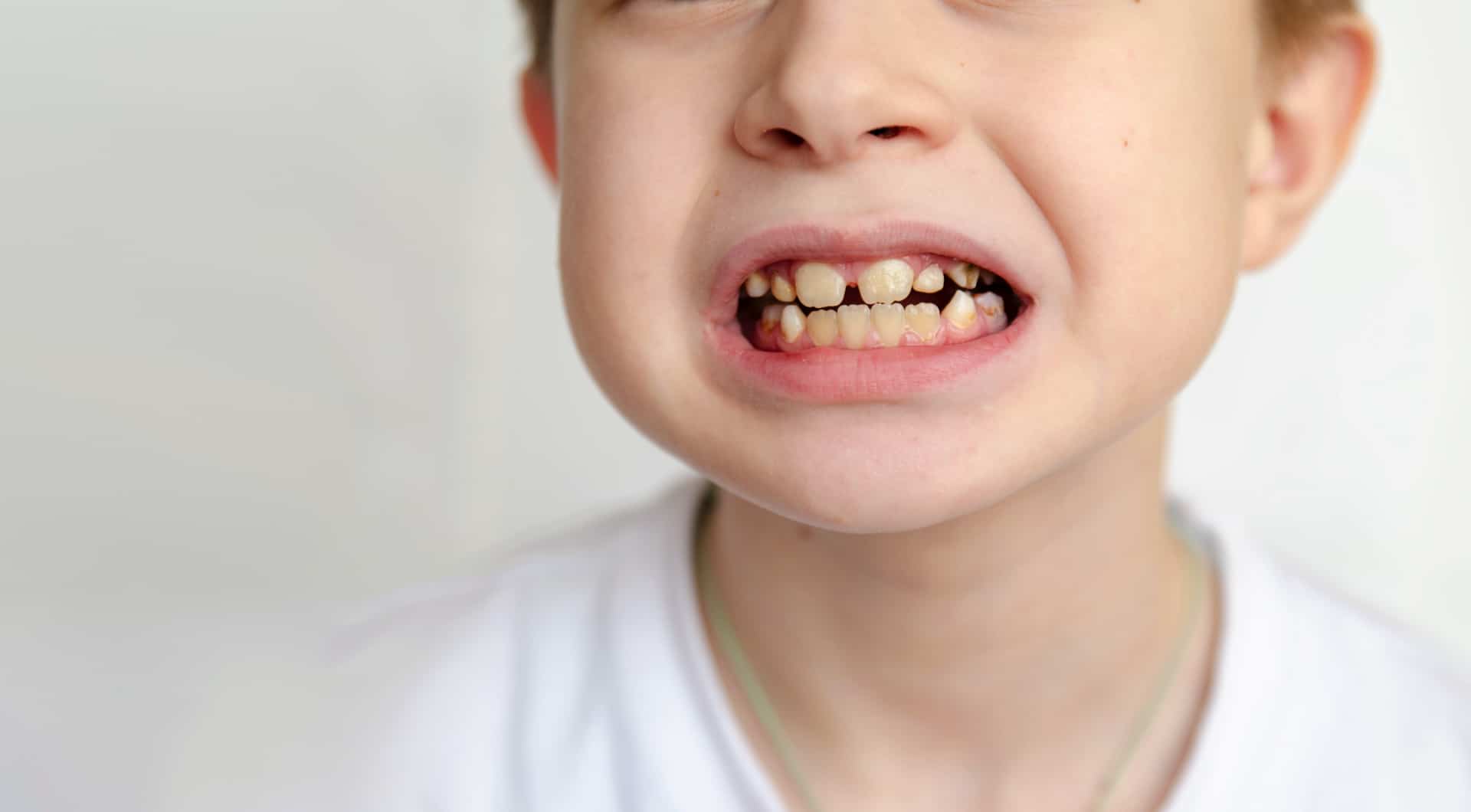
Furthermore, limiting the consumption of sugary foods and fizzy drinks is essential for preventing tooth decay in milk teeth. The premature loss of these teeth can be caused by tooth decay, an unbalanced diet or blows to the mouth, and this can lead to crowded teeth in the future. Dead milk teeth may turn dark due to an impact affecting their nerve, although this change is not always immediate. It is important not to force the loss of a loose baby tooth to avoid damaging the gum or developing tissue. Therefore, to care for baby teeth properly, it is necessary to:
Proper oral hygiene.
Even before the first teeth appear, you can start cleaning your baby’s mouth to remove any build-up of bacteria on the gums. You can carry out this type of oral hygiene using a damp piece of gauze or a special finger cot.
Once their teeth start to come through, you should start using a special baby toothbrush with very soft bristles to gently clean their teeth and get your baby used to this important routine, which will lay the foundations for their future oral health.
You can use toothpaste in small amounts, provided it is suitable for your child’s age and they have learnt to spit it out. If you’d like to find out more about how to clean your child’s teeth, take a look at our article on children’s oral hygiene.
Routine inspections.
Furthermore, in addition to good oral hygiene, it is essential to visit the dentist for regular check-ups, as this allows for the early detection of problems with milk teeth and the assessment of a child’s oral development. The enamel on milk teeth is thinner and more porous than that on permanent teeth, which means that tooth decay is more common and develops more quickly. It is important to treat cavities in baby teeth to prevent them from affecting the developing permanent teeth, resorting where necessary to conservative treatments such as pulpectomies in children.
These conditions also tend to develop at a young age, and tooth decay and gum disease in particular can be very aggressive; as a result, in some cases an assessment by specialists in paediatric and adolescent periodontology is required. Therefore, through regular check-ups and professional cleanings, it is possible to maintain the good health of milk teeth.
Interceptive orthodontics.
Although it is not always considered necessary, in some cases the paediatric dentist may notice during a check-up that the development of the jawbones, the dental arch or the position of the teeth does not follow the natural sequence of eruption and loss of milk teeth. In such cases, paediatric orthodontic treatment would be recommended.
Interceptive orthodontics, which can be carried out from the age of 6, is a treatment that helps prevent problems with bite, tooth alignment and jaw development during the growth phase. It is particularly important to monitor the order in which both baby teeth and molars appear and fall out, as molars usually erupt between 12 and 30 months and fall out between the ages of 10 and 12, playing a vital role in chewing and dental occlusion. This helps to avoid the need for orthognathic surgery in adulthood.
Number and types of baby teeth
Children have a total of 20 milk teeth, distributed equally between the upper and lower jaws: 10 in the upper jaw and 10 in the lower jaw. These primary teeth include the upper and lower central incisors, the upper and lower lateral incisors, the canines, and the upper and lower molars. The eruption of milk teeth follows a specific pattern that generally begins with the lower central incisors at around 6 months of age. As the process progresses, the other types of teeth appear, allowing babies to start chewing solid foods and ensuring the correct development of their mouth. The presence of these teeth is essential for chewing, the development of the jawbones and the correct pronunciation of sounds. Furthermore, each type of milk tooth fulfils a specific function in children’s mouths, ensuring that the feeding process and oral development take place properly from the first months of life.
Differences between milk teeth and permanent teeth
Baby teeth have several notable differences compared to permanent teeth. Firstly, baby teeth are smaller and have a slimmer shape, adapted to the mouths of growing children. Their enamel layer is thinner, making them more vulnerable to tooth decay, and their roots are shorter, facilitating their natural shedding when the time comes for the permanent teeth to take their place. Whilst baby teeth are designed to be temporary and to accompany children during their early years, permanent teeth are intended to last a lifetime. Baby teeth are essential for maintaining the necessary space in the mouth and guiding the eruption of permanent teeth, ensuring proper development and preventing future problems with alignment or spacing. Therefore, although they are small and temporary, baby teeth play a vital role in children’s oral and overall development.
Myths and frequently asked questions about baby teeth
There are numerous myths and concerns surrounding baby teeth that often worry parents. One of the most widespread myths is the belief that baby teeth do not require care because ‘they’re going to fall out anyway’. However, the reality is that the health of baby teeth is key to preventing complications such as tooth decay, infections or problems with the eruption of permanent teeth. Another common question is when baby teeth come through: the eruption process usually begins around 6 months of age and is complete by around 3 years, although every child develops at their own pace. It is important to remember that tooth eruption can vary and that, if you have any concerns about your child’s oral development, it is best to consult a paediatric dentist. Maintaining good hygiene and caring for baby teeth helps prevent problems and ensures a healthy smile in the future. Do not underestimate the importance of these temporary teeth: their proper development is the foundation for a healthy mouth throughout life. Do not forget that for specialised and personalised care, you can visit the Udemax clinics in Mallorca, where our professionals will help you maintain your child’s oral health from the very first tooth.