Types of dental crowns: a practical guide to choosing the best option in Mallorca
En este artículo
- Key conclusions
- What is a dental crown and when is it used?
- Types of dental crowns by material
- Which type of dental crown is best for each tooth?
- The process of fitting a dental crown at Udemax Clinics
- Care and lifespan of dental crowns
- Dental crowns in Mallorca: why choose Udemax Clinics
- Frequently asked questions about types of dental crowns
Choosing between the different types of dental crowns can be confusing if you don’t know the actual differences between materials, lifespan and price. In this article, we explain each available option, when each one is recommended and what the fitting process is like at our dental clinic in Mallorca, so that you can make an informed decision about your oral health.
Key conclusions
- A dental crown (also known as a cap) is a fixed prosthesis that covers and protects a damaged tooth or an implant, restoring its shape, function and appearance.
- The main types of dental crowns are: metal crowns, metal-porcelain crowns, porcelain (ceramic) crowns, zirconia crowns and resin crowns.
- For molars, high-strength materials such as metal, metal-porcelain or zirconia are recommended; for front teeth, porcelain or zirconia are recommended due to their superior aesthetic qualities.
- With proper care, most crowns last between 10 and 20 years, and some last for more than 25 years, depending on the material.
- At Clínicas Udemax, we assess each case on an individual basis to recommend the most suitable type of crown for each patient in Mallorca.
What is a dental crown and when is it used?
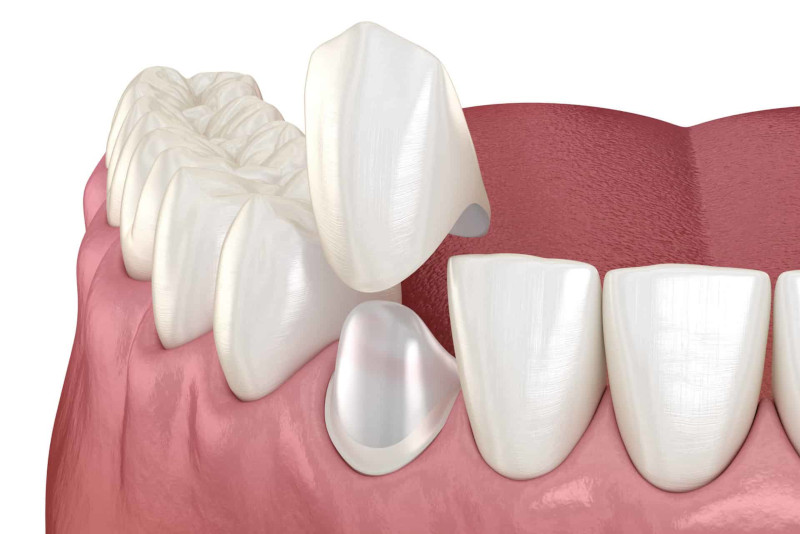
Dental crowns are fixed prostheses that completely cover a damaged tooth, acting as a protective layer that envelops the tooth from the gum line to the chewing surface. They are custom-made to match the bite, colour and shape of the neighbouring teeth. They are also fitted onto titanium implants when a tooth has been lost and both the root and the visible part of the tooth need to be replaced.
The most common reasons for being prescribed a crown are:
- Extensive tooth decay that has destroyed a large part of the tooth’s structure.
- A severe fracture or break in a natural tooth.
- Advanced wear caused by erosion or bruxism.
- Protection following root canal treatment, as crowns protect teeth that have undergone this procedure.
- Placement on an implant to replace a missing tooth.
- Cosmetic improvement of the smile (change in shape or colour).
Dental crowns restore function to teeth weakened by tooth decay or other damage, and are recommended for damaged or weakened teeth that can no longer be supported by a filling alone. A typical case in Mallorca would be that of an adult patient with a heavily restored back tooth who needs a crown to continue chewing safely; the crown is custom-designed to blend in with the rest of their teeth.
Types of dental crowns by material
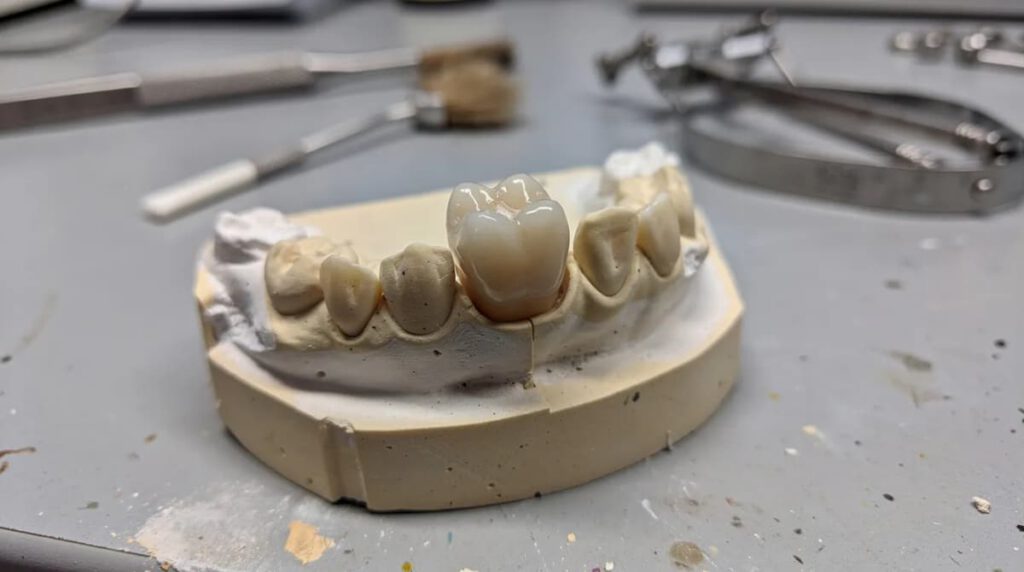
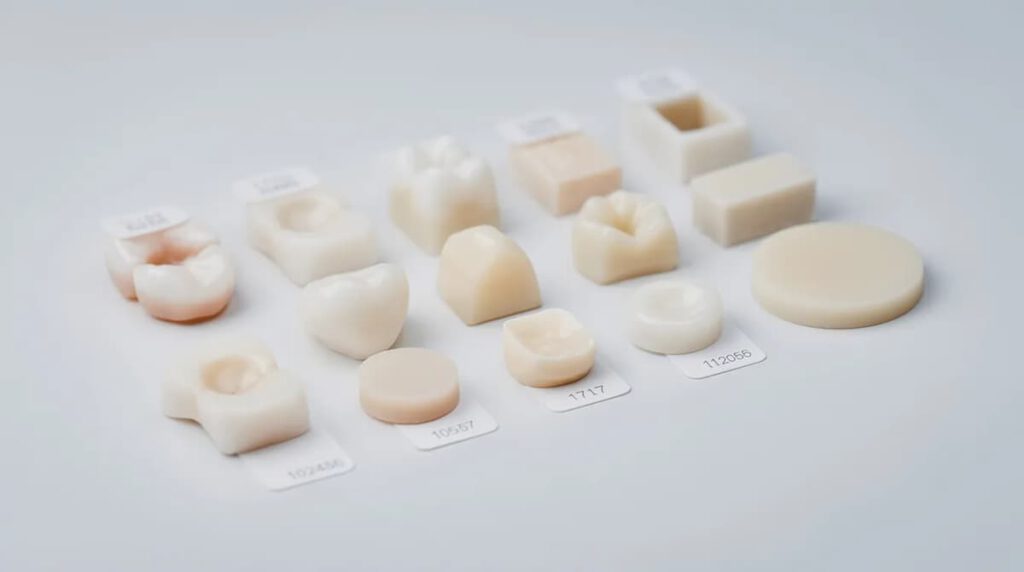
Below, we outline each type of dental crown available. The choice is between metal crowns, metal-porcelain crowns, porcelain (ceramic) crowns, zirconia crowns and resin crowns. Each material strikes a different balance between aesthetics, strength, biocompatibility and cost. In fact, the cost of dental crowns varies depending on the material and the dental practice where the treatment is carried out.
At Udemax Clinics, we explain these differences to patients before they make a decision, because there is no single ‘perfect’ material: it depends on each individual case.
Metal crowns
Metal crowns are made from alloys such as cobalt-chromium or titanium and, less commonly nowadays, from gold. All-metal crowns are very strong but not aesthetically pleasing, which limits their use to the back molars where they are not visible when smiling.
Their main advantage is their exceptional durability: metal crowns are strong and last a long time in the mouth, with an estimated lifespan of 20 to 40 years under favourable conditions. On the downside, their visible metallic appearance makes them unsuitable for the front teeth, and some patients may experience sensitivity or an allergy to certain metals. Their use has declined in cosmetic dentistry in Spain, but they remain a valid solution when functionality and cost are the priority.
Porcelain-fused-to-metal crowns
Porcelain-fused-to-metal crowns combine an internal metal framework with an outer layer of porcelain, giving them a more natural appearance without compromising on strength. Porcelain-fused-to-metal crowns are strong and durable, which is why they have been a very common choice in Spain for over 20 years.
However, they do present a potential aesthetic drawback: metal-porcelain crowns may reveal metal as the gums recede over time, leaving a dark line visible at the gum line. The price of metal-porcelain crowns ranges from €200 to €300 in many clinics across Spain, although in Mallorca the cost is usually around €600, depending on the complexity of the case. Their estimated lifespan is around 10–20 years.
Porcelain crowns (metal-free ceramics)
Porcelain crowns are made from pure ceramic, without any metal core. Porcelain provides a high level of translucency similar to that of a real tooth, and porcelain crowns closely match the colour of natural teeth. Ceramic crowns offer a natural-looking finish, making them the preferred choice for incisors and canines.
However, ceramic crowns are aesthetically pleasing but less durable than other materials. Specifically, porcelain crowns are brittle and not ideal for molars subjected to high chewing forces. Porcelain crowns are usually more expensive than metal ones, with prices ranging from €400 to €900. They are an excellent option for patients with metal allergies or high aesthetic expectations, such as people who work in customer-facing roles in Mallorca. They typically last between 10 and 15 years.
Zirconia crowns
Zirconium (also known as zircon or zirconium oxide) is regarded as the most advanced material due to its strength and aesthetic qualities. Zirconium crowns are biocompatible and highly durable, meaning they can be fitted to both front teeth and molars without compromising appearance or function.
Types of dental crowns include zirconia crowns, available in monolithic (single-piece, ideal for molars) and high-translucency (for aesthetic areas) variants. Thanks to current CAD/CAM milling technologies, these restorations allow for very precise adjustments to the occlusion. Zirconia crowns can cost between €500 and €800, and their estimated lifespan is 15–30 years with proper care. Although they are more expensive than metal-porcelain crowns, the investment is usually justified in the long term due to their durability and lower risk of fracture.
Resin crowns (temporary and permanent)
Resin or composite crowns play a vital role as a temporary solution whilst the permanent crown is being fabricated in the laboratory. Resin crowns are generally used as temporary restorations, although in certain cases they can serve as a cost-effective permanent option.
Their main advantage is the cost: resin crowns cost around €40, and they can be made quickly, even at the dental practice itself. On the other hand, resin crowns are inexpensive but not very durable: their resistance to wear and fracture is limited, and their surface tends to stain when exposed to pigmented foods such as coffee or red wine. Their lifespan as a permanent solution is around 3–7 years, considerably shorter than that of other materials.
Which type of dental crown is best for each tooth?
There is no single ‘best dental crown’. The choice of crown depends on the location of the tooth and each patient’s aesthetic requirements. Below, we outline the key criteria:
- Location of the tooth: anterior (aesthetic priority) or posterior (functional priority).
- Bite force: presence of bruxism or parafunctional habits.
- Desired aesthetic: standards regarding colour, shape and translucency.
- Budget: initial cost versus long-term durability.
The dentist at Clínicas Udemax carries out a personalised assessment – including X-rays, an analysis of the bite and an evaluation of habits – before recommending the most suitable type of crown. These factors determine which material offers the best balance between benefits and the likelihood of long-term success.
Crowns for anterior teeth (aesthetic zone)
For incisors and canines, the priority is to achieve a colour, shape and translucency very similar to those of natural teeth. The first-choice options are porcelain crowns and highly translucent zirconia crowns. Metal-porcelain crowns may also be used, but they are considered with caution due to the potential for a grey line at the gum line in the long term.
In cases involving a very wide smile, the shade and shape are planned using preliminary trials, comparing them with veneers and the rest of the patient’s teeth to ensure a harmonious result.
Crowns for molars and premolars (load-bearing area)
Molars and premolars are subjected to chewing forces of between 90 and 200 Newtons, so strength and durability are paramount. The most common options are porcelain-fused-to-metal crowns and zirconia crowns. All-metal crowns may be useful in specific cases where aesthetics are not a concern. Resin crowns are reserved as a temporary option following tooth preparation.
A practical example: a patient with bruxism needs a robust material that can withstand the same level of load for years; in such cases, monolithic zirconia is usually the best choice due to its combination of strength and acceptable appearance.
The process of fitting a dental crown at Udemax Clinics
Fitting crowns usually requires two visits to the dentist, although in some cases a third appointment is scheduled to check the details. The fitting process can be painless if carried out correctly, as local anaesthetic is used throughout the procedure. Between appointments, the tooth is protected with a temporary resin crown.
First appointment: diagnosis and treatment plan
A full clinical examination is carried out, along with X-rays and, if necessary, intraoral photographs. During this appointment, we assess whether the tooth can be preserved with a dental crown or whether an implant or another solution is preferable. The patient is informed of the recommended type of crown – metal-porcelain, zirconia, all-porcelain or other – along with the quote. At Udemax Clinics, we take into account habits such as smoking, bruxism and diet, as well as aesthetic expectations. If the patient agrees to the plan, the next appointment is scheduled.
Second appointment: preparation, impressions and temporary crown
Local anaesthetic is administered and the tooth is then prepared. Preparing the tooth reduces its size by up to 2 mm to leave sufficient space for the future crown. Impressions are then taken – either traditional or digital using an intraoral scanner – and sent to the prosthetic laboratory.
During this same appointment, the colour of the dental crown is selected by comparing it with the neighbouring teeth, and a temporary resin crown is fitted to protect the tooth and maintain its appearance and function. The patient leaves the clinic with the tooth covered and can carry on with their normal life, following the doctor’s recommendations.
Third appointment: fitting and cementing of the permanent crown
Once the permanent crown has been fabricated, the temporary crown is removed and the new crown is tried in on the tooth or implant. Key aspects are checked, such as the marginal fit to ensure there are no gaps between the crown and the gum, contact with neighbouring teeth, the occlusion to ensure a balanced bite, and the colour and appearance compared to the natural teeth. If everything is correct, the crown is cemented in place using a specialised cement, and minor adjustments are made to prevent the crown from ‘touching’ excessively when the mouth is closed. Finally, aftercare instructions are provided and a follow-up appointment is scheduled.
Care and lifespan of dental crowns
Crowns can last between 10 and 15 years with proper care, and many last longer than that if the patient maintains a rigorous oral hygiene routine and attends regular check-ups. The crown itself does not develop decay, but the remaining tooth and the surrounding gums can become diseased if they are not cleaned properly.
Practical tips for making your crown last longer:
- Brush your teeth and floss or use interdental brushes every day, just as you would with a natural tooth.
- Avoid biting bones, ice or hard objects that could cause a fracture.
- If you suffer from bruxism, wear a bite splint at night.
- Make sure you go for a check-up at your dental practice in Mallorca at least once a year.
- Cut down on smoking and foods that stain easily to maintain an even appearance across your teeth.
Dental crowns in Mallorca: why choose Udemax Clinics
Udemax Clinics has extensive experience in restorations using metal-porcelain, all-porcelain and zirconia crowns. We work with high-quality dental laboratories to ensure a precise fit and a natural appearance in every treatment.
We offer a personalised assessment, financing options for advanced materials and a follow-up maintenance plan that includes check-ups and bite assessments. If you need a dental crown in Mallorca, book an appointment so we can assess which type of crown is best suited to your specific case.

Frequently asked questions about types of dental crowns
Could I be allergic to any type of dental crown?
Yes, although the incidence is low. Some people are allergic to metals such as nickel, which is found in metal or metal-porcelain crowns. In such cases, the solution is to opt for porcelain or zirconia crowns, which are highly biocompatible. At Udemax Clinics, we review each patient’s medical history and, if there is any cause for concern, we arrange allergy tests before selecting the material.
Is it possible to replace an old crown with a more aesthetically pleasing one?
Of course. It is a common option for patients who want to refresh their smile after many years with the same crown. The process involves removing the old crown (for example, a metal-porcelain crown with a dark rim), assessing the condition of the tooth structure and taking new impressions to fabricate a more aesthetically pleasing zirconia or porcelain crown. The dentist will assess whether any preliminary treatment is required, such as a new root canal or tooth reinforcement.
How long will it take me to get used to a new crown?
Most patients settle in within a few days. It is normal to notice a slightly different sensation when biting down until your brain ‘recognises’ the new shape. If you experience persistent discomfort when closing your mouth or chewing, please visit the clinic for minor adjustments to your bite. At Udemax Clinics, we check your bite both at the time of fitting and at your follow-up appointment.
Do dental crowns change colour over time?
Porcelain and zirconia crowns retain their colour very well and their surface stains less easily than that of a natural tooth. Resin crowns, on the other hand, are the most prone to staining from coffee, tea, red wine or tobacco. It is important to bear in mind that, although the material of the crown itself does not change colour, the neighbouring teeth may darken and create a visual contrast; for this reason, prior or complementary whitening is sometimes recommended. Regular professional cleanings help to maintain an even colour.
What happens if a crown breaks or comes loose?
Although it is rare, a crown may fracture or come loose as a result of an injury or from biting into something very hard. In this case, keep the crown if possible and visit the dental practice as soon as possible. Do not try to reattach it at home using glue or household adhesives, as these can damage both the tooth and the gums. At Udemax Clinics, we prioritise these kinds of emergencies to restore the patient’s function and appearance as quickly as possible.
In this section, we answer the most common questions we receive from patients in Mallorca regarding the content of this article, covering topics such as allergies, changes in colour and what to do in an emergency.