Stains on milk teeth: causes, types and treatment in Mallorca
En este artículo
- The essential points
- Why do stains appear on milk teeth?
- Types of stains on milk teeth and what they mean
- White spots on milk teeth: are they always tooth decay?
- Other common causes of stains on milk teeth
- Trauma and discolouration of milk teeth
- How are stains on milk teeth treated at Clínicas Udemax in Mallorca?
- Prevention: how to prevent stains on milk teeth
- Paediatric Dentistry at Clínicas Udemax: our approach
- Frequently asked questions about stains on milk teeth
Stains on milk teeth are a common reason for children aged 0 to 6 to visit the dentist. They can vary greatly in colour, and in each case, the cause determines the necessary treatment. In this article, we explain why they appear, how to tell them apart and what we do at Clínicas Udemax (Palma de Mallorca) to protect your child’s teeth.
The essential points
- Color provides clues: opaque white spots are usually early-stage cavities or enamel defects; black streaks are chromogenic staining (not cavities); and a gray tooth following an impact indicates trauma.
- Superficial stains can be removed with professional cleaning; those caused by cavities or enamel defects do not go away on their own.
- A white spot detected early can be remineralized without a filling.
- Schedule the first visit to a pediatric dentist around age one, and have any spots evaluated even if they don’t hurt.
Why do stains appear on milk teeth?
Milk teeth are usually a uniform white colour, but they can develop stains from the first year of life. The appearance of a stain is a sign that something is happening to the enamel or in the child’s mouth.
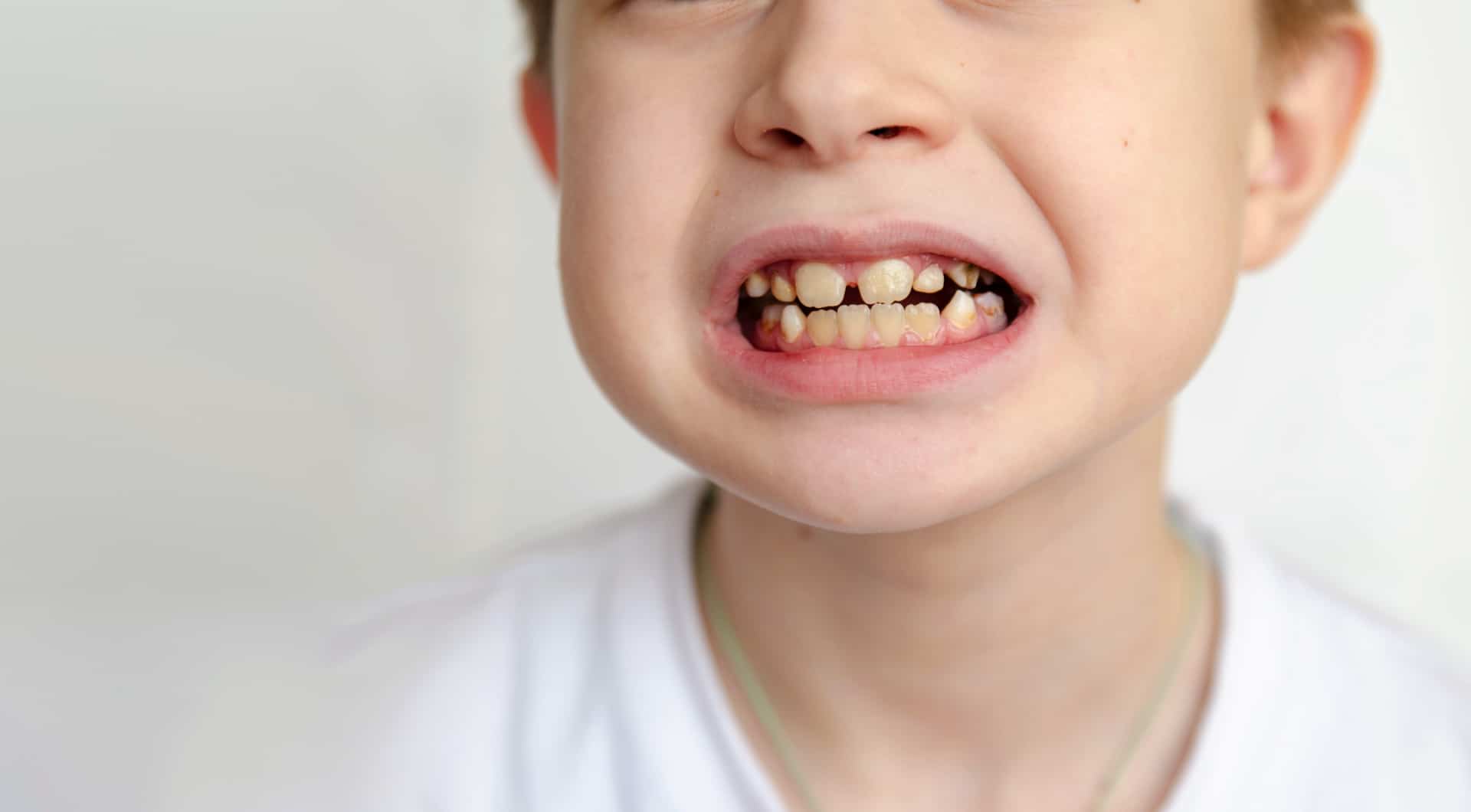
Stains on milk teeth can vary in colour: white, yellow, brown, greyish or blackish. They can affect a single tooth or several teeth, and their causes vary widely. Among the most common are: poor oral hygiene, a diet high in sugar, trauma, medication, excess fluoride and defects in enamel formation. Other causes of tooth discolouration include the build-up of bacterial plaque and tooth decay, which mainly affects growing children.
These should not be ignored as they may indicate early tooth decay, abnormalities in tooth development or problems that will also affect the permanent teeth. In Mallorca, it is common to see mild fluorosis in children who use too much fluoride toothpaste or take supplements without supervision, and bottle tooth decay in babies who fall asleep whilst drinking milk or sugary juices.
If you notice any change in the colour of your child’s teeth, book an appointment with a paediatric dentist at Clínicas Udemax. The first visit should take place by around one year of age at the latest.

Types of stains on milk teeth and what they mean
The colour, location and texture of the stain help to guide the diagnosis. Some are superficial and can be removed during a cleaning appointment. Others indicate tooth decay in milk teeth or a defect in enamel formation that requires treatment.
The table below summarises the most common types found in children aged 1 to 6. This is intended as a guide only: the diagnosis must always be confirmed by a paediatric dentist following an examination of the child.
| Appearance of the stain | Most likely cause | Is it tooth decay? | What is usually done |
|---|---|---|---|
| Opaque, white and rough near the gum | Early-stage tooth decay | Yes, early stage | Fluoride, good oral hygiene and dietary control |
| White, cream or brown, clearly defined | Enamel defect (hypomineralisation or hypoplasia) | No, but it increases the risk | Monitoring or restoration |
| Yellow or brown near the gum line | Plaque, tartar or food | No | Professional cleaning |
| Brown or black with a cavity | Advanced tooth decay | Yes | Filling or root canal treatment |
| Black lines or spots near the gum | Chromogenic staining | No | Professional cleaning |
| Grey, pink or brown discolouration on a single tooth following an impact | Trauma | No | X-ray and follow-up |
White spots on milk teeth: are they always tooth decay?
Many families come to the clinic because of ‘white spots’ on their child’s teeth and are unsure whether these are tooth decay or simply a cosmetic issue.
Early-stage tooth decay usually begins as opaque white spots near the gum line, particularly on upper incisors and molars. A meta-analysis of 16 studies estimated the overall prevalence of these white lesions on primary teeth in pre-school children at 14 per cent. There is a direct link between this and frequent sugar consumption and inadequate brushing.
However, not all white spots on teeth are tooth decay. Some are caused by mild dental fluorosis or defects in enamel formation (hypomineralisation or hypoplasia) that occur before the tooth erupts. Tooth decay mainly affects growing children, whilst fluorosis is the result of excessive fluoride intake during tooth development.
Signs suggestive of tooth decay: a rough white patch that turns yellow or brown, a foul odour, the presence of visible bacterial plaque, and possible complaints of sensitivity to cold or sweet foods. At Clínicas Udemax, the paediatric dentist uses a special light, X-rays where necessary and diagnostic tests to distinguish between tooth decay and other types of white lesions.
Other common causes of stains on milk teeth
As well as tooth decay, there are several common causes of staining on children’s teeth.
Food, drink and poor oral hygiene. Certain foods and medicines can stain the teeth. Juices containing colourings, tea, cocoa and poor oral hygiene cause yellow or orange discolouration in areas close to the gums. This can be improved with professional teeth cleaning.
Chromogenic staining. The black streaks near the gum line are caused by a reaction between chromogenic bacteria and the iron in saliva. They do not indicate ‘dirty teeth’ or tooth decay. They can be removed during a professional cleaning, although they tend to reappear frequently.
Dental fluorosis. Excess fluoride can cause staining on milk teeth when intake exceeds safe levels during enamel formation (between birth and the age of 6–8). Fluorosis can cause white or brown patches on the teeth, ranging from slight mottling to horizontal bands in severe cases.
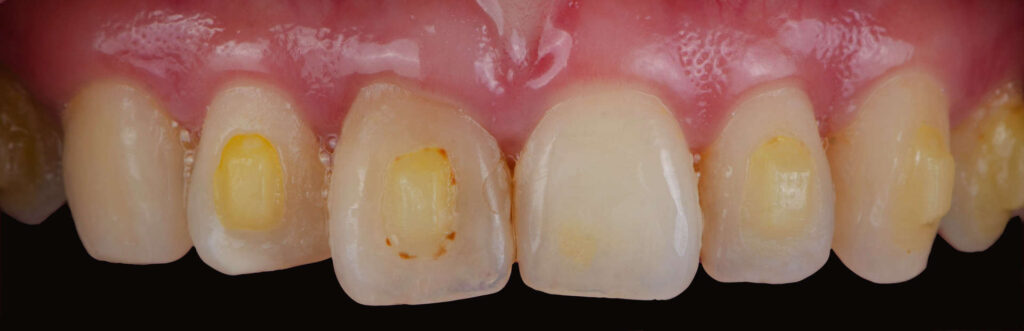
Hypoplasia and hypomineralisation. Enamel hypoplasia causes white or brown patches on the surface of the teeth, with areas where enamel is missing, leaving the teeth more fragile and irregular in shape. Dental hypoplasia causes yellow or brown patches on the teeth and increases the risk of tooth decay in milk teeth by leaving the dentine exposed.
Medicines. Iron in paediatric syrups can cause brown stains on the teeth. Stains caused by medicines can be brown or blackish in colour and, in most cases, can be removed by a professional dental cleaning. Nowadays, certain antibiotics, such as tetracyclines, are avoided in children under the age of 8 to prevent this type of condition.
Trauma and discolouration of milk teeth
Falls in the park, at the swimming pool or at home are common among children aged 1 to 4, and can cause a change in the colour of a milk tooth.
A blow can cause discolouration of a tooth due to internal damage to the pulp. Traumatic discolouration may be yellowish or greyish in colour, and may appear weeks or months after the impact, even without any pain. Trauma can cause baby teeth to darken in colour, ranging from a pinkish hue to a dark grey, depending on whether there is internal bleeding or pulp necrosis.
A traumatised milk tooth can affect the bud of the permanent tooth if the impact is severe. For this reason, at Clínicas Udemax we carry out X-rays and regular check-ups to determine whether close monitoring is sufficient, whether the nerve needs to be treated or, in extreme cases, whether the tooth needs to be extracted to prevent infection.
How are stains on milk teeth treated at Clínicas Udemax in Mallorca?
The treatment for stains on milk teeth depends on their cause. The aim is to keep the tooth healthy and functional until it is replaced by the permanent tooth. Professional treatments are safe if carried out by a paediatric dentist with experience in treating children.
At Clínicas Udemax, parents are given practical guidance tailored to their individual circumstances:
- Professional cleaning and polishing (prophylaxis). The first choice for removing extrinsic stains caused by food, tartar, chromogenic bacteria or medication. It is carried out using gentle instruments suitable for children.
- Fluoride varnishes and remineralisation. For treating early white spots caused by tooth decay. Clinical trials show that 5 per cent fluoride varnish, applied twice a year, reduces the incidence of carious cavities in children under 5 years of age by up to 49 per cent. These are combined with advice on oral hygiene and dietary management.
- Fillings and restorations. The treatment of tooth decay can range from simply monitoring the situation to a filling using tooth-coloured resin, depending on how far the decay has progressed.
- Microabrasion, sealants or paediatric crowns. For hypoplasia or moderate fluorosis that compromise the appearance and strength of the tooth.
Udemax Clinics offers a child-friendly environment, with staff trained in managing children’s behaviour, to ensure that the experience at the clinic is as positive as possible.

Prevention: how to prevent stains on milk teeth
Most stains and cavities in milk teeth can be prevented by adopting good habits from the age of one.
- Oral hygiene from the very first tooth. Oral hygiene should begin with the very first tooth: clean the gums and first teeth with gauze pads or silicone brushes, and switch to a soft children’s toothbrush as soon as they come through.
- The correct amount of fluoride toothpaste. A rice-sized amount up to the age of 3; a pea-sized amount between the ages of 3 and 6. The use of fluoride products should be supervised to avoid overuse, as too much fluoride can cause staining on the teeth.
- Controlling sugar intake. Limit your consumption of packaged juices, sweets and pastries. Avoid giving your child a night-time bottle of sweetened milk or juice, as this is a common cause of bottle tooth decay.
- Summer habits in Mallorca. High consumption of fruit juices and ice cream in summer increases the risk. Make sure children brush their teeth after eating sweet treats and offer water as their main drink.
- Regular check-ups. Regular visits to the paediatric dentist help to detect dental problems early. At Clínicas Udemax, we recommend check-ups every 6–12 months, even if no stains are visible. It is essential to see a paediatric dentist if stains appear on the teeth, so that they can be assessed at an early stage.
Paediatric Dentistry at Clínicas Udemax: our approach
Clínicas Udemax comprise three leading centres in Mallorca, along with the Arcdental children’s dental clinic, which provides paediatric dental care to patients from all over the island. The team comprises paediatric dentists specialising in stains on milk teeth, early tooth decay, trauma and enamel abnormalities, with experience in treating children from the age of 6 months.
The first paediatric appointment includes a full check-up, medical history, dietary assessment, a detailed explanation for parents and a personalised prevention plan. Clínicas Udemax uses state-of-the-art technology (low-radiation digital X-rays, intraoral cameras) to diagnose tooth discolouration and tooth decay accurately and safely.
Specific advice is also provided for families who live in Mallorca all year round and for those who spend only the summer months there, taking into account the frequency of check-ups and seasonal risk factors.
If you notice white, yellow, brown or black spots on your child’s milk teeth, please book an appointment by telephone or via the online form. Early detection makes all the difference to the long-term outcome.
Frequently asked questions about stains on milk teeth
Do the stains on milk teeth disappear when the permanent teeth come through?
Extrinsic stains (caused by food, tartar or chromogenic staining) disappear when the milk tooth is cleaned or falls out. However, stains on milk teeth do not disappear on their own when they are caused by tooth decay or enamel defects. Certain injuries or infections affecting primary teeth can affect the permanent tooth, causing permanent stains or malformations. Even though the tooth is temporary, any stain should be assessed to protect the permanent teeth.
Can a child’s milk teeth be whitened?
Teeth whitening treatments using peroxides are not recommended for milk teeth or young children, for safety reasons and due to the sensitivity of developing enamel. Instead, depending on the cause of the stain, treatments such as cleaning, polishing, micro-abrasion and age-appropriate cosmetic restorations are used. The primary objective in paediatric dentistry is the health and function of the tooth; aesthetics are improved using techniques that are safe for the child.
How often should I take my child to the paediatric dentist if they have stains on their teeth?
It is advisable to have an initial check-up as soon as a stain is detected, even if the child is not experiencing any pain or discomfort. Following the initial assessment at Clínicas Udemax, the dentist will determine the frequency of check-ups (usually every 3, 6 or 12 months) based on the risk of tooth decay and the type of stain. Children with early tooth decay, hypoplasia or fluorosis usually require more frequent check-ups.
What can I do at home if I notice white spots on my child’s teeth before the appointment?
Immediately improve oral hygiene: brush teeth twice a day with age-appropriate fluoride toothpaste under adult supervision, paying particular attention to the area near the gums. Reduce the intake of sugars between meals and offer water as the main drink. Abrasive home remedies can damage the enamel of milk teeth; do not try to scrape or rub them with bicarbonate of soda, lemon or vinegar.
Can using a dummy or a bottle cause stains on milk teeth?
The dummy itself does not stain the teeth. The problem lies in the prolonged use of a bottle containing milk, juice or sugary drinks, particularly at night, which can lead to bottle tooth decay and the appearance of white or brown stains. Stop giving your child a sugary bottle at night as soon as possible, avoid dipping the dummy in sugar or honey, and offer water between feeds. At Clínicas Udemax, we advise parents on how to make this transition gradually and in a way that is respectful of the child.