How often can you have your teeth whitened?
En este artículo
- Key conclusions
- How often can you have your teeth whitened?
- How long does teeth whitening actually last?
- Types of teeth whitening and how they affect how often you need to repeat the treatment
- Factors that determine how often to repeat the whitening treatment
- How can I maintain my white teeth and space out my treatments more?
- Maintenance and touch-ups: an alternative to repeating a full whitening treatment
- Is it dangerous to have your teeth whitened too often?
- Frequently asked questions about how often you can have your teeth whitened
Achieving a bright, white smile is one of the most common cosmetic goals we see in our practice. However, the question most frequently asked by our patients at Udemax Clinics is clear: how often can you have your teeth whitened without putting the health of your enamel at risk? In this article, we provide a straightforward answer, backed by up-to-date information and practical advice tailored to your individual situation.
Key conclusions
- Dentists recommend having a full teeth-whitening treatment every 12 to 18 months; specialists recommend leaving a gap of between 12 and 24 months between full treatments to avoid damaging the enamel.
- Teeth whitening can last between 1 and 3 years with good oral hygiene, and up to 2 to 5 years under optimal conditions.
- Minor adjustments can be made every 6 to 12 months using aligners at home, under the supervision of your dentist.
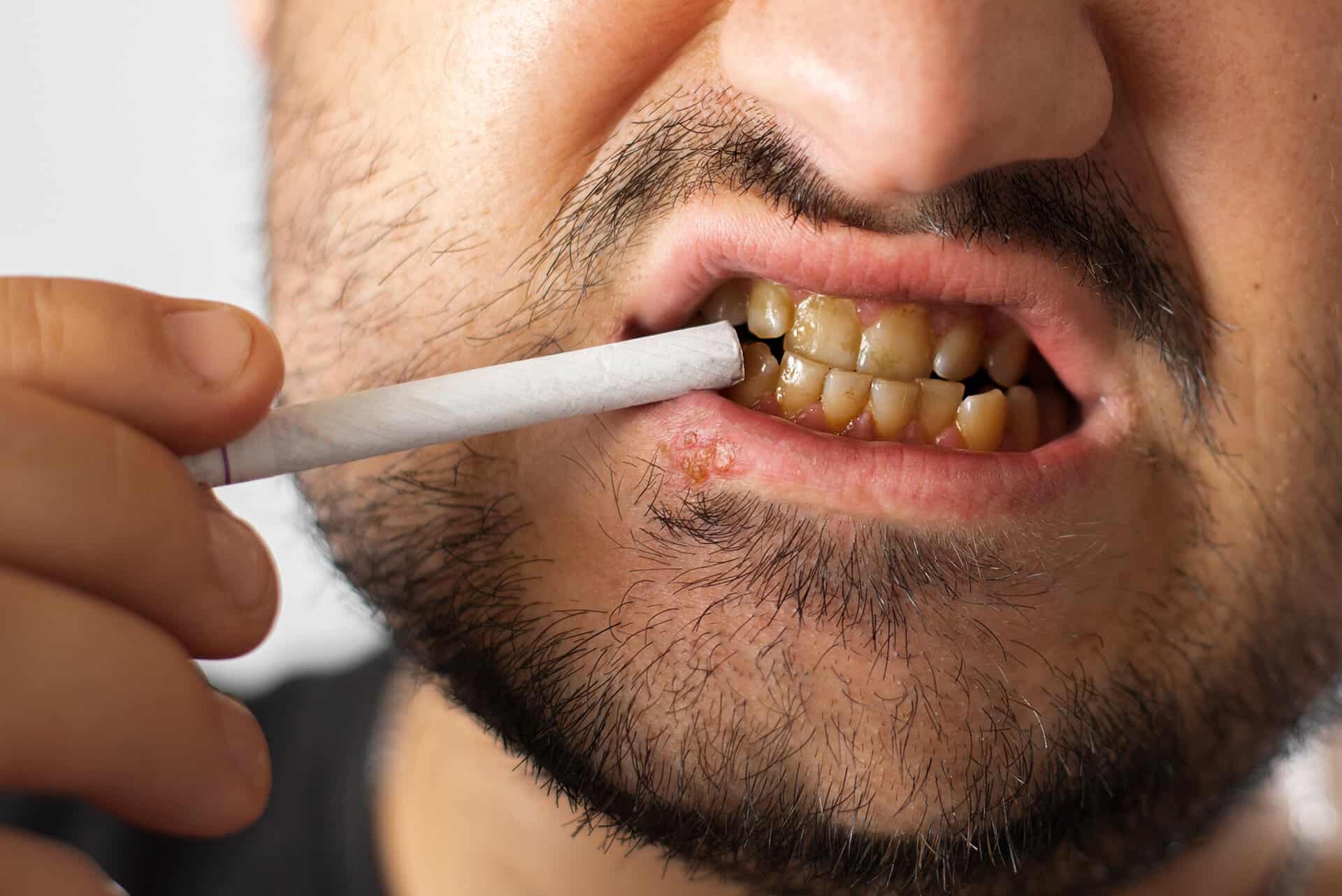
- The factors that shorten life expectancy the most are tobacco, coffee, tea and red wine.
- The decision to repeat the procedure must always be based on a prior clinical assessment to check sensitivity and the condition of the enamel.
How often can you have your teeth whitened?
This is the main question on the mind of any patient who has already undergone the procedure or is considering having it done for the first time. The straightforward answer is that a full course of teeth whitening can be carried out every 12 to 24 months. As a general guideline, teeth whitening is recommended once a year, although many patients with good oral hygiene and few staining habits can easily space out treatments to as long as 24 months.
People who smoke or consume large amounts of coffee, tea or red wine tend to notice a loss of whiteness sooner, but this does not always mean they need to undergo a full whitening treatment again: often, a light touch-up is sufficient. The interval between touch-ups or maintenance treatments can be reduced to 6 to 12 months without any problem, provided this is done under supervision.
There is no one-size-fits-all rule. The frequency depends on the condition of the enamel, any pre-existing sensitivity and the dentist’s assessment at each check-up. That is why, at Udemax Clinics, we stress that you should not overuse whitening gels on your own.
How long does teeth whitening actually last?
How long teeth whitening lasts depends on the type of treatment and the patient’s lifestyle. It is important to distinguish between the duration of the effect and the frequency with which the treatment should be repeated.
At our clinic, a well-carried-out in-clinic whitening treatment usually produces results that last between 1 and 3 years. Under particularly favourable conditions, the results of a teeth whitening treatment can last between 2 and 5 years. The visible effect of teeth whitening generally lasts between 6 months and 2 years, with in-clinic whitening results being the most predictable, typically lasting between 12 and 24 months.
With at-home whitening treatments using trays, the results usually last between 6 and 12 months, and can be extended to up to 18 months with consistent care. Below, we outline the differences between each method.

Types of teeth whitening and how they affect how often you need to repeat the treatment
In-clinic whitening is not the same as at-home whitening: the concentration of the whitening agent, the number of sessions required and the duration of the results vary significantly. At Udemax Clinics, we offer three approaches: professional in-clinic whitening, supervised at-home whitening and a combined treatment.
Professional treatments mean you don’t need to repeat the treatment as often. Pharmacy products or online kits, however, mean you have to repeat the treatment more frequently without offering the same level of safety or results.
Teeth whitening at Udemax Clinics in Mallorca
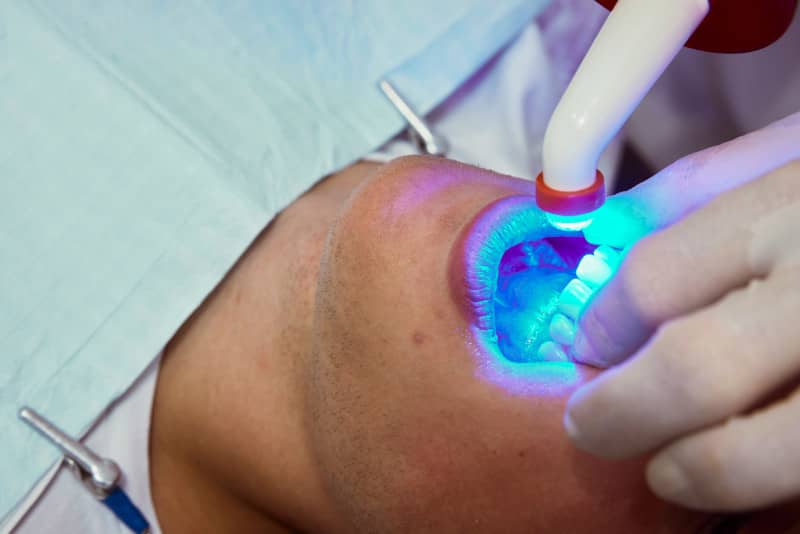
This type of teeth whitening is carried out over one or more sessions lasting 30 to 60 minutes, using a high-concentration hydrogen peroxide gel. The results are visible during the same appointment and last for approximately 12 to 36 months, depending on your habits.
Due to the strength of the treatment, the recommended minimum interval between full courses of teeth whitening is 1 to 2 years. In practice, many patients have a check-up after a year, at which point it is assessed whether a minor touch-up is sufficient or whether it would be better to wait.
Supervised at-home teeth whitening
At-home teeth whitening is carried out using custom-made trays and carbamide peroxide gel prescribed by a specialist, over a period of 2 to 4 weeks. The average duration of the results is between 6 and 18 months, depending on the initial shade and dietary habits.
As this method is gentler, it allows you to carry out short maintenance cycles more frequently. However, please do not start new gel cycles on your own without first having a check-up at Udemax Clinics to assess your sensitivity and the condition of your enamel.
Combined treatment: in-clinic + at home
It consists of a powerful in-clinic session followed by several days of wearing trays at home. According to recent studies, this type of whitening offers the longest-lasting results in the medium term, lasting up to 2–3 years with good aftercare. We recommend a whitening maintenance programme, which can be carried out every 5 years if oral hygiene habits are excellent, although a light touch-up every 18–24 months is more common. The decision to repeat a full treatment course is made during a consultation, taking into account not only the colour but also the general health of the teeth and gums.
Factors that determine how often to repeat the whitening treatment
Not all patients require treatment at the same frequency. The main factors are:
- Diet: foods and drinks containing pigments (coffee, tea, red wine, dark soft drinks, curry, beetroot) reduce the duration.
- Tobacco: do not smoke to prolong the results of teeth whitening. E-cigarettes containing nicotine have a similar effect.
- Oral hygiene: brushing, flossing and using fluoride mouthwash help to space out treatments.
- Enamel and sensitivity: thin enamel or enamel with microcracks means that the intervals must be increased.
- Restorations: fillings, crowns and veneers do not whiten in the same way and affect the final aesthetic result.
How can I maintain my white teeth and space out my treatments more?
The aim is not to have your teeth whitened more often, but for a single treatment to last as long as possible. The first 48 hours after a whitening treatment are critical: the enamel is more permeable and absorbs stains easily.
Foods and drinks to avoid after teeth whitening
For the first 3–5 days, avoid strongly coloured foods and drinks:
- Coffee, black tea, red wine, cola drinks
- Soy sauce, curry, beetroot, red berries
- Tobacco and nicotine vapes
- Brightly coloured rinses
Once this period is over, return to a normal diet, but in moderation. Drinking water after consuming dark-coloured drinks or using a straw reduces contact with the tooth enamel.
Hygiene routine and check-ups at Udemax Clinics
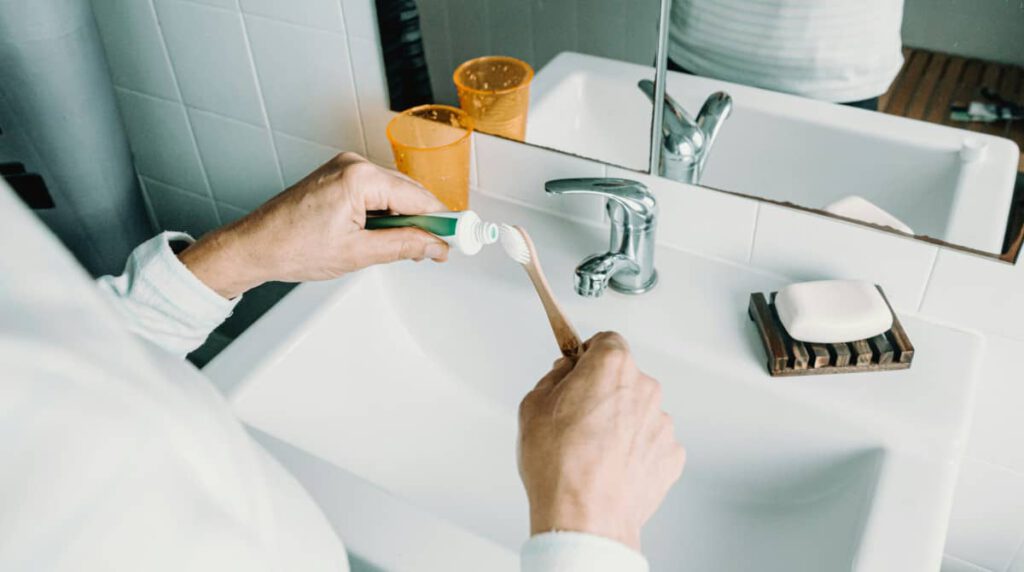
- Brush your teeth at least twice a day with mild fluoride toothpaste.
- Floss every day and use a fluoride mouthwash.
- Visit the dentist every 6 months for professional cleanings; these remove surface stains before they set in.
- At each check-up, we assess whether a clean-up or routine maintenance is sufficient, or whether it is time for another whitening treatment.
Maintenance and touch-ups: an alternative to repeating a full whitening treatment
It is not always necessary to undergo a full whitening treatment. Have touch-up treatments every 6 to 12 months as recommended by your dentist: a few days’ use of trays with a lower-concentration gel or a short in-clinic session are usually sufficient.
For many patients, a maintenance treatment every 12–24 months avoids the need to repeat the full treatment. Dentists advise against excessive whitening, and we warn against ‘whitenorexia’: an obsession with extreme whiteness that disregards the natural appearance of the enamel.
Is it dangerous to have your teeth whitened too often?
Having teeth whitened too frequently can cause gum irritation. Furthermore, uncontrolled teeth whitening can cause extreme tooth sensitivity and lead to microcracks in the enamel, giving it an unnatural, translucent appearance.
When the procedure is carried out at Udemax Clinics at the appropriate intervals – a minimum of 12 months for full treatments – the adverse effects are minimal and reversible. The real risks arise from unsupervised products or kits used too frequently. Any decision to undergo a new teeth-whitening treatment must be preceded by a clinical assessment.
Frequently asked questions about how often you can have your teeth whitened
At what age is it advisable to have your teeth whitened?
It is standard practice to wait until the patient has a full set of permanent teeth, usually around the age of 18. In adolescents, it is only considered in very specific cases, using mild products and under the strict supervision of a dentist. Before that age, the focus is on dental cleanings, sealants and hygiene education.
Can I have my teeth whitened if I’m pregnant or breastfeeding?
As a precaution, teeth whitening is usually postponed during pregnancy and whilst breastfeeding. In the meantime, at Udemax Clinics we recommend check-ups, cleanings and plaque control to maintain good oral health. During your first visit, we can plan the best time for treatment after your pregnancy.
What should I do if I experience a lot of sensitivity after a teeth-whitening treatment?
Once the treatment is complete, it is common to experience slight sensitivity for 24–48 hours. Use desensitising toothpastes and mouthwashes and avoid very hot or very cold foods during this time. If the sensitivity is severe or lasts for more than 3–4 days, contact your clinic to adjust your treatment.
If I smoke, how often will I need to have my teeth whitened again?
Smoking significantly reduces the duration of the effects of teeth whitening, potentially shortening them to less than 12 months. For active smokers, more frequent maintenance appointments and regular professional cleanings are usually recommended. Cutting down on or giving up smoking protects both the colour of your teeth and the health of your gums.
Will teeth whitening work if I have fillings, crowns or veneers?
Restorative materials do not lighten with whitening in the same way as natural teeth. When undergoing whitening treatment, it may be necessary to replace some visible fillings to match the final shade. That is why, at Udemax Clinics, we carry out a preliminary aesthetic assessment to plan the sequence of treatments and answer all your questions before we begin.