Sore gums in babies: causes, symptoms and how to relieve them
En este artículo
- Key conclusions
- Why do babies’ gums become swollen?
- Teething: how and when the first milk teeth appear
- Signs and symptoms of inflamed gums in babies
- How to relieve gum pain and inflammation at home
- Gum and early teeth care
- When to see a paediatric dentist or a paediatrician
- Frequently asked questions about sore gums in babies
Swollen gums in babies are a cause for concern for many parents, especially when they first appear and it’s not entirely clear what to do. In most cases, gum inflammation is directly linked to teething, but it’s worth knowing all the causes, the warning signs and the safest ways to provide relief at home.
Key conclusions
- Sore gums are common during teething. The first milk teeth appear between 6 and 12 months, and each time a tooth comes through, it can cause red, swollen gums.
- The most common signs include excessive drooling, irritability, sleep disturbances and a constant urge to bite objects.
- Three quick ways to soothe your baby’s gums: gentle massage with a clean finger, cool teething rings (never frozen) and frequent wiping away of drool to prevent skin irritation.
- It is essential to consult your paediatrician if your baby’s gums show signs of a high temperature or sores, persistent bleeding, a foul odour, or if your baby refuses to feed for more than a day.
- At Udemax Clinics, we have paediatric dentists who check babies’ gums from their first year of life.
Why do babies’ gums become swollen?
Gum inflammation in babies is very common and is not always due to a single cause. Teething is the most common cause of inflamed gums in babies, but there are other factors worth being aware of. The emergence of milk teeth usually begins between 4 and 10 months, although some babies may start earlier or later without this being a cause for concern.
The main causes are:
- Teething: the tooth presses against the gum from the inside, causing localised inflammation, redness and discomfort.
- Minor injuries: biting hard or dirty objects can damage the oral mucosa. Poor oral hygiene can cause gum irritation due to the build-up of bacterial plaque.
- Oral infections: oral thrush causes inflammation and white patches in the mouth, and viral or bacterial infections can also lead to gingivostomatitis.
- Simultaneous teething: the eruption of several teeth at almost the same time, particularly between 8 and 18 months, intensifies the inflammation.
- Environmental factors: dry environments, air conditioning and certain medicines can make the lining of a baby’s mouth more sensitive.
Teething: how and when the first milk teeth appear
Knowing the teething timeline helps parents understand why their child has sore gums and to anticipate each phase of discomfort.
The first signs of teething may be noticeable from 3–4 months, although the first milk teeth appear between 6 and 10 months, usually the lower central incisors. These are followed by the upper central incisors (8–12 months), the lateral incisors, the first molars (10–16 months), the canines (16–20 months) and the second molars, which appear by 30–36 months.
By the age of about two and a half, most children will have all 20 milk teeth through, and episodes of sore gums may occur repeatedly throughout this process. If no teeth are visible by 12–14 months, it is advisable to consult a paediatric dentist to rule out any problems with teething.

Signs and symptoms of inflamed gums in babies
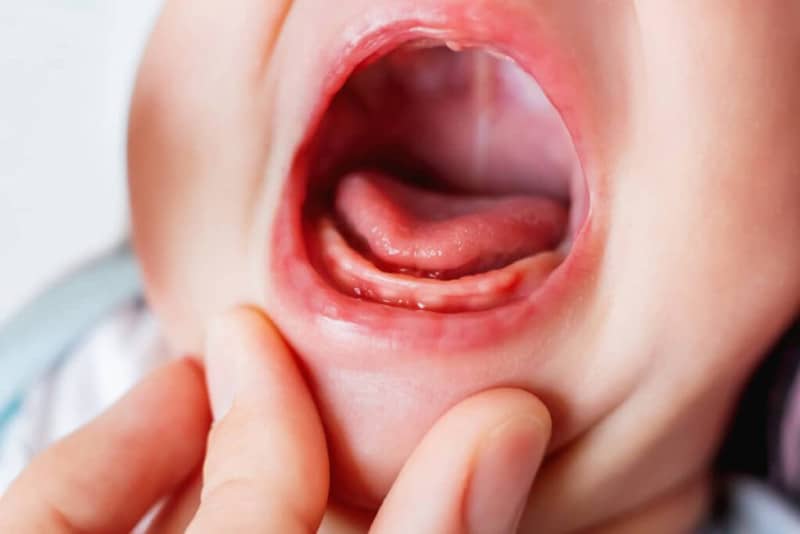
Not all babies experience teething pain to the same extent; some show hardly any signs of discomfort, whilst others have a really tough time. Typical symptoms include red, swollen or puffy gums, with small white spots where the first teeth are about to come through. Increased salivation, known as excessive drooling, and reddened cheeks are also common – two very characteristic symptoms of teething. The urge to chew on objects is another sign directly associated with this process. Furthermore, constant irritability, particularly in the afternoon and evening, accompanied by crying, may indicate sore gums in babies. Frequent waking, difficulty falling asleep and a need for more physical contact are also common signs. Inflamed gums can cause irritability in babies who partially refuse solid foods.
As warning signs, it is important to watch out for symptoms such as bad breath, obvious bleeding from the baby’s gums, an almost total refusal to eat for more than 24 hours, weight loss or a high fever of over 38 °C. If these signs are present, it is recommended that you consult your paediatrician as soon as possible. Caregivers are advised to examine the baby’s mouth calmly, in good light, and to take a photo to show at the consultation if there are any concerns.
What is normal during teething and what isn’t?
It’s true that teething causes sore gums, drooling, a desire to bite, sleeplessness and a slight rise in temperature. All of this is to be expected.
However, teething does not cause fever or diarrhoea in babies. Symptoms such as a high fever or diarrhoea require immediate medical attention, as they may indicate infections or other illnesses unrelated to teething. Inconsolable crying lasting for many hours, vomiting or a generalised rash should not be attributed to teething either.
At Udemax Clinics, we work alongside local paediatricians when we detect symptoms that go beyond simple gum inflammation caused by teething.
How to relieve gum pain and inflammation at home
Parents can go a long way towards relieving their baby’s teething pain with simple measures that prioritise safety. Any medication should only be used on the advice of a paediatrician, and dangerous home remedies should be avoided. If, despite these measures, the baby continues to experience severe discomfort for more than 2–3 days, it is advisable to make an appointment with a healthcare professional.
Gently massage your baby’s gums
Massaging the gums can provide immediate relief for your baby. Gently rub the gums with a clean finger for two minutes, using soft, circular movements over the swollen area. Repeat the massage several times a day, especially before feeds and at bedtime, adjusting to your child’s tolerance. If they complain a lot, reduce the pressure or stop. Once a few teeth have come through, you can use a silicone teething ring designed specifically for babies.
Local cold weather: teethers and other safe options
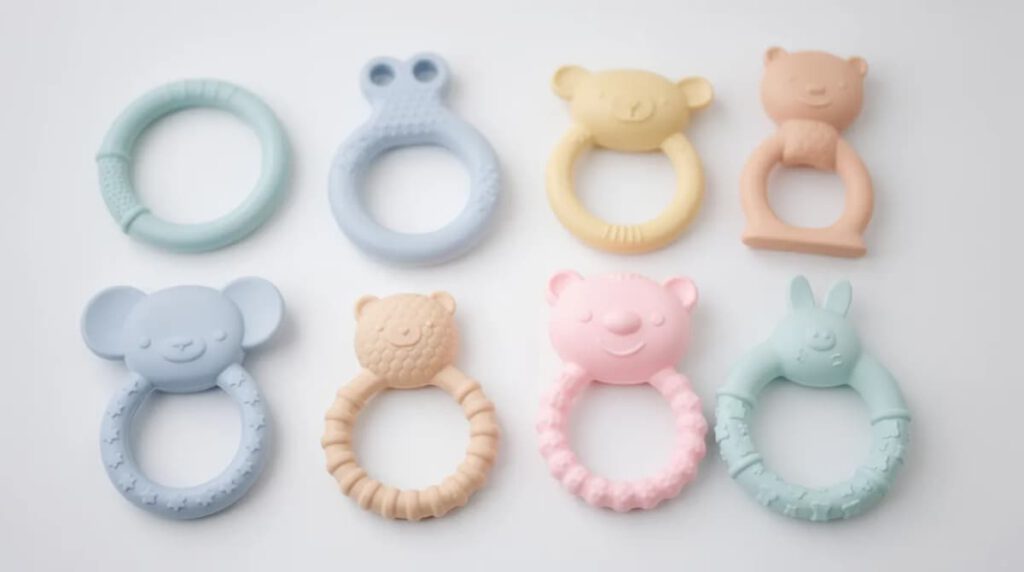
Placing cold objects against the gums can soothe pain without the need for pharmaceutical products. Cold teething rings help to reduce inflammation and pain in the gums: choose ones made of silicone or solid rubber, without any gel or liquid inside. Chill teething rings in the fridge, not the freezer, for a few minutes before giving them to your child.
Safe home remedies: a cold metal teaspoon or a damp gauze pad cooled in the fridge, always under direct supervision. For babies who have already started on complementary foods, offer very ripe, chilled fruit (banana or pear) in a mesh feeder or special feeding cup.
Avoid direct contact with ice, amber necklaces, teething rings that are too hard, and any toys that could break into small pieces, as these pose a choking hazard.
Changes to diet and daily routine
Some babies eat less when their gums are sore. Offer shorter, more frequent feeds, allowing the baby to stop when they need to. Offer a cup of cold water to babies over 6 months old to keep them hydrated and soothe their gums.
For babies on complementary feeding: specially formulated natural yoghurt, lukewarm to slightly cool purées and soft pieces of cold fruit are a good solution. Adjustments to the sleep routine – a lukewarm bath, a calm environment, gentle white noise and more physical contact – help considerably. If your baby refuses almost all food or drink for more than a day, consult your paediatrician.
Responsible use of painkillers
Some babies need occasional medication to relieve teething pain. Painkillers such as paracetamol are safe in moderate doses, but never give paracetamol or ibuprofen without your paediatrician having specified the exact dose based on your child’s weight and age. Use them only for 1–2 days to relieve severe pain, not as a daily treatment throughout the teething period.
Specific soothing gels can help reduce gum discomfort, but it is recommended to avoid products containing benzocaine in children under two years of age without medical advice, as well as lidocaine, alcohol and unvalidated homeopathic preparations. Over-the-counter gels containing homeopathic tablets lack sufficient evidence to support their effectiveness. Medication only complements physical relief measures such as massage and local cooling.
Gum and early teeth care
Good oral hygiene prevents gingivitis in children, reduces inflammation and prevents early tooth decay. Oral care should begin even before the first teeth appear. At Udemax Clinics, we recommend a routine tailored to each age group: gauze or a silicone teething ring before teeth appear, followed by brushing with a soft children’s toothbrush and a minimal amount of fluoride toothpaste. Parents are the main role models: brushing in front of children turns oral hygiene into a playful activity.
How to clean your baby’s gums before their first teeth come through
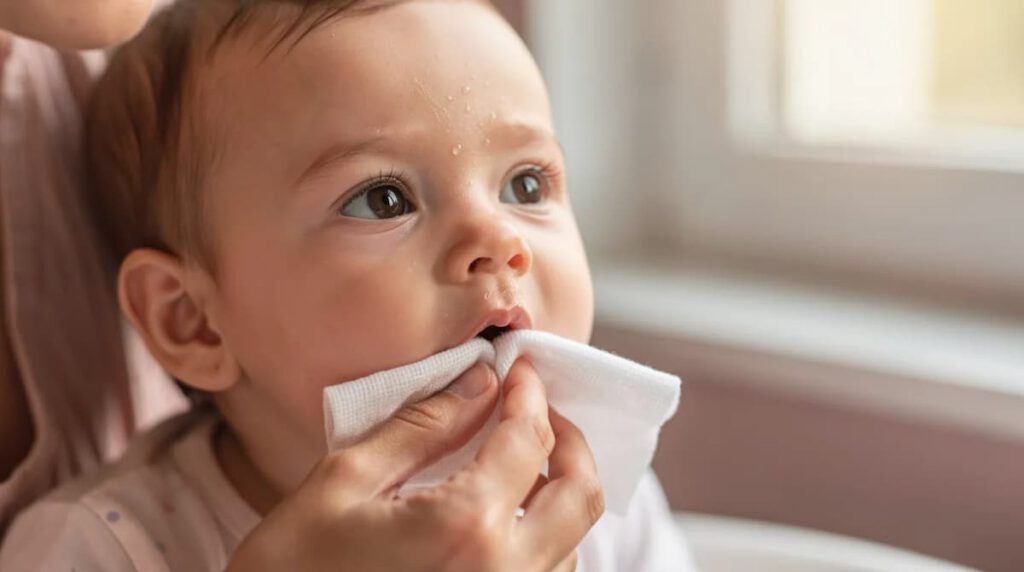
From the first month onwards, gently wipe the gums, the inside of the cheeks and the tongue with a slightly dampened sterile gauze pad. Clean your baby’s gums twice a day, using very clean hands, whilst they are calm. This routine removes any traces of milk and helps the baby get used to having their mouth touched.
If you notice a persistent white coating that bleeds on contact, this may be thrush and you should consult your paediatrician. Do not use toothpaste or mouthwash at this stage.
Caring for your child’s first milk teeth
Start brushing their teeth every day as soon as the first tooth appears. Use a soft baby toothbrush with a small head once the teeth have come through. Apply a quantity of fluoride toothpaste equivalent to a grain of rice for children under 3 years of age. Parents should brush their baby’s teeth using gentle strokes, paying particular attention to the area where the tooth meets the gum. Limiting sugar intake reduces the risk of tooth decay in babies: avoid giving them a bottle of sugary drinks at night.
When to see a paediatric dentist or a paediatrician
Although teething is a natural process, there are situations that require professional assessment:
- Very swollen and painful gums that do not improve within 2–3 days.
- High fever, bad breath, discharge or spontaneous bleeding.
- Prolonged refusal to eat or failure to gain weight.
- Absence of teeth after 12–14 months, or teeth erupting in very unusual positions.
The first visit to the dentist should be around a child’s first birthday, although it can be brought forward if parents notice anything of concern.
How Udemax can help with your baby’s gum care
At Udemax Clinics, we take a preventive approach to paediatric dentistry: early check-ups and educating parents on hygiene and eating habits. Dr Cristina Martínez-Almoyna, who is trained in paediatric dentistry, is part of the team that assesses gum health and the first teeth. We offer a free initial consultation to assess your baby’s gums and answer any questions you or your family may have.
Our clinics are located in Palma de Mallorca. You can book an appointment online or by telephone between 8.30 am and 8.00 pm to suit families’ needs. We offer an emergency dental service to quickly assess problems such as severe inflammation, injuries to the mouth or bleeding in patients of any age.
Frequently asked questions about sore gums in babies
Do swollen gums in babies always mean they’re teething?
Not necessarily. Although teething is the most common cause, minor infections, minor knocks, irritation from very hard objects or poor oral hygiene can also cause inflammation. Look out for other signs of teething, such as drooling and a desire to bite. If the gums look unusual – with spots, pus or sores – a dental professional can distinguish between teething, thrush or early gingivitis.
Is it normal for a baby to have a bit of blood on their gums when their first teeth come through?
A small reddish halo may appear when the tooth breaks through the gum, and this usually disappears within a few hours. Heavy, persistent bleeding, or bleeding accompanied by a bad smell or pus, is not considered normal. Keep the area clean, do not rub it vigorously, and see your paediatric dentist if the gum continues to bleed.
Can I carry on breastfeeding if my baby has sore gums?
Yes, breastfeeding can continue as normal and may even soothe your baby. If your baby bites your nipple, gently remove your breast and offer them a cold teething ring first. They may feed for shorter, more frequent sessions for a few days. If the pain whilst breastfeeding is severe, consult a lactation consultant or your paediatrician.
Do amber necklaces help with gum inflammation?
There is no solid scientific evidence to support their effectiveness. On the contrary, significant risks have been reported: strangulation, choking on loose parts and skin injuries. Both paediatric societies and safety organisations advise against their use. Opt for safe alternatives such as massage, cold teething rings and professional supervision.
How often should I take my baby to the paediatric dentist if they have sensitive gums?
Provided there are no additional issues, an initial visit is recommended around the last month before the child turns one, followed by annual check-ups. If there is a family history of early tooth decay or recurrent severe gum inflammation, the expertise of the professionals at Udemax allows for an earlier assessment. Regular check-ups enable the early detection of changes to the enamel or bite, or infections that might go unnoticed at home, offering the best form of preventive care for your child.
The following answers are for information purposes only and are not a substitute for an individual assessment by a paediatrician or paediatric dentist. If you have any queries whilst in Mallorca, families can contact Udemax Clinics for personalised advice.