Inflamed gums: effective treatment and prevention in Mallorca
En este artículo
- Key conclusions
- What should you do today if you have swollen gums?
- Swollen gums and periodontal disease: the basics
- Symptoms of gum inflammation
- Main causes of inflamed gums
- Professional treatment to reduce gum inflammation
- Home care to reduce and prevent gum inflammation
- Long-term prevention of periodontal disease
- Frequently asked questions about the treatment of inflamed gums
n reasons for seeking dental care, and in many cases it takes weeks or months for the person affected to seek professional help. This article brings together the information you need to understand the causes of the problem, take action today and find out about the treatment options available at Clínicas Udemax in Palma de Mallorca.
Key conclusions
- Seeing a dentist or periodontist at an early stage can help reverse gum inflammation and prevent advanced periodontal disease.
- At Udemax Clinics, we offer a free initial consultation, a periodontal assessment and a personalised treatment plan.
- The basic steps are clear: improve oral hygiene, give up smoking, adjust your diet and follow professional treatment (deep cleaning, scaling, medication where appropriate).
- Home remedies are only a temporary measure and are never a substitute for professional advice, particularly if the bleeding lasts for more than 5–7 days.
- The sooner the situation is dealt with, the simpler, more cost-effective and more predictable the outcome will be.
What should you do today if you have swollen gums?
Before getting into the technical details, it’s worth quickly addressing the main concern. If you notice swelling, a deep red colour or bleeding in your gums, here are the immediate steps to take:
It is essential to brush gently two or three times a day using a soft-bristled toothbrush, taking care not to apply too much pressure so as not to irritate the gums. In addition, dental floss or interdental brushes should be used carefully to remove any food debris left between the teeth. Rinsing with warm salt water can help to temporarily relieve inflammation; to prepare this, dissolve a teaspoon of salt in a glass of water. Whilst the discomfort persists, it is important to avoid smoking and strong alcohol.
If you experience frequent bleeding, pain when chewing, bad breath or swelling that has lasted for more than a week, book an appointment within 48–72 hours. At Udemax Clinics, you can book a periodontal assessment with a free initial consultation. Do not self-medicate with antibiotics, do not use alcohol-based mouthwash without a prescription, and avoid applying abrasive products such as concentrated bicarbonate of soda or lemon directly to your mouth.
Swollen gums and periodontal disease: the basics
The gums are the soft tissue that surrounds and protects the base of the teeth. When we talk about gum inflammation, we are referring to the body’s response to the harmful effects of bacteria that have built up in the form of plaque and tartar.
Gingivitis is a mild form of periodontal disease: it involves redness, swelling and bleeding, but the damage is reversible if treated in time. If left untreated, gingivitis can progress to periodontitis, a condition in which the alveolar bone and periodontal ligament are already being destroyed, posing a real risk of tooth loss.
According to data from a study involving more than 5,000 Spanish workers, up to 38.4 per cent had moderate to severe periodontal pockets, a figure that rises significantly from the age of 45 onwards. A large proportion of these cases were undiagnosed. Periodontics is the speciality at Udemax Clinics responsible for diagnosing and treating these conditions.
Symptoms of gum inflammation
Many people downplay the early symptoms and only seek medical advice when the condition is already at an advanced stage. Recognising the signs helps you take action sooner.
Initial mild symptoms:
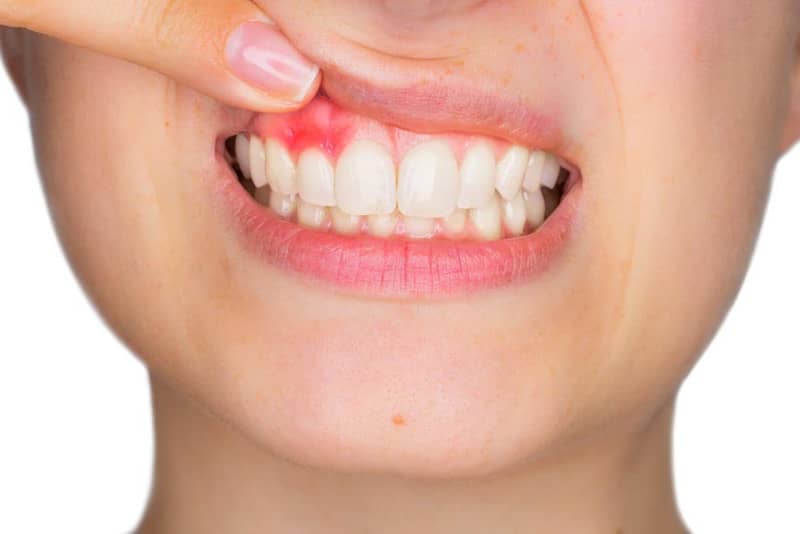
- Inflamed gums may appear red and tender.
- Bleeding whilst brushing is a common symptom.
- Inflamed gums may appear swollen and purple where they meet the tooth.
- Inflammation may be accompanied by mouth ulcers.
Warning signs:
- Inflamed gums can cause persistent bad breath.
- Gingival recession (the sensation that the teeth are longer).
- Loose teeth, the presence of pus or pain when chewing.
Bleeding, even if it is only slight, is never normal and warrants a check-up with your dentist. At Udemax Clinics, we carry out a full periodontal examination, including gum probing and, where necessary, digital X-rays to assess the condition of the bone.
When should you see a dentist or periodontist in Mallorca?
Book an appointment without delay in the following specific situations: if the swelling and bleeding last for more than 5–7 days; if you experience pain that prevents you from eating normally; if you have localised swelling with a lump, pus or infection; or if you have a fever or feel generally unwell, accompanied by discomfort in your mouth.
Pregnant women, patients with diabetes and smokers should attend an earlier appointment, as they are at greater risk of aggressive periodontal disease. At Udemax Clinics in Palma de Mallorca, there is an emergency dental service and a telephone helpline available from 8.30 am to 8.00 pm. The sooner the inflammation is treated, the easier and more cost-effective the process will be.
Main causes of inflamed gums
Dental plaque is the main cause of gum inflammation. The typical sequence begins with poor oral hygiene, which leads to the build-up of plaque, followed by the formation of tartar, causing chronic irritation of the gum tissue and, ultimately, persistent inflammation.
There are other common risk factors that contribute to this inflammation. Hormonal changes, such as those that occur during pregnancy, adolescence or the menopause, can cause inflammation of the gums. Poorly controlled diabetes and certain medicines that reduce saliva flow also increase the risk. Furthermore, localised infections such as herpes can cause inflammation in specific areas of the gums.
Diet plays an important role; a diet high in refined sugars, processed foods and sugary drinks – which is common in a place with such a wide variety of cuisine as Mallorca – promotes inflammation. Finally, mechanical problems such as poorly fitting dentures, overhanging fillings or crowded teeth make it easier for plaque to build up and contribute to irritation and inflammation of the gum tissue.
Factors that make gum inflammation worse
- Smoking increases the risk of gum inflammation and also masks the bleeding: the gums appear less red, but the disease progresses silently.
- Brushing too hard can cause gum irritation rather than protecting them.
- Nocturnal bruxism, mouth breathing and excessive use of alcohol-based mouthwashes.
- Genetics play a role: people with a family history of severe periodontitis should have check-ups every 4–6 months.
At your first appointment at Clínicas Udemax, we recommend that you always discuss your current medication, any chronic conditions and your family medical history so that we can tailor the prevention plan to each patient.
Professional treatment to reduce gum inflammation
The aim of treatment is to eliminate the infection, reduce inflammation and preserve the bone supporting the teeth. At Udemax Clinics, the protocol follows a phased process, in accordance with the clinical practice guidelines of the Spanish Society of Periodontology:
- Professional cleaning (prophylaxis): removal of supragingival plaque and tartar, tooth polishing and guidance on proper brushing technique. Recommended for cases of mild gingivitis.
- Root scaling and planing (curettage): root scaling and planing removes tartar from beneath the gums and smooths the surface of the root, reducing periodontal pockets. It is carried out under local anaesthetic.
- Medicines and antiseptics: chlorhexidine mouthwashes disinfect the gums in the short term. Local or systemic antibiotics are only prescribed in selected cases.
- Maintenance: check-ups every 3–6 months, depending on each patient’s risk.
Advanced treatments at Udemax Clinics
For complex cases of periodontal disease, the clinic offers specialised treatments:
- Periodontal surgery to access deep pockets, root planing and gum tissue reshaping.
- Bone and tissue regeneration using modern biomaterials. Recent research in Spain shows that regenerative procedures provide an additional improvement in clinical insertion of 1.3–1.4 mm compared with conventional access surgery.
- Rigorous periodontal maintenance following surgery to prevent relapses.
- Dental implants as a solution when teeth have already been lost due to periodontitis, backed by the Udemax team’s training and experience in periodontics and implantology.
Home care to reduce and prevent gum inflammation
Long-term success depends largely on daily habits. It is essential to maintain good oral hygiene to prevent gingivitis. It is therefore recommended that you brush your teeth at least twice a day, spending more than two minutes brushing gently with a soft-bristled toothbrush. In addition, it is vital to floss daily to prevent inflammation and clean the spaces that a toothbrush cannot reach; interdental brushes can be an effective alternative, depending on the type of gap between the teeth. It is also advisable to use toothpaste and mouthwashes specifically designed for sensitive gums, always following your dentist’s advice. To improve oral health, it is important to give up smoking, reduce your intake of refined sugars, increase your consumption of fruit and vegetables rich in vitamin C, and drink plenty of water. Finally, managing stress through exercise and adequate rest is key, as high levels of cortisol have a negative impact on gum health.
Home remedies: when to use them and when not to
Some remedies may relieve mild symptoms of inflamed gums, but they do not cure the underlying periodontal disease.
They can help:
- Gentle rinses with warm salt water (osmotic and anti-inflammatory effect).
- Apply a cold compress to the cheek to reduce swelling.
- Natural remedies such as chamomile tea can help relieve mild discomfort.
Avoid:
- Apply lemon, vinegar, concentrated bicarbonate of soda or strong alcohol directly to the gums.
- Undiluted oils or any type of unregulated product.
If, after 5 days of good oral hygiene and gentle care, the swelling does not improve, you must see your dentist. At Udemax Clinics, we always assess the underlying cause first before recommending any complementary treatments.
Long-term prevention of periodontal disease
Prevention is simpler and more cost-effective than treating advanced periodontitis with bone loss. A professional dental clean is recommended every six months to remove tartar that cannot be removed by brushing. Visit the dentist at least once a year; for smokers, diabetics, pregnant women or people with a history of swollen gums, visits should be every 4–6 months.
At Udemax Clinics, a personalised periodontal maintenance programme is drawn up, tailored to each patient’s risk factors. According to data from the Ministry of Health, approximately 16.5 per cent of the population of the Balearic Islands aged over 15 report bleeding when brushing their teeth, which shows that there is still a long way to go in terms of prevention.
Controlling gum inflammation improves breath, the appearance of your smile and is also linked to better cardiovascular and metabolic health.

Frequently asked questions about the treatment of inflamed gums
How long does it take for gum inflammation to subside with treatment?
In cases of mild gingivitis, with good oral hygiene and professional cleaning, the inflammation can improve significantly within 7–14 days. In moderate or advanced periodontal disease, the treatment requires several scaling sessions and check-ups over the following 3–6 months. The periodontist at Clínicas Udemax will adjust the treatment plan according to the patient’s progress. If the patient continues to smoke or does not change their habits, the inflammation may return quickly.
Do inflamed gums always lead to bone loss?
No. Gingivitis involves inflammation without irreversible damage to the bone, provided it is treated in time. Bone loss occurs in periodontitis, when the infection penetrates deeper. Only a periodontal examination and X-rays can confirm whether bone damage has already occurred. Treating inflamed gums as soon as possible is the best way to prevent the condition from reaching that stage.
Can receding gums caused by chronic inflammation be restored?
The inflammation may subside and stabilise, but receded gum tissue does not always return to its original position spontaneously. In some cases, periodontal plastic surgery (gum grafts) is performed to improve root coverage. The periodontist must assess the feasibility of this. The first step is always to control the infection and eliminate the cause.
Can I have teeth whitening treatment if my gums are swollen?
It is not advisable to undergo teeth whitening or cosmetic treatments when the gums are inflamed or bleeding. The inflammation must first be treated and periodontal health stabilised. At Udemax Clinics, we follow a phased approach: health first, aesthetics second. Undergoing cosmetic treatment on unhealthy gums can increase sensitivity and pain, and worsen periodontal disease.
How can I book an appointment at Clínicas Udemax if I have inflamed gums?
You can book an appointment online via the Clínicas Udemax website or call between 8.30 am and 8.00 pm. The first appointment is free and includes an assessment of the condition of your gums and an explanation of the possible treatment plan. The clinic has three centres in Palma de Mallorca, making it easy to find a convenient time and location. You can also send your enquiry by email before your visit.