Dental health tips: 10 habits to look after your teeth

En este artículo
- The essential points
- 1. Brush twice a day for 2 minutes
- 2. Use fluoride toothpaste and spit without rinsing
- 3. Choose a soft toothbrush and do not press hard
- 4. Clean between your teeth every day
- 5. Do not forget your tongue
- 6. Use mouthwash only as an extra
- 7. Watch what you eat and how often
- 8. Avoid smoking and vaping, and drink alcohol in moderation
- 9. Protect your teeth from knocks and wear
- 10. Go for professional check-ups and cleans
- Warning signs to see a dentist
- Frequently asked questions about dental health tips
Good dental health does not depend on major treatments, but on small habits repeated every day. A healthy mouth spares you pain, tooth decay and gum problems, and it also affects your general health. Here are 10 practical dental health tips from our team to look after your teeth and gums day to day.
The essential points
- Brush twice a day for 2 minutes with fluoride toothpaste, without pressing hard, and clean between your teeth every day.
- What harms teeth most is frequent sugary snacking and acidic drinks, not just the amount.
- Smoking, vaping and alcohol damage the gums and increase the risk of oral cancer.
- A professional check-up and clean every 6-12 months lets problems be caught while they are still small.
1. Brush twice a day for 2 minutes
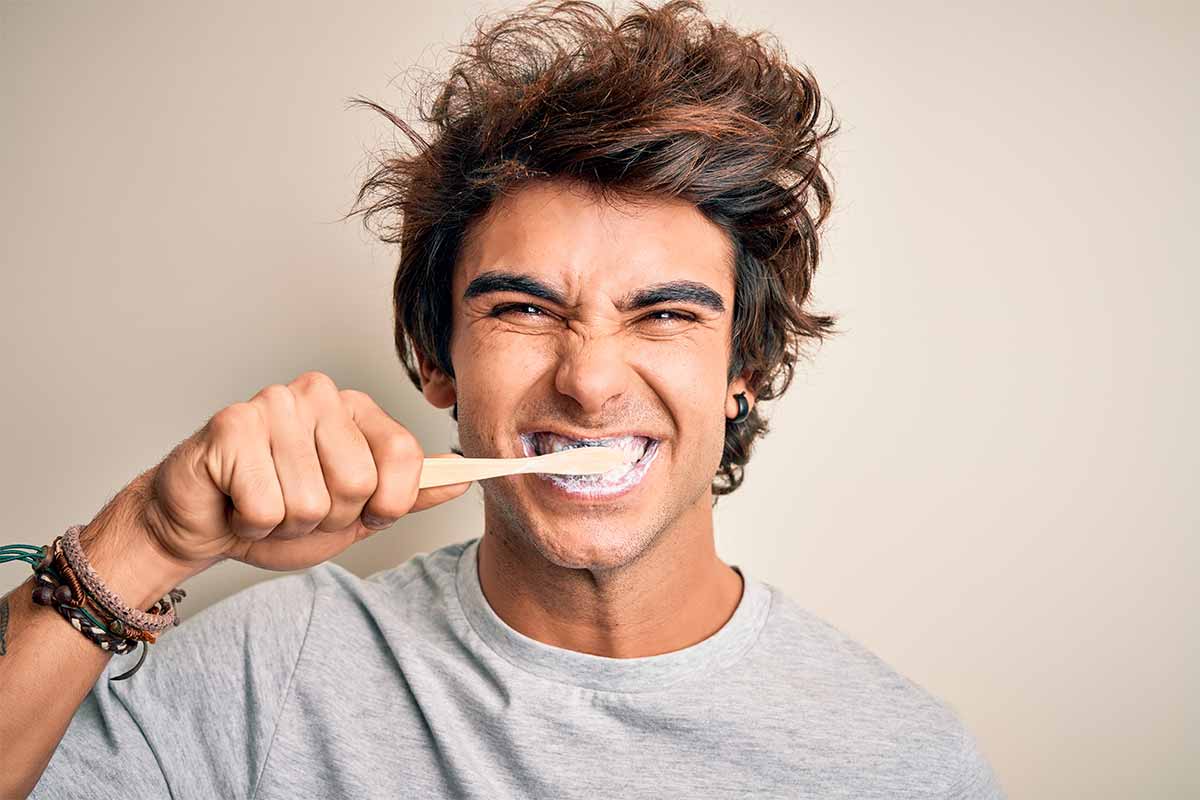
Brushing removes dental plaque, the main cause of tooth decay and gum problems. Brush at least in the morning and at night, for 2 minutes, covering every surface of your teeth. The night-time brush is the most important, because less saliva is produced while you sleep. If you are unsure about technique, we explain how to brush your teeth properly.
2. Use fluoride toothpaste and spit without rinsing
Fluoride strengthens enamel and makes it more resistant to decay. Adults are advised to use toothpaste with 1,450 ppm fluoride. When you finish, spit out the excess but do not rinse with lots of water, so the fluoride keeps working for longer. Here is more on which toothpaste to use.
3. Choose a soft toothbrush and do not press hard
A toothbrush with soft or medium bristles cleans just as well and does not damage enamel or gums. Brushing too hard can cause gum recession and sensitivity: find out about the dangers of brushing your teeth too hard. Replace your toothbrush or brush head every 3 months, or sooner if the bristles are splayed. If you are not sure which to choose, we help you pick the best toothbrush for you.
4. Clean between your teeth every day
A toothbrush does not reach the spaces between teeth properly, and that is where a lot of decay and gum problems start. Once a day, ideally at night, use dental floss or interdental brushes. We explain why interdental cleaning is key and how to do it.
5. Do not forget your tongue
Bacteria build up on the surface of the tongue and are a common cause of bad breath. Clean it gently every day with your toothbrush or a tongue cleaner. If bad breath persists, there may be other causes: we explain what halitosis is and how to treat it.
6. Use mouthwash only as an extra
A mouthwash can help in specific cases, such as inflamed gums or a high risk of decay, but it does not replace brushing or interdental cleaning. Ask your dentist to recommend the right one. More on the use of mouthwashes.
7. Watch what you eat and how often
Bacteria in the mouth turn sugars into acids that demineralise enamel. The most harmful thing is snacking on sweets or sipping fizzy drinks and juice often between meals, because enamel does not have time to recover. Make water your usual drink and include dairy, vegetables and whole fruit. Here is a guide to foods that are good for teeth.
Our adviceAfter something acidic, wait before brushing
8. Avoid smoking and vaping, and drink alcohol in moderation
Smoking reduces blood flow to the gums, masks the bleeding that warns of gum disease, stains teeth and increases the risk of oral cancer. Find out how tobacco affects dental health and the effects of vaping on teeth. Alcohol dries the mouth and many alcoholic drinks are acidic or sugary, so it is best in moderation.
9. Protect your teeth from knocks and wear
Wear a mouthguard if you play contact sports. If you clench or grind your teeth at night, get it checked: bruxism wears down enamel and is managed with a night guard. And do not use your teeth as a tool to open packaging or cut thread.
10. Go for professional check-ups and cleans
A check-up every 6-12 months means decay, gum problems or lesions can be caught while they are still small and easy to treat. You also get a professional clean to remove tartar, which a toothbrush cannot shift. If you have diabetes, are pregnant or take medication that dries your mouth, tell your dentist: you may need more frequent check-ups. Diabetes and dental health are closely linked, as are oral health and general health.
Warning signs to see a dentist
Even if you follow all these tips, there are symptoms you should not ignore:
| Sign | What it may indicate | What to do |
|---|---|---|
| Gums that bleed when you brush | Gingivitis or gum disease | Book a check-up; keep brushing that area |
| Sensitivity to cold or sweet things | Decay, enamel wear or receding gums | Get it checked if it lasts more than a few days |
| Bad breath that will not go away | Plaque on the tongue, gum problems or decay | Review your hygiene and get it checked if it persists |
| A sore or patch that does not heal in 2-3 weeks | A lesion that needs assessing, including oral cancer | See your dentist without waiting |
| Toothache or swelling | Deep decay or infection | Book an urgent appointment |
Checking your mouth from time to time also helps catch oral cancer early, especially if you smoke or drink alcohol. And if your gums bleed, here is how to treat inflamed gums.
Has it been a while since your last check-up? Book one at Clínicas Udemax
Book your check-upFrequently asked questions about dental health tips
How can I have good dental health?
Brush twice a day with fluoride toothpaste, clean between your teeth every day, limit sugar between meals, avoid smoking and go for check-ups every 6-12 months. They are simple habits, but they need to be kept up every day.
How many times a day should you brush your teeth?
At least twice a day, morning and night, for 2 minutes. You can also brush after meals, but if you have had something acidic, wait about 30 minutes.
Do I really need to floss?
Yes, or use interdental brushes. A toothbrush does not clean the spaces between teeth properly, and that is where a lot of decay and gum problems start.
How often should I go to the dentist?
Generally every 6-12 months. If you have gum problems, a lot of decay, diabetes or wear braces, your dentist may recommend more frequent check-ups.
Does mouthwash replace brushing?
No. Mouthwash is a useful extra in some cases, but it does not remove plaque like a toothbrush and floss.