Types of dental veneers: a comprehensive guide to choosing the best option for you in Mallorca

En este artículo
- What are dental veneers and what are they used for?
- Types of dental veneers by material
- Composite dental veneers
- Porcelain dental veneers
- Lithium disilicate veneers: highly aesthetic ceramics
- Zirconia veneers: when are they recommended?
- Ultra-thin veneers or ‘contact lenses’
- Types of veneers depending on the shape of the tooth
- Bonded veneers vs non-bonded veneers
- Which type of dental veneers is best for you?
- Before and after results: what you can expect
- Care, maintenance and lifespan of veneers
- Dental veneers at Clínicas Udemax (Mallorca)
- Frequently asked questions about types of dental veneers
Choosing between the different types of dental veneers can be confusing: composite, porcelain, lithium disilicate, zirconia, with or without tooth preparation… Each material and technique affects the result, durability and price. In this guide, we explain the real differences between each option so that you can make an informed decision about your smile, with up-to-date information and the perspective of Clínicas Udemax in Mallorca.
What are dental veneers and what are they used for?
Dental veneers are very thin shells that are bonded to the visible surface of the teeth to improve their appearance. Dental veneers enhance the aesthetics of the teeth by correcting their colour, shape and size, and are one of the most popular cosmetic dental treatments in Mallorca due to the speed of the procedure and the natural-looking results.
Dental veneers are mainly divided into porcelain veneers and composite veneers, although there are now advanced ceramic subtypes such as lithium disilicate. Treatment with veneers is considered a cosmetic procedure and is not a substitute for dental crowns or other oral healthcare procedures.
Problems they can resolve:
- Teeth that are yellowish or have old stains (tetracyclines, fluorosis).
- Veneers can hide stains and small cracks in the teeth.
- Diastemas (gaps between the front teeth).
- Irregular shapes or short teeth due to wear.
- Minor misalignments that do not require comprehensive orthodontic treatment.
There are different types of dental veneers, depending on the material used and whether or not they require the tooth to be prepared; we will discuss this in detail below.
Types of dental veneers by material
There are four main types of dental veneers in use today: composite veneers, porcelain veneers, lithium disilicate veneers and zirconia veneers.
The material has a direct impact on the aesthetic appearance, including aspects such as natural look, translucency and finish, as well as the mechanical strength, expected lifespan and price of the veneers. There is no single universal material, as each one has its own manufacturing process and characteristics that make it ideal for specific cases.
Composite is characterised by its speed and cost-effectiveness, although it is less durable than other materials. Porcelain offers excellent aesthetics, colour stability and a long lifespan. Lithium disilicate, meanwhile, combines premium aesthetics with superior strength. Finally, zirconia stands out for its mechanical strength, although it has lower translucency.
At Udemax Clinics, treatment planning is based on the patient’s smile, bite, the condition of their teeth and their expectations; it is never based solely on fashions or trends. Below, we take a closer look at each type of veneer, detailing their advantages, disadvantages and the ideal cases for their use.
| Material | Estimated lifespan | Shaping | Sessions | Main indication |
|---|---|---|---|---|
| Composite | 5–7 years | Does not usually require | 1 | Minor corrections, young patients, temporary solution |
| Porcelain | 10–15 years | Minimal (0.3–0.5 mm) | 2–4 | Complete aesthetic restoration with long-term colour stability |
| Lithium disilicate | 10–15 years | Minimal or none | 2–4 | Maximum natural appearance and translucency; ultra-thin veneers |
| Zirconia | 10–15 years | Yes | 2–4 | Severe bruxism, heavily discoloured teeth, functional priority |
Lifespan depends on the material, the fitting technique and the patient’s habits.
Composite dental veneers
Composite dental veneers are made from aesthetic resin. They are moulded directly at the dental practice by applying layers of composite to the surface of the tooth and shaping them until the desired form is achieved. Composite veneers are usually fitted in a single appointment.
Advantages:
- They are cheaper than porcelain veneers: in Mallorca, they cost between approximately €180 and €450 per unit.
- Quick treatment, often completed in a single visit.
- A minimally invasive option: it does not usually require any enamel removal.
- Simple touch-ups and repairs can be carried out at the clinic.
- An alternative that can be reversed in many cases.
Disadvantages:
- Composite veneers have an average lifespan of 5 to 7 years.
- Composite is less durable than porcelain.
- Composite veneers can discolour over time, particularly from coffee, tea, red wine and tobacco.
- Composite does not offer the same translucency as porcelain, so the result may look slightly less natural in some cases.
- They require regular maintenance polishing to retain their shine.
When are they recommended:
- Young patients whose teeth are still developing.
- Minor, localised cosmetic corrections.
- People on a tight budget.
- As a temporary solution before moving on to ceramic veneers.
At Udemax Clinics, we use high-aesthetic composite and dental photography to precisely match the colour of each veneer, achieving the most natural-looking result possible given the characteristics of this material.
Our adviceProtect the color for the first 48 hours
Porcelain dental veneers
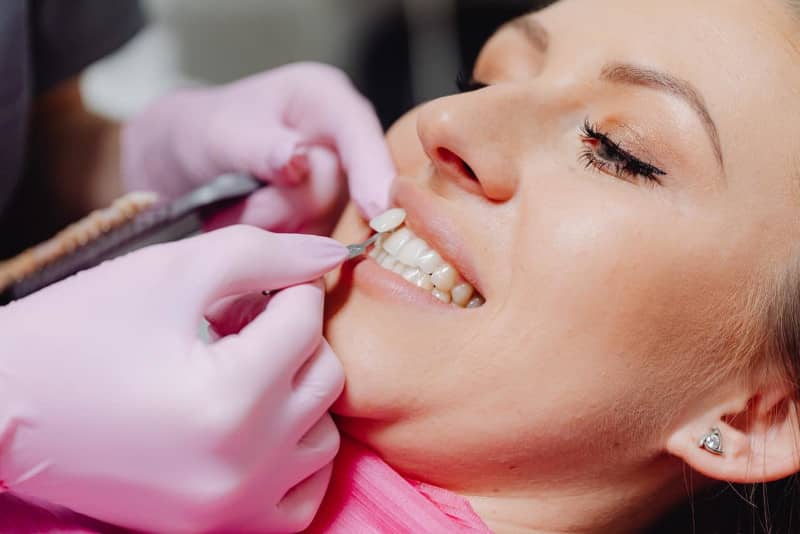
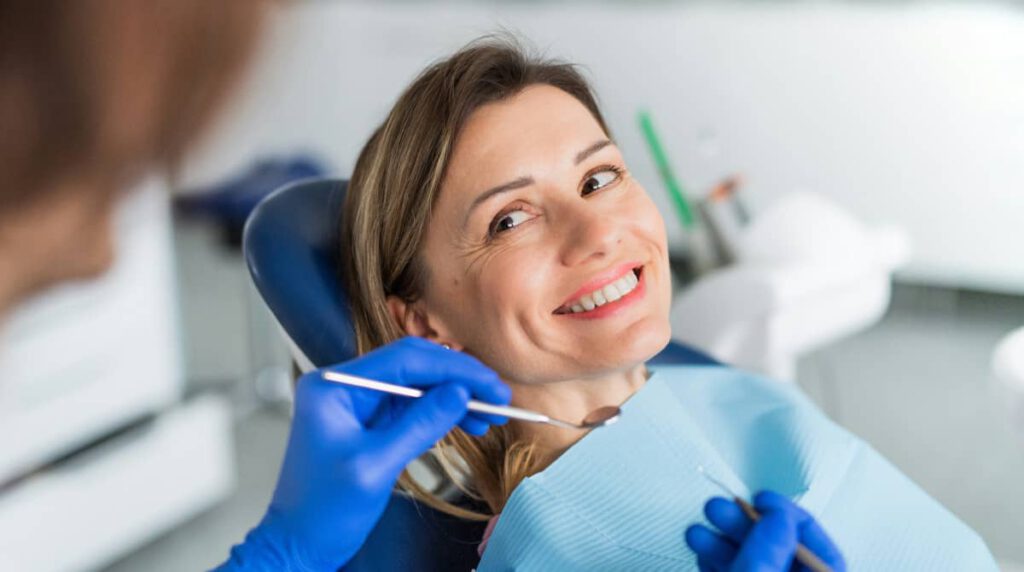
Porcelain dental veneers are thin ceramic shells custom-made in a laboratory for each patient. Porcelain veneers are approximately 0.5 mm thick, which allows them to closely mimic the appearance of natural enamel.
Advantages:
- Highly aesthetic: they offer a natural finish and can be customised in terms of shape, size and shade.
- They are stronger than natural tooth enamel.
- Porcelain veneers are resistant to staining and discolouration, unlike composite.
- Porcelain veneers last between 10 and 15 years, and even longer with proper care.
- Excellent translucency, gloss and long-term colour stability.
Points to consider:
- Porcelain veneers require minimal grinding of the tooth enamel so that the veneer fits seamlessly without making the tooth look bulky.
- They require a detailed aesthetic assessment, digital smile design and several sessions.
- The investment is higher than for composite, with prices in Mallorca ranging from €450 to €910 per unit.
A common example: people with severe tetracycline staining who want a complete colour change without losing their natural look. In such cases, porcelain veneers achieve a result that is difficult to attain with conventional whitening.
At Udemax Clinics, we use state-of-the-art porcelain materials and work with a specialist laboratory to achieve natural-looking results, avoiding ‘artificial’ or excessively white smiles that do not blend in with the patient’s face.
Lithium disilicate veneers: highly aesthetic ceramics
Lithium disilicate is a vitreous ceramic characterised by high strength and excellent optical properties. Lithium disilicate veneers are ultra-thin and aesthetically pleasing, and many of the so-called ‘dental contact lenses’ are made from this very material.
Lithium disilicate offers excellent optical properties, with translucency and light refraction very similar to those of natural enamel. This makes it possible to produce very thin veneers – as thin as 0.3 mm – whilst ensuring they blend in so well as to be virtually imperceptible.
Advantages:
- Lithium disilicate offers greater fracture resistance than feldspathic porcelain at a lower thickness, allowing for thinner laminates without compromising durability.
- Lithium disilicate veneers offer both excellent aesthetics and strength.
- Minimal preparation may be required, or in certain cases, no preparation at all may be needed for veneers.
- Lithium disilicate veneers are resistant to staining and discolouration.
- Good biocompatibility with the gums.
When is disilicate preferred over conventional porcelain:
- Patients seeking the utmost natural appearance and translucency.
- Cases involving significant colour changes without compromising the natural appearance of the tooth.
- People whose smile is part of their professional image (such as those who deal with the public).
- This type of veneer requires a more precise technique for fitting, so it is essential to have a team with experience in ceramic bonding.
At Udemax Clinics, disilicate veneers form part of our advanced cosmetic dentistry treatments. We use digital scanning and smile design to ensure that each veneer is customised to the optimal shape, colour and position.
Zirconia veneers: when are they recommended?
Zirconium (zirconium oxide) is a highly durable ceramic material, with a mechanical hardness superior to that of porcelain and lithium disilicate. Zirconium veneers are very durable but less aesthetically pleasing than the former, as they are less translucent. They are not the first choice for aesthetics when the priority is maximum natural appearance in anterior teeth. At Udemax Clinics, we prioritise lithium disilicate or layered ceramic for visible teeth. Zirconia is used more frequently in dental crowns than in veneers, where its strength is more beneficial. Zirconia veneers offer high resistance to discolouration and may be suitable for patients with severe bruxism, large restorations or heavily discoloured teeth that require a more opaque core. Currently, many clinics avoid using zirconia veneers in the anterior region, reserving them for specific functional situations. At Udemax Clinics, when the priority is maximum natural appearance, we prefer layered porcelain or lithium disilicate. Zirconia is considered a specific option, not the first choice for aesthetics in all cases.
Ultra-thin veneers or ‘contact lenses’
Ultra-thin veneers – commonly known as ‘dental contact lenses’ – are extremely thin ceramic shells that are fitted without the need to grind down the tooth, or with only minimal reduction of the enamel.
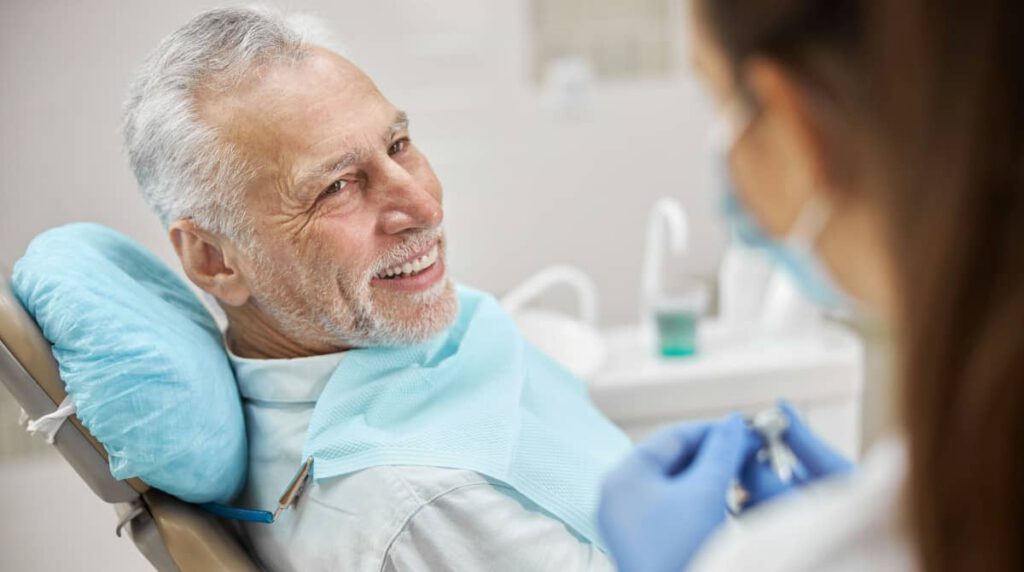
- Ultra-thin veneers are 0.3 mm thick, which is significantly thinner than conventional veneers.
- Ultra-thin veneers require little or no reduction of tooth enamel.
- They are usually made from porcelain or lithium disilicate.
- They are ideal for preserving the natural structure of the teeth.
- Ultra-thin veneers are reversible if the tooth is not ground down, which is a major advantage in the long term.
- They deliver aesthetic results without the need for invasive procedures.
Directions:
- Teeth that are well-aligned and of a relatively suitable colour, where the aim is to refine their shape or close small gaps.
- Slight changes in colour or an improvement in the surface finish.
- Patients who wish to preserve as much of their natural teeth as possible.
Not all patients are suitable candidates: if the teeth protrude significantly, are very dark or have significant misalignment, a different approach may be required. At Udemax Clinics, we use a photographic assessment and 3D scan to determine whether it is feasible to use this type of no-prep veneer.
Types of veneers depending on the shape of the tooth
Apart from the material, one of the most important factors when choosing veneers is whether or not they require the tooth to be ground down. Grinding involves removing a small layer of enamel to make room for the veneer and, when carried out, is an irreversible procedure.
The current trend in cosmetic dentistry, which we follow at Udemax Clinics, is to be as conservative as possible with the natural tooth. The decision depends on:
- The thickness and position of the tooth.
- To what extent the shape or colour needs to be altered.
- The type of ceramic material chosen.
- The patient’s expectations regarding the outcome.
Bonded veneers vs non-bonded veneers
- Contoured veneers: a small amount of enamel (between 0.3 and 0.7 mm) is removed so that the veneer does not protrude and is aligned with the smile. These are recommended when the shape or colour needs to be significantly altered. The wear is minimal but irreversible.
- No-prep veneers: an ultra-thin veneer is bonded to the virtually intact enamel. They are only suitable when the position, shape and colour of the tooth allow for it.
Quick comparison:
- Impact on dental health: less so with non-prep veneers; with prep veneers, a layer of enamel is lost which does not regenerate.
- Reversibility: non-prep veneers can be removed without causing any damage; prep veneers mean that some form of restoration must always be in place.
- Patient experience: non-prep veneers tend to cause less sensitivity after treatment.
- Compatible materials: non-prepared veneers require ultra-thin materials (lithium disilicate, high-end porcelain); prepared veneers allow for a wider range of materials and thicknesses.
At Udemax, we prioritise minimally invasive techniques wherever possible, combining digital smile design with in-mouth trials (mock-ups) to verify the result before making any irreversible decisions.
Which type of dental veneers is best for you?
There is no single ‘best’ type of veneer. The best option is the one that suits each person’s aesthetic, functional and financial needs.
During your first visit to Udemax Clinics in Mallorca, a comprehensive examination is carried out, including photographs, a digital scan and, if necessary, X-rays, to assess the mouth as a whole.
- The following factors are taken into account: age, the condition of the enamel, current colour and shape, smile line, habits (coffee, smoking), whether the patient suffers from bruxism, and the available budget.
- Composite is usually ideal for minor repairs, young people or as a temporary solution.
- Porcelain and lithium disilicate are the preferred choice for those seeking durability, a natural look and long-term colour stability.
- Zirconia is considered in cases where mechanical strength is a priority (severe bruxism, severely compromised teeth).
If you’re considering a change to your smile, the most sensible thing to do is to book a personalised consultation with a dentist who specialises in cosmetic dentistry, rather than assuming that one material is universally ‘the best’.
We'll evaluate your case at no cost at any of our three clinics in Palma
Schedule your first free visitBefore and after results: what you can expect
When planned correctly, porcelain or lithium disilicate veneers transform the smile in a striking yet natural way. A recent systematic review puts the survival rates of laminated ceramic veneers at over 96 per cent after 10 years, which gives an idea of how reliable the results are.
- Closing diastemas: the gaps between the central incisors are corrected using veneers that slightly increase the width of each tooth.
- Teeth worn down by bruxism: the original length and shape of the incisal edges are restored.
- Severe staining: tetracycline stains or fluorosis can be completely concealed with bespoke ceramic restorations.
- At Udemax Clinics, we use digital simulations and in-mouth mock-ups to give each patient an idea of the likely outcome before they make a decision.
- The aim is always to achieve a smile that is in proportion to the face, avoiding the effect of teeth that are too white or too large.
Care, maintenance and lifespan of veneers
The lifespan of veneers depends on the material, the fitting technique and, above all, the patient’s habits. Porcelain veneers can last for many years with the right care. It is essential to maintain a daily oral hygiene routine that includes brushing 2–3 times a day with non-abrasive toothpaste, as well as using dental floss or a water flosser. In addition, it is recommended to attend check-ups at the clinic every 6–12 months, where professional scaling and polishing will be carried out. It is important to avoid excessive stress, such as biting hard objects like bones, shells, ice or pens. For patients with bruxism, wearing a night guard is essential to protect the ceramic veneers. As for maintenance, composite veneers require periodic polishing and possible colour touch-ups every few years, whilst ceramic veneers require fewer cosmetic procedures, although check-ups are still necessary. In terms of approximate lifespan, composite veneers usually last between 5 and 7 years, whilst porcelain and lithium disilicate veneers can remain in good condition for 10–15 years or more if the registered dentist’s instructions are followed.
Dental veneers at Clínicas Udemax (Mallorca)
At Udemax Clinics, we are a leading provider of cosmetic dentistry in Mallorca, specialising in personalised treatments using dental veneers.
Standard treatment steps:
- Initial diagnostic consultation: full examination, photographs and X-rays if necessary.
- Photographic and digital studio: 3D scanning and smile design.
- Selecting the type of veneer in consultation with the patient, taking into account the material, preparation and expectations.
- Aesthetic trial using an in-mouth mock-up to visualise the result.
- Placement and permanent cementation using advanced bonding protocols.
Our team consists of dentists specialising in cosmetic dentistry and prosthetics, with specific expertise in porcelain veneers and lithium disilicate veneers. At Clínicas Udemax, our aim is to enhance your smile whilst preserving your natural teeth and gum health as much as possible.
If you’re thinking about changing your smile, book an appointment for a consultation at our clinic in Mallorca. No obligation, no pressure.
Frequently asked questions about types of dental veneers
Can I have veneers fitted to just one tooth?
Technically, yes. For example, a fractured incisor can be restored with a single veneer. However, it is often recommended to treat at least 2–4 teeth so that the colour and shape blend in perfectly with the rest of the smile. At Udemax Clinics, we assess each case individually: for very localised defects, a single veneer combined with whitening of the remaining teeth may be sufficient.
The aim is to ensure that the tooth with the veneer does not ‘stand out’ from the neighbouring teeth, which requires a minimum of aesthetic planning.
Can dental veneers be removed or replaced?
- Composite veneers are easier to remove or modify, as they usually require little or no preparation.
- Ceramic veneers (porcelain, lithium disilicate, zirconia) can be replaced, but if the enamel has been ground down, it will not regenerate: the tooth will always require some form of restoration. This is why a thorough preliminary diagnosis and a carefully considered decision, made in consultation with a cosmetic dentistry specialist, are so important.
Do veneers damage your teeth?
When treatment is well planned and carried out with minimal intervention, veneers should not damage the teeth, but rather provide them with partial protection. In cases where tooth reduction is required, only a very thin layer of enamel (0.3–0.5 mm) is removed, always aiming to be as conservative as possible.
At Udemax Clinics, we prioritise ultra-thin and no-prep veneer techniques whenever the clinical situation allows, in order to preserve the tooth’s structure. It is a safe procedure when carried out by an experienced professional.
Can dental veneers become stained?
It depends on the material. Composite tends to discolour over time, whilst ceramic veneers (porcelain, lithium disilicate, zirconia) are highly resistant to staining. Even so, good oral hygiene and regular check-ups are essential for maintaining the brightness and health of your gums and teeth.
It is recommended that you cut down on the regular consumption of tobacco, coffee, black tea and strongly coloured drinks in order to maintain the overall appearance of your smile.
How long does it take to complete a veneer treatment?
Composite veneers are usually fitted in a single appointment or over a few sessions.
Porcelain or lithium disilicate veneers usually require between 2 and 4 appointments: an initial assessment, aesthetic trials and final fitting. In most cases, a complete smile makeover can be achieved in a few weeks, depending on the treatment plan and whether any prior treatment is required (such as orthodontics or treatment for tooth decay).