What is an overbite and how can it be treated?
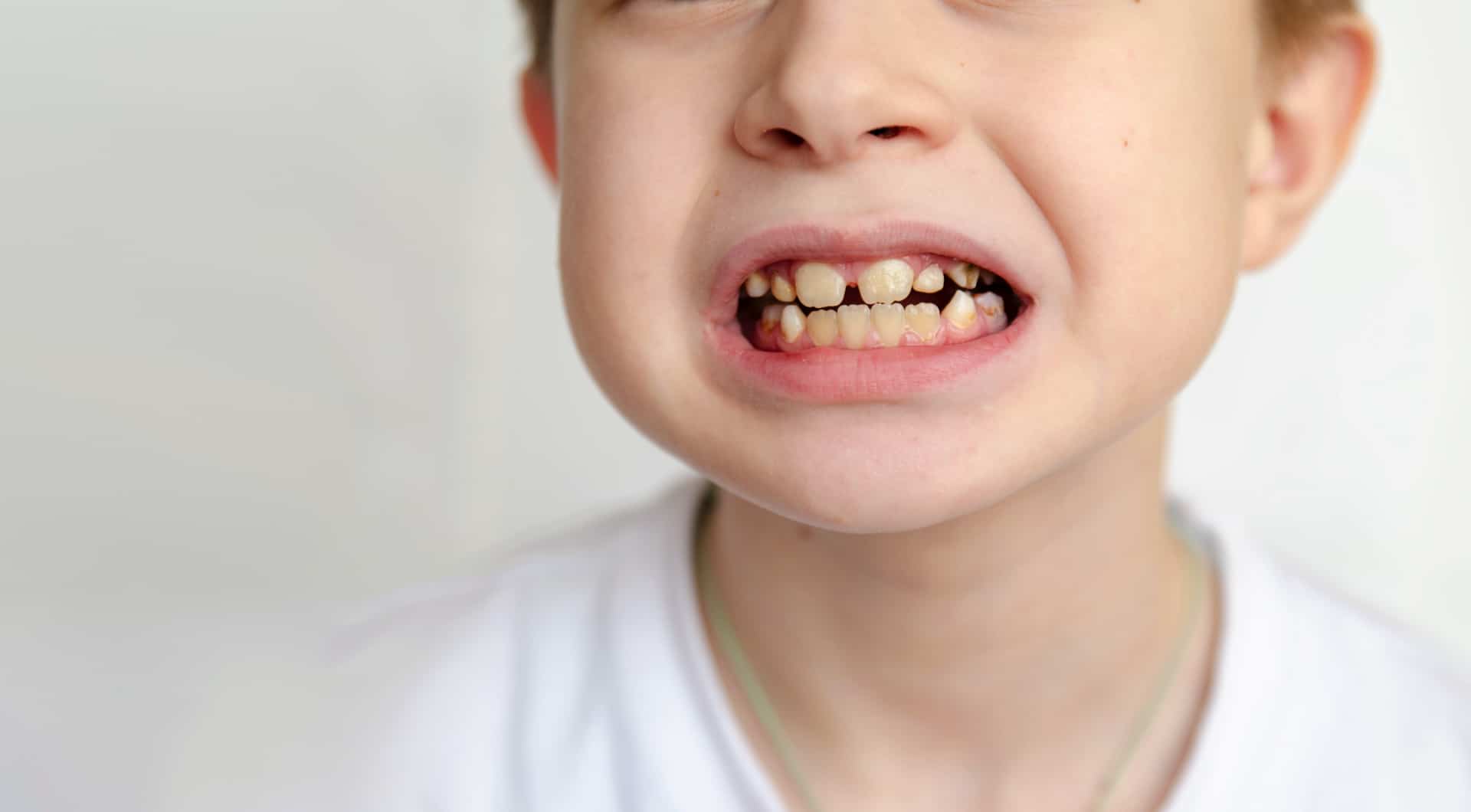
There are several ways in which the upper and lower dental arches do not fit together correctly; in other words, where the upper and lower teeth do not align when biting down. When this happens, we refer to it as a dental malocclusion; an overbite is one of the most common types, but also one of the least noticeable in children as they develop.
What you need to know about an overbite.
- What is an overbite?
- Can an overbite be prevented?
- What problems does this cause?
- How is an overbite treated?
1. What is an overbite?
An overbite is a Class II malocclusion in which the upper teeth are positioned further forward than the lower teeth and, depending on the severity, may cover them partially or completely vertically. In other words, it is a type of dental malocclusion in which the upper jaw protrudes further than the lower jaw.
As we have mentioned, this type of bite is not always noticeable, particularly in milder cases, as it is not necessarily accompanied by misalignment of the teeth – that is, crooked teeth in the dental arch. However, when the upper incisors cover more than a third of the lower ones – when they should cover no more than a third – this is considered a deep overbite, and in some cases they may even cover them completely. This also helps to distinguish between the different types of overbite according to their severity or the way in which they manifest.
2. Can an overbite be prevented?
During the period of growth and development in young children, it is essential to instil good dental hygiene habits in them and ensure they learn these habits. This is because the causes of overbite include both factors acquired during childhood and genetic inheritance, as the shape of the upper and lower jaws can be passed down from parents to children and contribute to this malocclusion; in fact, it is hereditary in a large percentage of cases. Furthermore, one particular habit can lead to an overbite: thumb-sucking or prolonged use of a dummy, together with abnormalities in the tongue, its position and the pressure it exerts, which influence the development of the bite. Prolonged thumb-sucking also disrupts the development of the jawbones.
It is therefore important for parents to bear in mind that, if a child uses a dummy, harmful oral habits must be stopped before the age of three. On the other hand, if the problem is thumb-sucking or sucking on another finger, it is advisable to consult a paediatrician, paediatric dentist and orthodontist, who can provide the necessary advice to break this habit and thus prevent an overbite and any problems it might cause.
3. What are the problems and causes of an overbite?
Although, as we have mentioned, there are different degrees of overbite, its consequences can lead to other problems; in fact, they can also affect oral function and aesthetics:
- Difficulty speaking, as correct bite alignment is key to the articulation of certain sounds.
- Problems with chewing, leading to functional problems, excessive wear on some teeth and pain when biting into food.
- Damage to soft tissues such as the gums caused by the strain exerted by certain teeth.
- Damage to tooth enamel, which can lead to an increased risk of tooth fractures.
- Abnormalities in the teeth that can lead to crowding of the incisors and even the canines (fangs).
- As a result, oral hygiene can become more difficult, which may increase the likelihood of developing tooth decay.
- Respiratory problems associated with the cause of the malocclusion. Inability to breathe with the mouth closed.
- Bruxism, caused by excessive tension in the jaw due to malocclusion and tooth wear.
- Problems with the temporomandibular joint (TMJ), which can also cause headaches and neck pain
- Changes to the appearance of the face, as the relationship between the upper jaw and the lower jaw appears visually unbalanced; a severe overbite can affect the aesthetics of the face and the smile.
4. How is an overbite treated?
The main aim of treatment for overbite in young children and adolescents is to correct the incorrect relationship between the teeth in the upper arch and those in the lower arch. This will improve both the functionality and the appearance of the teeth. However, to achieve this, orthodontic treatment must be tailored to when the problem was diagnosed, the severity of the malocclusion — including severe overbite, which is discussed in section 1.4.2 — and how it manifests in each patient. Below, we will look at how to correct an overbite according to the patient’s age and individual needs in each case:
4.1. Interceptive orthodontics.
Interceptive orthodontics is a form of paediatric orthodontic treatment that can correct and prevent cases of overbite in children aged between 6 and 11, using appliances that guide the growth of the jawbones whilst they are still developing, provided that an accurate diagnosis is made at specialist clinics.
At this stage of life, it is possible to focus on the jawbones rather than the position of the teeth, as we would otherwise have to wait until all the permanent teeth have come through. That is why, following this treatment, it may be necessary to undergo what is known as corrective orthodontic treatment.
4.2. Corrective orthodontics.
Corrective orthodontic treatment usually begins at the age of 12, once the jawbones have fully developed and the permanent teeth have erupted. This type of orthodontic treatment makes it possible to correct the position of the teeth in teenagers and young adults (as well as adults) using the following treatments.
Corrective orthodontic treatment enables teenagers to reach adulthood with correctly aligned teeth, resulting in an ideal bite that ensures both optimal functionality and aesthetics. In this case, there are several types of treatment that can be carried out, and they usually last between 12 and 24 months, although mild overbites can be corrected in 12 months:
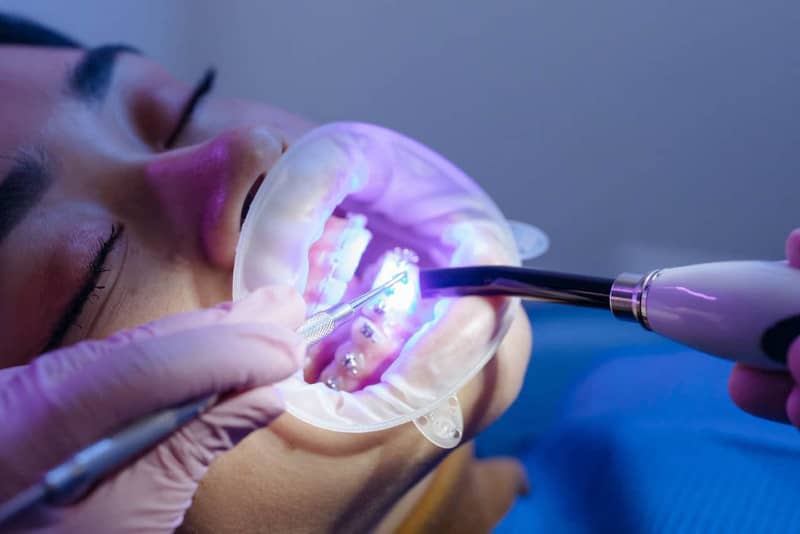
- Orthodontic treatment using metal braces or self-ligating braces, which is the most common type of treatment; traditional braces are an effective method of gradually moving teeth and achieving the goals set by the specialist
- Orthodontics using Invisalign Teen clear aligners is a more aesthetically pleasing treatment involving custom-made aligners that need to be changed regularly to gradually improve the alignment of the teeth; furthermore, clear aligners are a popular option for teenagers and adults.
On the other hand, if a person reaches adulthood with a severe overbite that has not been corrected during childhood, it would be necessary to undergo orthodontic treatment alongside what is known as orthognathic surgery, which is carried out from the age of 21 onwards and would correct the relationship between the upper and lower jaws.
That is why, in order to avoid these more complex and costly procedures, it is recommended that children attend regular check-ups with a paediatric dentist, who will not only assess whether the health of their teeth and gums is optimal, but will also monitor the growth of the upper and lower jaws during the developmental stage to effectively prevent and correct an overbite at an early age, thereby achieving an ideal bite for adolescents and adults, as the Spanish Society of Orthodontics also points out in this informative article.