Myths about dental health that are false
En este artículo
- 1. Regular check-ups and clean-ups at the dentist wear down my teeth.
- 2. Titanium implants can be rejected.
- 3. It’s not pyorrhoea, it’s periodontitis.
- 4. The more foam the toothpaste produces, the better it cleans.
- 5. Periodontal treatment is pointless because I’m going to lose my teeth just like my parents did.
- 6. Mouthwash… the more it stings, the better it works.
- 7. Bad breath is caused by digestive problems.
- 8. Regular dental cleanings are a substitute for periodontal treatment.
- 9. I’ll brush my teeth in the morning…
- 10. Chewing gum can replace oral hygiene.
- 11. It’s normal for my gums to bleed… and it doesn’t even hurt.
- 12. Periodontal diseases are not contagious.
- 13. Orthodontic treatment is only for children.
- 14. Receding gums are a natural part of ageing.
- 15. My saliva causes a lot of tartar to build up.
- 16. Smoking just stains my teeth.
- 17. My gum problems stay in my mouth.
- 18. I brush my teeth three times a day; my gums are healthy.
- 19. Electric toothbrushes damage my gums and teeth
- 20. I’m too old; I can’t have implants and it’s not worth it
1. Regular check-ups and clean-ups at the dentist wear down my teeth.
Teeth are the hardest and most durable part of the body. Professional cleaning and the treatment of gum disease, carried out as part of proper preventive dentistry, do not harm or damage the structure of the teeth or the enamel that covers their surface.
Dental check-ups (at least those we carry out at Udemax Clinics) have no adverse effects and do not cause wear and tear to the teeth or enamel; however, there are certain practices or habits that do have implications for long-term dental health. One of the most common dental myths is the belief that brushing your teeth vigorously is more effective, but in reality, brushing too hard not only fails to improve cleanliness but can also damage tooth enamel and cause gum recession. It is essential to brush gently for at least two minutes, twice a day, using a suitable toothbrush. It is recommended to choose a medium-firm toothbrush and use gentle circular movements, as hard-bristled brushes can damage both the enamel and the gums. Furthermore, it is important to replace the toothbrush or electric brush head every three months, or sooner if the bristles are worn. Other harmful habits include biting pencils or nails, drinking fizzy drinks and using your teeth as tools.
2. Titanium implants can be rejected.
They are made of titanium, a material that is completely biocompatible.
Titanium is a metal that has not been shown to cause any toxic or irritant reactions in living tissue; however, there are certain limitations or restrictions that may affect the success of implants, such as the patient’s general state of health. In other words, if an implant fails, once it has been removed and the tissue healing period has elapsed, it can be replaced and achieve successful osseointegration.
3. It’s not pyorrhoea, it’s periodontitis.
In dentistry, it is essential to use the correct terminology to avoid confusion and misunderstandings. Colloquially, the term ‘piorrea’ is used to refer to periodontal diseases that affect the tissues supporting the teeth. However, many popular beliefs can lead to misunderstandings about dental health, so it is more accurate and advisable to replace this term with ‘periodontitis’, which is the term used by dentists at Udemax Clinics and refers to a deep infection or inflammation of the gums and the other tissues that hold the tooth in place.
4. The more foam the toothpaste produces, the better it cleans.
The purpose of these substances is to provide a pleasant sensation in the mouth when used, but they do not affect the outcome. It is essential to have accurate information about dental products to avoid falling for myths and to choose the right oral care products.
5. Periodontal treatment is pointless because I’m going to lose my teeth just like my parents did.
Treatment for periodontitis is highly effective, preserving your teeth in the vast majority of cases. Prevention and proper care, combined with regular visits to the dentist, are essential, as tooth decay and gum disease may not cause pain in their early stages. That is why it is vital to visit the dentist at least once or twice a year for check-ups and professional cleanings, not just when there is pain. This allows problems to be detected early and enables better-informed decisions to be made to maintain dental health, prevent tooth loss and, in some cases, even regenerate some of the lost bone using regenerative techniques.
6. Mouthwash… the more it stings, the better it works.
Mouthwashes with a high alcohol content are not necessarily more effective and can cause dryness of the oral tissues by altering the quantity and quality of saliva. Mouthwash can be a useful addition to your oral hygiene routine, but it is no substitute for brushing or flossing. At Udemax Clinics, we advise against using mouthwashes containing alcohol or essential oils.

7. Bad breath is caused by digestive problems.
In fact, halitosis, or bad breath, originates in the mouth in 85–90% of cases. Maintaining good oral health is essential for preventing halitosis and other oral diseases, as it is caused by anaerobic bacteria in the mouth that break down food particles.
It is common for fear or anxiety about visiting the dentist or receiving a diagnosis to prevent many people from seeking professional help. So, if you are concerned about bad breath, before you consider visiting various medical specialists, we recommend having your gum health assessed at Udemax Clinics.
8. Regular dental cleanings are a substitute for periodontal treatment.
Regular cleanings are no substitute for periodontal treatment, which offers a range of additional benefits that are essential for maintaining good oral health. A dental cleaning simply cleans the tooth, whereas periodontal maintenance not only cleans the tooth but also allows for cleaning beneath the gum line. In patients with periodontal problems, there is no point in cleaning the outside if the problem lies within.
9. I’ll brush my teeth in the morning…
When we sleep, we produce less saliva, which encourages the growth of bacteria responsible for tooth decay and gum disease. Brushing your teeth at night is essential for preventing tooth decay, as overnight food particles – particularly those containing sugar or other carbohydrates – can be broken down by bacteria, producing acids that attack tooth enamel and trigger the process of tooth decay. It is important to remember that sugar is a major factor in the development of tooth decay, but it is not the only culprit, as any type of carbohydrate can contribute to its development. Don’t put off until tomorrow what you can do today!
10. Chewing gum can replace oral hygiene.
What chewing actually does is create a sweeping action and increase saliva production, both of which are highly beneficial for oral health. However, chewing gum is no substitute for brushing and flossing. Flossing is crucial for oral health, as it allows you to clean areas that a toothbrush cannot reach and prevents the build-up of plaque. Therefore, flossing should be part of your daily oral hygiene routine, complementing brushing and other methods to maintain a healthy mouth.
11. It’s normal for my gums to bleed… and it doesn’t even hurt.
Bleeding is one of the few signs that indicate gum disease. Healthy gums should not bleed. At Udemax Clinics, we emphasise the importance of keeping your gums in good condition. This is the foundation for maintaining strong teeth that will not cause problems in the future.
12. Periodontal diseases are not contagious.
Published studies show that the same bacterial profile is present in both partners, provided they have lived together for more than 10 years. It is strongly recommended that the periodontist assess the spouse of a patient with periodontal disease and their children from adolescence onwards, utilising appropriate paediatric and adolescent periodontal care and providing the whole family with the necessary information to prevent the transmission of periodontal disease.
13. Orthodontic treatment is only for children.
Orthodontic treatment can be carried out at any age. Braces and other orthodontic corrective systems are an effective option for both children and adults, dispelling the myth that they are only for younger people. At Udemax Clinics, we have experience treating patients as old as 70. It is never too late to straighten your teeth and enjoy a healthy, attractive smile, improving both your dental appearance and your self-confidence.
14. Receding gums are a natural part of ageing.
Gum recession is not linked to age. It can also occur in young patients and has various causes, including oral health issues such as hormonal or anatomical changes, as well as aggressive brushing of the gums, consumption of highly acidic foods or the presence of a lingual or labial frenulum… It is advisable to seek treatment as soon as such recession is detected, as many cases can be resolved easily and affordably.
15. My saliva causes a lot of tartar to build up.
Whilst it is true that, due to pH levels, some people experience greater and faster tartar build-up, this can be prevented by maintaining good dental hygiene through proper, thorough and meticulous brushing within the first 24 hours of plaque formation, thereby preventing it from calcifying. Good dental hygiene is essential for preventing the build-up of plaque and the development of tooth decay, which are caused by a combination of factors such as poor oral hygiene, a diet high in sugars and carbohydrates, genetics and other factors. In this way, we can prevent the formation of tartar deposits.
16. Smoking just stains my teeth.
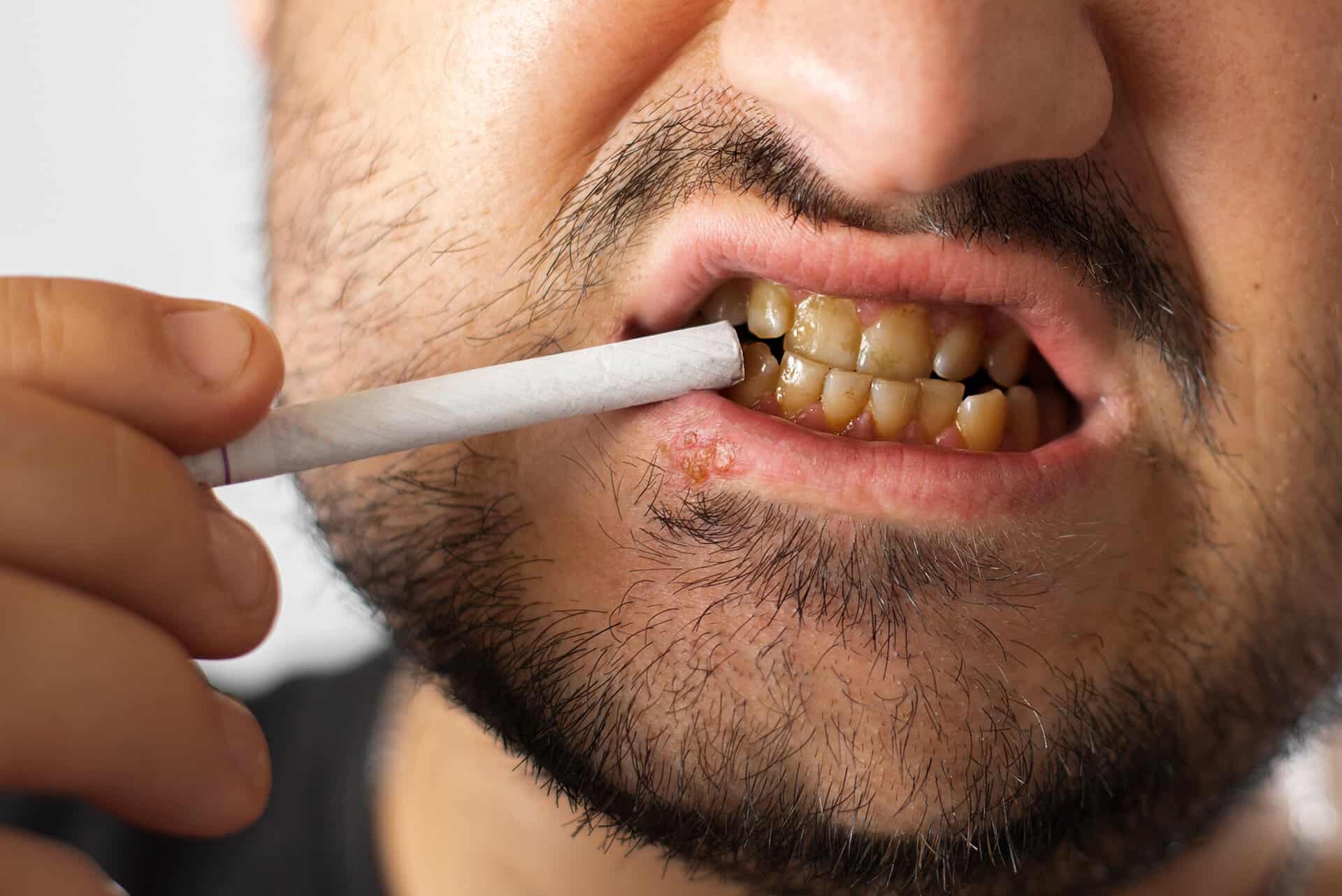
Not only that, but it can also lead to bad breath or halitosis and, above all, is a cause of a wide range of diseases and a risk factor for periodontitis. Therefore, making informed decisions about tobacco use is essential for protecting oral health and preventing these problems.
17. My gum problems stay in my mouth.
There is now strong evidence linking periodontitis to other very common and serious conditions, such as diabetes, cardiovascular disease, adverse effects during pregnancy and respiratory problems. It is therefore essential to maintain regular care and check-ups to prevent systemic complications related to oral health. If you suffer from periodontitis or pyorrhoea, be sure to visit a Udemax Clinic, where you will find the solution to your pyorrhoea.
18. I brush my teeth three times a day; my gums are healthy.
The effectiveness of brushing your teeth depends not only on how often you do it, but also on using the right technique and how motivated you are – essential factors for achieving and maintaining good oral health. Access to hard-to-reach areas and the time spent brushing also play a part. If you find that after brushing, you can still see or feel dirty areas, at Udemax Clinics we can offer you lessons on how to improve your brushing technique.
19. Electric toothbrushes damage my gums and teeth
Brushing each tooth correctly for a sufficient amount of time optimises the results. An electric toothbrush can be much more effective for people who find it difficult to reach certain teeth or spaces. However, it is essential to attend regular check-ups with your dentist to ensure you are using your electric toothbrush correctly and to maintain optimal oral health. Even so, you must not neglect this and should use it correctly for the right amount of time.
20. I’m too old; I can’t have implants and it’s not worth it
Advanced age is not a contraindication for dental implants; the only limiting factor is the patient’s state of health. It is essential that older people make informed decisions about dental implants, as having a full set of teeth helps to maintain digestive function and general health in later life, preventing digestive problems.