Baby Teething: A Complete Guide
En este artículo
- What is teething?
- When do babies’ teeth come through? (Month by month)
- Common symptoms of teething
- Common problems during teething
- How to soothe a baby’s discomfort
- Teething and breastfeeding
- First visit to the paediatric dentist (very important)
- Emergencies and warning signs
- Dental care for babies by age
- Frequently Asked Questions
- How to help your baby through teething with peace of mind
The definitive guide for parents, compiled by the paediatric dentists at Udemax Clinics
A baby’s teething is one of the most eagerly awaited — and sometimes most stressful — processes for families. The content of this guide is organised to make it easy to find information on teething, helping parents to understand each stage. From the first nibbles at 3 months to the eruption of molars, teething can cause increased salivation, discomfort, irritability and even changes in sleep or appetite.
In this comprehensive guide, you’ll find:
- When do a baby’s teeth come through (month by month) and what does the emergence of each one look like?
- Order of eruption of the primary teeth
- Here are the real symptoms of teething… and the myths
- What to do if a baby is slow to cut its teeth
- Early teething: teeth at 2–3 months
- Care, remedies and warning signs
- The relationship between teething, fever and diarrhoea
- Teething and breastfeeding
- Early dental care and prevention of bottle tooth decay
What is teething?
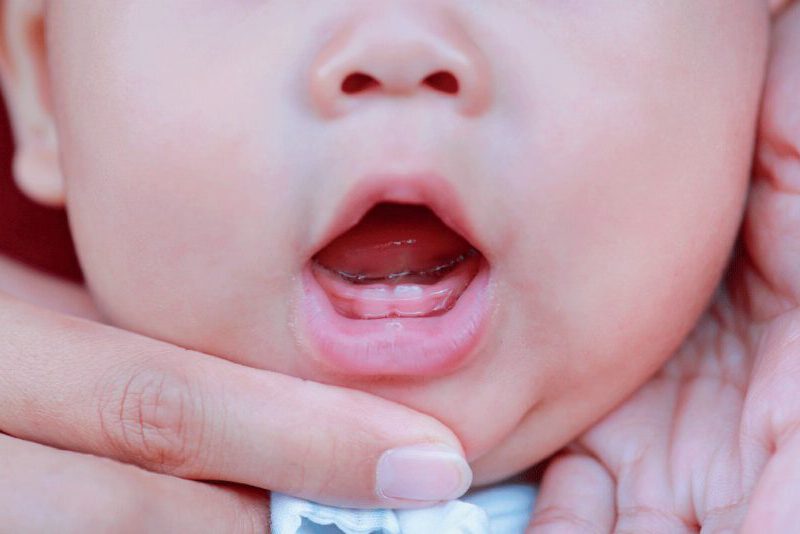
Teething is a stage of a child’s development during which the primary teeth (baby teeth) break through the gums. Every baby develops at their own pace, but most begin teething between 4 and 7 months, with variations being completely normal.
During teething, parents may notice various signs that indicate their baby is going through this stage, such as sore gums or changes in behaviour.
Baby teeth perform essential functions:
- They enable you to chew properly
- They help with speech
- They keep space for the permanent teeth
- They guide the growth of the facial bones
That is why, even though they are ‘just baby teeth’, they need looking after from day one.
When do babies’ teeth come through? (Month by month)
Standard timeline for the eruption of primary teeth
A baby’s teething process usually begins between 4 and 7 months of age, which is the age range in which the first signs of teething typically appear. The typical order in which baby teeth emerge starts with the lower central incisors.
Age | Teeth coming through |
|---|---|
4–7 months | Lower central incisors |
6–10 months | Upper central incisors |
8–12 months | Upper and lower lateral incisors |
12–16 months | First molars |
16–20 months | Canines |
20–30 months | Second molars |
Depending on the type of tooth coming through and the baby’s age in months, the symptoms of teething can vary in intensity and discomfort. By the age of 3, most children have all 20 of their milk teeth. |
Early teething: “My 3-month-old baby has teeth”
Some babies start teething very early (at 2–3 months), whilst others may experience variations in the teething process. A baby’s first tooth usually appears between 6 and 12 months, although some babies may not have any teeth by their first birthday. It is normal if:
- There is no excessive inflammation
- The baby is feeding well
- The tooth isn’t very loose
If the tooth is very loose, it may be a neonatal or connatal tooth, which sometimes needs to be removed. Your paediatric dentist will confirm this.
Late teething: “My 1-year-old hasn’t got any teeth yet”
The absence of teeth before the age of one is not usually a cause for concern, but it is advisable to seek advice if any of the following symptoms or circumstances arise: there is a family history of late teething, the baby had a low birth weight, there are delays in other areas of development, or the gums are persistently swollen.
Most cases are normal variants, but a check-up will rule out:
- Tooth agenesis
- Rash problems
- Severe nutritional deficiencies
If you have any concerns about teething or notice any worrying symptoms, it is important to consult your paediatrician for advice and to rule out any potential complications.
Common symptoms of teething
The signs of teething in babies can vary, but they usually manifest themselves in both the baby’s behaviour and physical appearance. Babies may show symptoms such as irritability, excessive drooling, swollen gums and a strong urge to bite objects. The most common symptoms include increased salivation, swollen gums and tenderness in the area where the tooth is coming through. Furthermore, babies often become more fussy and difficult to comfort during teething due to discomfort in their mouths.
Symptoms that look like teething but aren’t:
High fever, severe diarrhoea, vomiting, persistent cough, thick green phlegm
Teething does not cause a high fever or illness.
When a baby is teething, it is common for their body temperature to rise slightly and for them to develop a mild fever (below 38°C), but a high fever or a genuine fever is not associated with this process and usually indicates the presence of an illness or infection. If these symptoms appear, there is likely to be another cause (a virus, a cold, gastroenteritis, etc.).
Common problems during teething
Sore gums during teething
The baby may be:
- More irritable
- More sensitive to pressure
- More mouth-watering
This is normal and will go away once the tooth has come through.
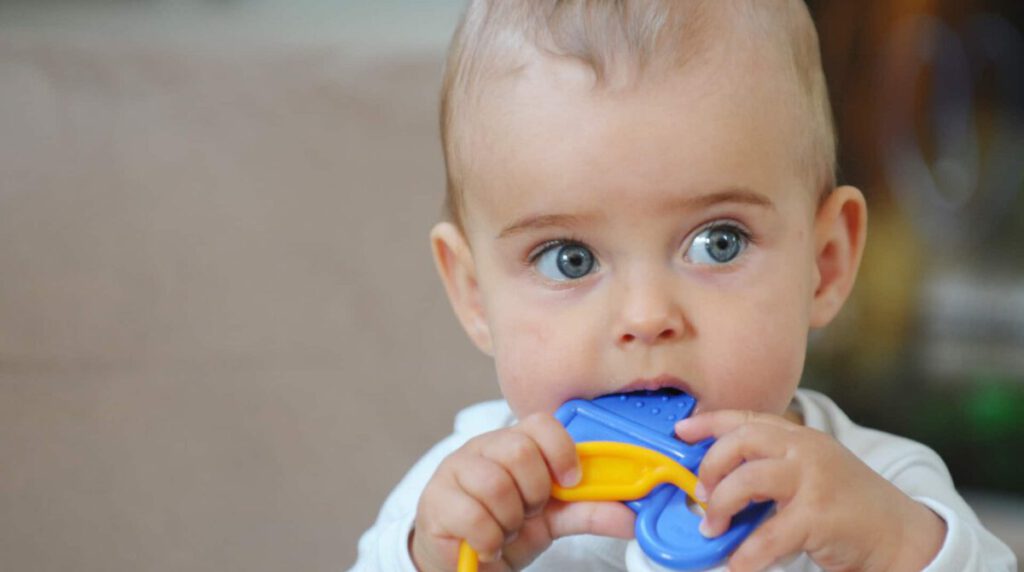
To relieve teething pain, it is recommended that you gently massage your baby’s swollen gums, as this can help soothe the discomfort. It is also helpful to offer something cold, such as cold teething rings or cold food, and on a particularly difficult night, you may consider giving paracetamol in accordance with your paediatrician’s instructions.
Constant teeth grinding or clenching
This is completely normal behaviour. To relieve the discomfort caused by teething, it is recommended that you give your baby a safe teething ring, preferably one that has been chilled, as this helps to soothe sore gums. Teething in babies usually stops once their permanent teeth start to come through.
Bad breath in babies
In some cases, it may be linked to gum problems such as periodontitis in children, although in babies it is usually caused by:
- A lot of pooled saliva
- Milk trapped on the tongue and gums
- A dry mouth when you have a cold
- Sore throats
It isn’t typical of teething, but it is very common at this stage.
Teeth that “grow crooked” or protrude sideways
This is normal at first.
The tooth usually settles back into place once it has fully erupted.
How to soothe a baby’s discomfort
Safe and effective remedies
- Cool (not frozen) teething rings. Using a teething ring made from safe materials, such as silicone, and cooling it can help soothe a baby’s sore gums during teething. Parents can also offer solid, non-liquid-filled teething rings, or a clean, damp or frozen cloth to relieve the pain.
- Massage the gums with a silicone teething ring or a clean finger. Gently massaging your baby’s gums with a silicone teething ring or a clean finger provides immediate comfort and helps relieve discomfort.
- Cool teething ring
- Cold foods if they are already eating solids
- Specialised balms containing no sugar or strong anaesthetics
What not to do
Apply benzocaine gels, teething tablets or other over-the-counter teething products. It is also not recommended to use frozen objects, as these can cause burns to the gums. The use of amber necklaces or teething necklaces is not advised due to the risk of strangulation and suffocation. Medicines should not be administered without professional advice, nor should alcohol, honey or dangerous home remedies be applied.
Teething and breastfeeding
Teething can cause increased drooling whilst the baby is breastfeeding, episodes of the baby biting down on their gums, and difficulty suckling on certain days.
It is important to dispel some common myths: breastfeeding does not damage teeth or cause tooth decay. The reality is that early tooth decay is caused by the consumption of added sugars, not by breastfeeding.
First visit to the paediatric dentist (very important)
In Spain, it is recommended that you take your child to the dentist when their first tooth appears or, at the latest, by their first birthday. This first visit helps to ensure a positive experience from the outset and familiarises your child with the dental environment.
Organisations such as the Spanish Society of Paediatric Dentistry and the General Council of Dentists of Spain recommend that all children have their first dental check-up before the age of one. The aim is to monitor the proper development of their teeth and prevent potential problems from a very early stage.
It is also advisable to have regular check-ups throughout childhood to ensure good oral health and support the proper development of children’s orthodontic treatment in Palma.
Why is it important?
- Prevention of early
tooth decay Tooth decay can develop as soon as the first teeth appear. Preventive measures, such as fluoride varnish, can be applied at the dentist’s surgery where necessary. - Gum assessment and tooth eruption This allows us to check that teeth
are coming through correctly and to detect any problems at an early stage. - Advice for parents:
We teach hygiene guidelines and brushing techniques tailored to each stage. - Correcting habits Habits such as using a dummy
or prolonged sucking are reviewed to prevent future problems.
Emergencies and warning signs
It is essential to see a paediatric dentist in Mallorca in cases such as a high fever accompanied by swollen gums, when a 12-month-old baby has not yet cut any teeth, or if there is heavy bleeding. It is also important to seek advice if a hard lump appears that does not go away, if a tooth is very loose in a young baby, if there is a strong, persistent bad smell, or if the baby completely refuses to eat or drink. Furthermore, suspected bottle tooth decay, which can manifest as white or brown spots on the teeth, is another reason to seek professional care.
Dental care for babies by age
0–6 months
- Cleaning with a damp cloth
- No honey, sugar or sugary drinks
- Avoid letting them fall asleep with a bottle of milk or juice
6–12 months
- Brush with 1000 ppm fluoride from the moment the first tooth appears
- Cooling teething rings
- First dental check-up
1–3 years
- Brush twice a day
- Toothpaste containing 1000–1450 ppm fluoride
- Full supervision (the child will only be able to brush their teeth properly once they can write their name neatly, as this indicates that they have developed the necessary motor skills)
- Avoid fruit juices, sugary yoghurts and baby biscuits to reduce the risk of childhood tooth decay
Frequently Asked Questions
Why do babies get teeth?
Because it is part of the normal development of the primary teeth.
How can I tell if my baby is teething?
Swollen gums, drooling, teething and sleep disturbances.
How long does teething last?
From 4 months to 3 years.
Does teething cause a fever?
No. There may be a slight rise in temperature, but never a high fever.
Is it normal for my baby not to have any teeth at 10–12 months?
Yes, but it’s a good idea to have a check-up if a year goes by without any teeth coming through.
Can baby teeth get cavities?
Yes. Early tooth decay is caused by sugary foods or poor oral hygiene.
How to help your baby through teething with peace of mind
Teething is a natural process which, although it can sometimes be uncomfortable, should not be a cause for concern. With reliable information, good habits and an early check-up, most babies get through this stage without any complications. Remember that after the baby teeth come the permanent teeth, including the wisdom teeth, which usually emerge during adolescence or adulthood as part of the adult dentition.
At Udemax Clinics, our paediatric dentists are here to help ensure your baby grows up with a healthy, strong and happy smile, right from their very first tooth.
Book a free check-up for your baby and get answers to all your questions from a specialist in paediatric dentistry.