Receding gums: debunking the myth
En este artículo
- What are receding gums and how can you spot them?
- Why do gums recede? (The real causes)
- Recession, abrasion, erosion and abfraction: they are not the same thing
- Symptoms of gum recession
- Does receding gum hurt?
- How is gum recession diagnosed?
- Treatments for receding gums
- Can receding gums be regenerated without surgery?
- The relationship between receding gums, orthodontics and bruxism
- How to stop your gums from receding further
- Treatment for receding gums at Udemax Clinics
Gum recession, also known as receding gums, is a common periodontal problem that causes the gums to ‘shrink’ and expose part of the tooth root. Although at first it may seem merely a cosmetic issue – for example, the teeth appear longer or the smile becomes uneven – it can actually have significant consequences for your oral health, such as sensitivity, tooth decay at the neck of the tooth, or even tooth loosening in the long term. In this article, we will discuss the causes and solutions for receding gums.
In this article, you’ll find a comprehensive and up-to-date guide designed to help you understand why it happens, when you should be concerned, and what treatments are available today to restore your smile. The build-up of plaque and bacteria is one of the main causes of gum recession, so prevention through good oral hygiene is essential to avoid this problem.
What are receding gums and how can you spot them?
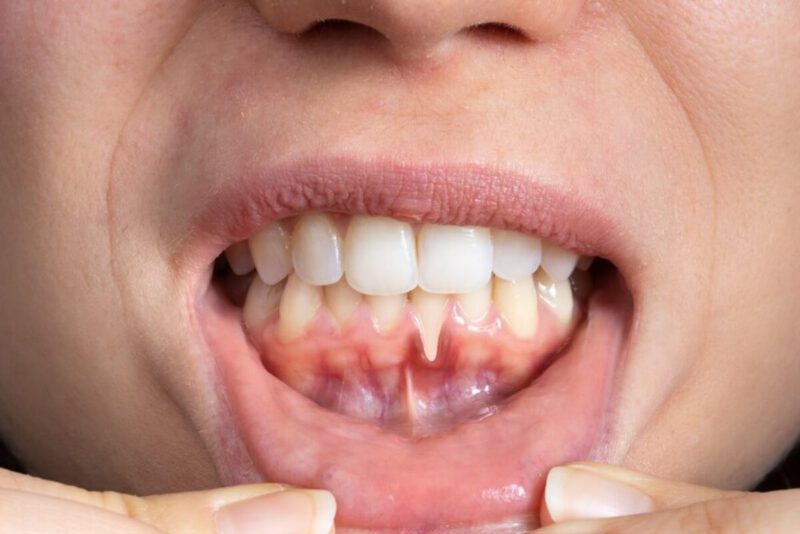
Receding gums refer to a downward (or upward) shift of the gum line, exposing the root of the tooth. Many people feel as though their gums are receding, which can cause concern about root exposure and the potential problems associated with it. This should not be confused with inflammation: inflamed gums swell; receding gums lose tissue.
Most common signs:
- Teeth that look longer.
- Exposed yellowish root.
- Sensitivity to cold, sweet foods or touch.
- Thin or translucent gums.
- An uneven gum line between two teeth.
If you ever notice one or more of these symptoms, it is advisable to have a periodontal assessment.
Why do gums recede? (The real causes)
Gum recession is not usually caused by a single factor, but rather by a combination of several factors. The causes of gum recession and receding gums can vary, and it is essential to identify them in order to prevent complications. Among the main factors is the build-up of bacterial plaque and tartar in the mouth, which promotes inflammation, irritation and damage to the gums, thereby facilitating gum recession. The build-up of bacteria can lead to infections and periodontal diseases, such as periodontitis (also known as pyorrhoea), which destroys the gum tissue and the tissues supporting the teeth. Another of the most common conditions is gingivitis, an inflammation of the gums caused by the build-up of plaque and food debris, which can lead to recession if not treated in time.
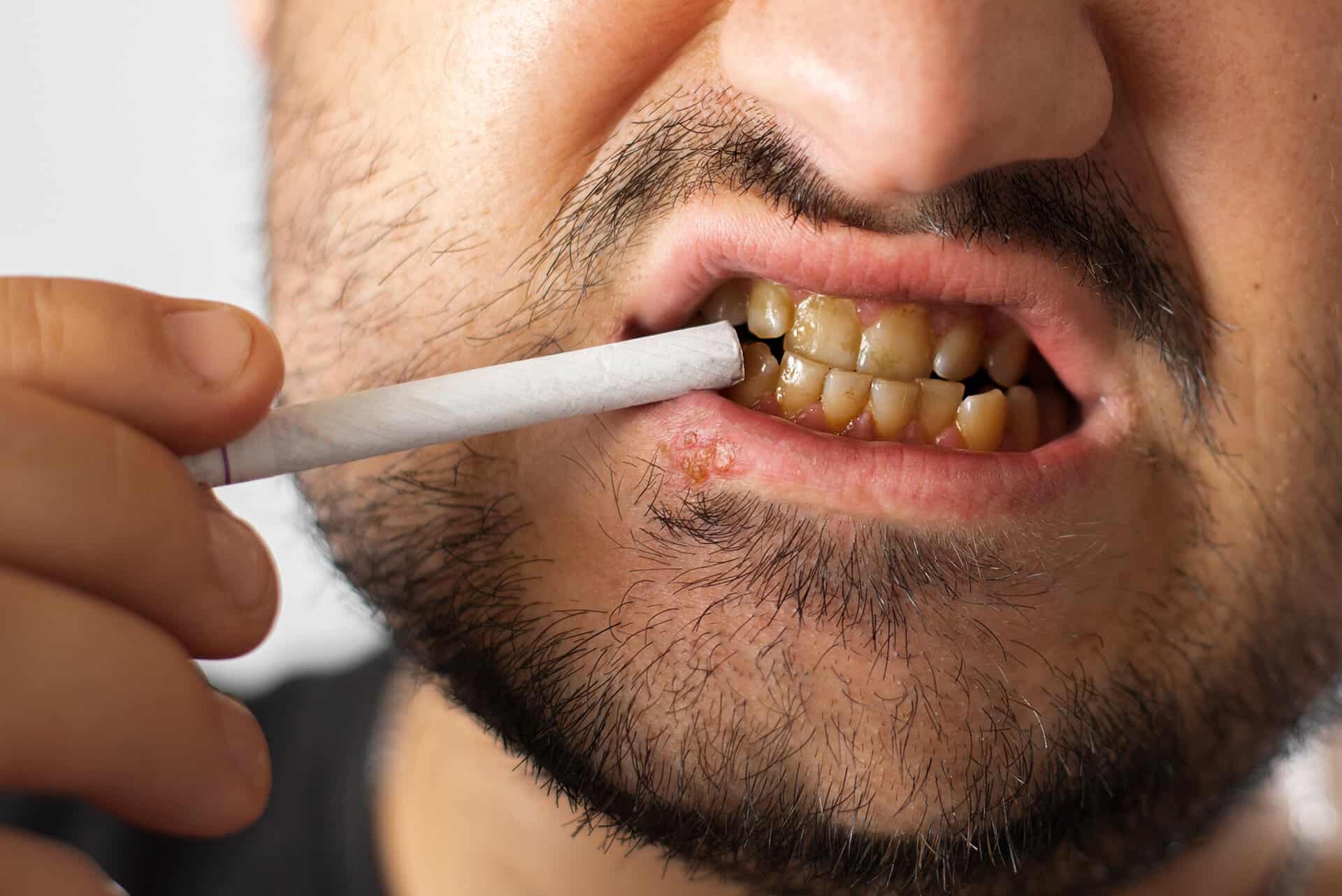
Aggressive brushing, smoking, bruxism and misaligned teeth are significant risk factors for gum recession. Smoking directly affects gum health, as it reduces blood flow and impedes healing, thereby increasing the risk of recession. Bruxism, particularly when linked to stress, can exert excessive pressure on the gums and contribute to their recession. Furthermore, hormonal changes, such as those occurring during pregnancy or the menopause, can make the gums more sensitive and prone to inflammation, increasing the likelihood of recession.
Trauma to the mouth, such as hard knocks or piercings, can also damage the gums and cause them to recede in various areas. It is important to note that the build-up of plaque, tartar and bacteria not only causes inflammation, but can also lead to infections and the progression of periodontal disease.
For all these reasons, it is essential to see a periodontist to obtain an accurate diagnosis and avoid treating the area without addressing the underlying cause. Furthermore, regular check-ups allow for professional plaque and tartar removal, and enable the early detection of gum recession, which is key to maintaining good oral health.
Aggressive brushing and tooth abrasion
This is the most common cause. Applying too much force when brushing your teeth, particularly when using hard-bristled toothbrushes, can damage the gums and lead to gum recession. Aggressive brushing, using horizontal movements and hard-bristled toothbrushes, wears down the neck of the tooth (abrasion) and causes the gums to recede. To prevent receding gums, it is essential to brush your teeth using a gentle technique: use a soft-bristled toothbrush and make gentle circular movements, avoiding excessive pressure on the gums.
Bruxism and excessive forces (abfraction)
Bruxism is a stress-related condition that causes teeth grinding, leading to excessive wear at the neck of the tooth and creating small ‘wedges’ known asabfraction lesions, which contribute to gum recession. In many cases, the use of a bite splint and other specific approaches form part of the treatment for bruxism and TMJ disorders.
Orthodontics: when it can cause receding gums
It is not orthodontics itself, but rather various factors related to orthodontic treatment, such as:
- Moving teeth out of the bone
- Thin gingival biotype
- Poorly distributed forces
These factors can leave the root less protected and lead to root exposure.
Periodontal disease (periodontitis)
When there is infection and bone loss, the gums may recede along with the bone structure. The main cause of periodontal disease and gum recession is the build-up of bacterial plaque and tartar, which consist mainly of bacteria and cause inflammation and destruction of the gum tissue. This is not the most common cause in young people, but it is in adults.
Thin gingival biotype (genetic)
People with very thin or poorly keratinised gums – that is, with less gum tissue – are at a much higher risk of gum recession, as this tissue is essential for protecting the gums against external factors and preventing recession.
Injuries, piercings or habits
They can also cause localised recession, particularly when trauma directly affects the mouth, such as hard blows to the oral area or injuries caused by oral piercings. In contact sports, it is advisable to wear mouthguards to prevent injuries to the gums and other structures in the mouth.
Recession, abrasion, erosion and abfraction: they are not the same thing
Many patients confuse these terms. Here is a clear table:
Problem | What’s going on? | Main cause |
|---|---|---|
Recession (gum recession) | The gum recedes and exposes the root | Vigorous brushing, bruxism, orthodontics, periodontitis |
Abrasion | Worn, rounded neckline | Vigorous brushing |
Erosion | Chemical corrosion caused by acids | Acidic drinks, acid reflux, bulimia |
Abfraction | Wedge injury | Bruxism and excessive forces |
Gingival recession, also known as gum recession, differs from abrasion, erosion and abfraction in that it involves the displacement of the gum tissue, whereas the other conditions mainly affect the tooth or its surface. |
The good news is that all of these conditions can be treated if detected early, and where there is significant damage to the tooth, dental reconstruction techniques can be used to restore its shape and function.
Symptoms of gum recession
- Tooth sensitivity to cold or sweet foods
- Pain when brushing
- Visible root
- Minor bleeding caused by friction
- Altered appearance (crooked smile)
- A sensation of receding gums, which may be accompanied by further discomfort
Does receding gum hurt?
Receding gums do not cause pain in themselves.
What hurts is:
- The exposed root
- Sensitivity
- Possible secondary inflammation
- An associated abrasion or erosion injury
If there is acute pain, there is usually an underlying cause: infections (such as bacterial infections affecting the gum tissue), cervical caries that sometimes requires root canal treatment, or active periodontitis.
How is gum recession diagnosed?
During a periodontal examination, the patient must undergo a comprehensive periodontal assessment to determine the extent of gum recession. The following are assessed:
- Drilling depth
- Gingival biotype (thin, medium or thick)
- Amount of keratinised gum
- Tooth mobility
- Type of lesion (abrasion, abfraction, erosion)
- Possible dental malocclusion
- Assessment of bone condition by X-ray
This determines whether the recession is stable, progressive or poses an aesthetic or functional risk.
Treatments for receding gums
To treat receding gums, it is essential to identify both the cause and the extent of the recession, as the appropriate treatment depends on these factors. The choice of treatment depends on the extent of the recession, the biotype and the cause.
When surgery is not required
- Slight retraction
- Long-term stability
- Lacking sensitivity
- No aesthetic risk
- Correcting the underlying cause
In these cases, the aim is to halt the progression and promote prevention to stop the retraction from getting worse:
- Change your brushing technique
- Use a soft-bristled brush
- Management of bruxism using a mouthguard
- Improve hygiene
- Overcoming traumatic habits
Gum graft (connective tissue graft): the most effective treatment
Among the various surgical approaches to gum recession, grafts and microsurgical techniques offer the most predictable and long-lasting treatment for regenerating receded gums.
It is the treatment of choice when:
- There is a commitment to aesthetics
- There is sensitivity
- Keratinised gum tissue has been lost
- The downturn continues
A gum graft is a surgical procedure that involves transplanting gum tissue – specifically connective tissue from an area with abundant gum tissue – to the area affected by recession. The aim is to restore lost gum tissue, protect the exposed tooth root and improve both periodontal health and the appearance of the teeth.
What is a gum graft?
A small piece of tissue is taken from the palate (connective tissue) and placed in the recessed area to cover the root and thicken the gum.
Benefits:
- Restore its appearance
- Eliminates sensitivity
- It thickens the biotype
- Stop it from falling any further
- Consistent results over time
Tunnel technique: the most cosmetically pleasing microsurgical procedure
The Tunnel Technique (or CTG Tunnel) is one of the most advanced techniques in cosmetic surgery:
- No visible cuts are made
- The graft is inserted through a ‘tunnel’ beneath the gum
- Less inflammation
- Very natural results
It is ideal for the anterior region (incisors and canines).
Free gingival graft
It is used when:
- Lack of keratinised gingiva
- The gums are very thin
- The area to be expanded is extensive
It’s excellent for stabilising, although slightly less attractive.
Guided tissue regeneration
Useful when recession is associated with periodontitis and bone loss.
Can receding gums be regenerated without surgery?
The short answer is: No. Once gum tissue has been lost, it does not grow back on its own.
However, there are solutions available to halt the progression of the condition, reduce sensitivity, improve oral hygiene and slightly thicken the tissue.
However, only periodontal grafts can regenerate lost gum tissue.
The relationship between receding gums, orthodontics and bruxism
Orthodontics
It may promote retraction if:
- A tooth is coming loose
- The biotype is very slender
- There is pre-existing malposition
For this reason, the gingival biotype is assessed prior to orthodontic treatment.
Bruxism
It is one of the main causes of abfraction and retraction.
A bite splint is essential for preventing further damage.
How to stop your gums from receding further
- Brushing using a gentle technique (modified Bass)
- Soft-bristled brushes
- Maintaining good oral hygiene – by brushing your teeth at least twice a day with a soft-bristled toothbrush and flossing daily – is essential for preventing gum recession and other periodontal problems.
- Having a professional dental clean-up every six months helps to remove plaque and tartar that cannot be removed at home, preventing gingivitis and the loss of gum tissue and bone.
- Do not move teeth using orthodontic treatment without a prior periodontal examination
- Avoid oral piercings
- Managing bruxism
- Eating foods rich in vitamin C and calcium helps to strengthen the teeth and promote the regeneration of gum tissue.
Treatment for receding gums at Udemax Clinics
At our dental clinic, we offer specialist treatments such as scaling and root planing and deep cleaning, which are essential procedures for removing tartar and bacteria that have built up below the gum line. Deep cleaning is vital for halting the progression of gum recession and preventing irreversible damage to the tissues supporting the teeth. Our clinic is equipped with advanced technology and a team of specialists in oral and maxillofacial surgery who provide comprehensive, personalised solutions for each patient.
At Udemax Clinics, we have periodontists specialising in advanced microsurgical techniques such as connective tissue grafting and the tunnel technique, which are ideal for restoring the appearance and health of the gums with long-lasting, natural-looking results, as well as experts in dental implantology for cases where missing teeth need to be replaced.
Book your free periodontal check-up and we’ll recommend the best treatment for your specific situation.