What is halitosis and how can you get rid of bad breath?
Bad breath, or halitosis, is a problem that concerns many people. Bad breath is detected in exhaled air due to volatile substances that give off an unpleasant odour. Generally, this problem originates in the mouth, due to a lack of proper oral hygiene. However, it is important to understand what it actually entails, what causes it and how to prevent it, as it can sometimes be a symptom of a more serious oral health problem.
The substances responsible for bad breath are usually volatile sulphur compounds produced by bacteria in the mouth.
There are various scales used to measure the severity of bad breath and to aid in its diagnosis.
What you need to know about bad breath to prevent it or treat it.
- What is halitosis, or bad breath?
- What causes bad breath?
- How can you prevent bad breath?
- How is halitosis treated?
What is halitosis, or bad breath?
Halitosis, bad breath or a bad taste in the mouth is generally caused by the build-up of food debris, bacteria and other substances in the oral cavity – that is, on the teeth, gums and tongue. These substances include food particles, epithelial cells and other debris that accumulate in the mouth and on the tongue, promoting the production of compounds responsible for the unpleasant odour. Unlike ‘morning breath’ or the strong odour that lingers after eating certain foods, halitosis is a problem that persists over time.
What is more, this bad breath can vary depending on its source and underlying cause; whilst it is usually due to poor oral hygiene, it may be caused by other factors, as we shall see later. Furthermore, the breakdown of proteins present in food debris, epithelial cells and leukocytes contributes to the formation of volatile sulphur compounds, such as methyl mercaptan and hydrogen sulphide, which are responsible for the characteristic foul odour. On the other hand, halitosis may even go unnoticed by some patients who suffer from it, with those around them being the ones to notice the problem.
In general, bad breath can cause embarrassment and even anxiety in some people who are aware of it. As a result, many turn to chewing gum, mints, mouthwashes or other products which, unfortunately, merely mask the problem. In other words, these are only temporary measures that do not tackle the root cause of the condition. There are home remedies that can provide occasional relief, but their effectiveness is limited and, if the bad breath persists, it is advisable to consult a professional.
And although, thanks to growing public awareness of the importance of oral hygiene, this problem has been on the decline in Spain in recent years, a significant proportion of the population still suffers from it. If you are one of those people, you should know that you can visit your dentist to identify the main cause of the problem and find out how to tackle it.
What causes bad breath?
As we have mentioned, halitosis usually originates in the mouth due to the build-up of bacteria. Adequate saliva flow is essential for preventing the proliferation of these bacteria, as saliva helps to clean the mouth and reduce the compounds responsible for bad breath. And whilst this is the case in 60% of instances, there is a further 20% of cases where the cause is different. Furthermore, certain metabolic disorders can cause a fishy smell on the breath, as occurs in certain biochemical imbalances. Therefore, to address the problem and find a solution, it is necessary to carry out an accurate diagnosis to determine the origin and cause, which may include:
Poor oral hygiene.
Failure to maintain good oral hygiene after every meal causes food debris to build up between the teeth and gums, leading to the proliferation of bacteria. In this case, both the decomposition of food debris and the accumulation of bacteria (which, over time, forms a sticky film or bacterial plaque that becomes increasingly difficult to remove) can cause bad breath.
It is also important to bear in mind tongue coating (a whitish layer of debris on the tongue), as this can also trap odour-causing bacteria. Therefore, in this case, it is vital to maintain good oral hygiene by using a toothbrush, dental floss and other methods of interdental cleaning, as well as a tongue scraper, in addition to mouthwash. It is essential to clean the tongue with a toothbrush as well to remove the bacteria responsible for bad breath. Finally, it is recommended to use the ‘gum line’ technique, which involves carefully cleaning the junction between the teeth and gums, to achieve a deep clean and prevent halitosis.
On the other hand, poor oral hygiene can cause halitosis in patients with removable dentures. In such cases, if, for example, the dentures are not cleaned regularly, or do not fit properly, food particles can become trapped, allowing the bacteria that cause bad breath to thrive.
Oral problems and diseases.
Poor oral hygiene can lead to other conditions such as tooth decay, gingivitis or periodontitis. This is because both tooth decay and periodontal disease are caused by the build-up of bacterial plaque between the teeth and gums. In addition to the necrosis or decay of food debris, in the worst-case scenario, the bacteria present in the oral cavity can lead to infectious processes that cause halitosis.
Other oral problems that can cause bad breath include surgical wounds following oral surgery (such as after a tooth extraction); oral thrush, a fungal infection characterised by white patches on the soft tissues accompanied by redness; and scurvy, a condition caused by a lack of vitamin C, etc.
Dry mouth or xerostomia.
Saliva is one of the first elements to play a role in the digestive process, helping to clear the mouth of particles that cause bad breath. For this reason, people suffering from xerostomia, who have abnormally low saliva production, may suffer from halitosis.
Smoking and alcoholism.
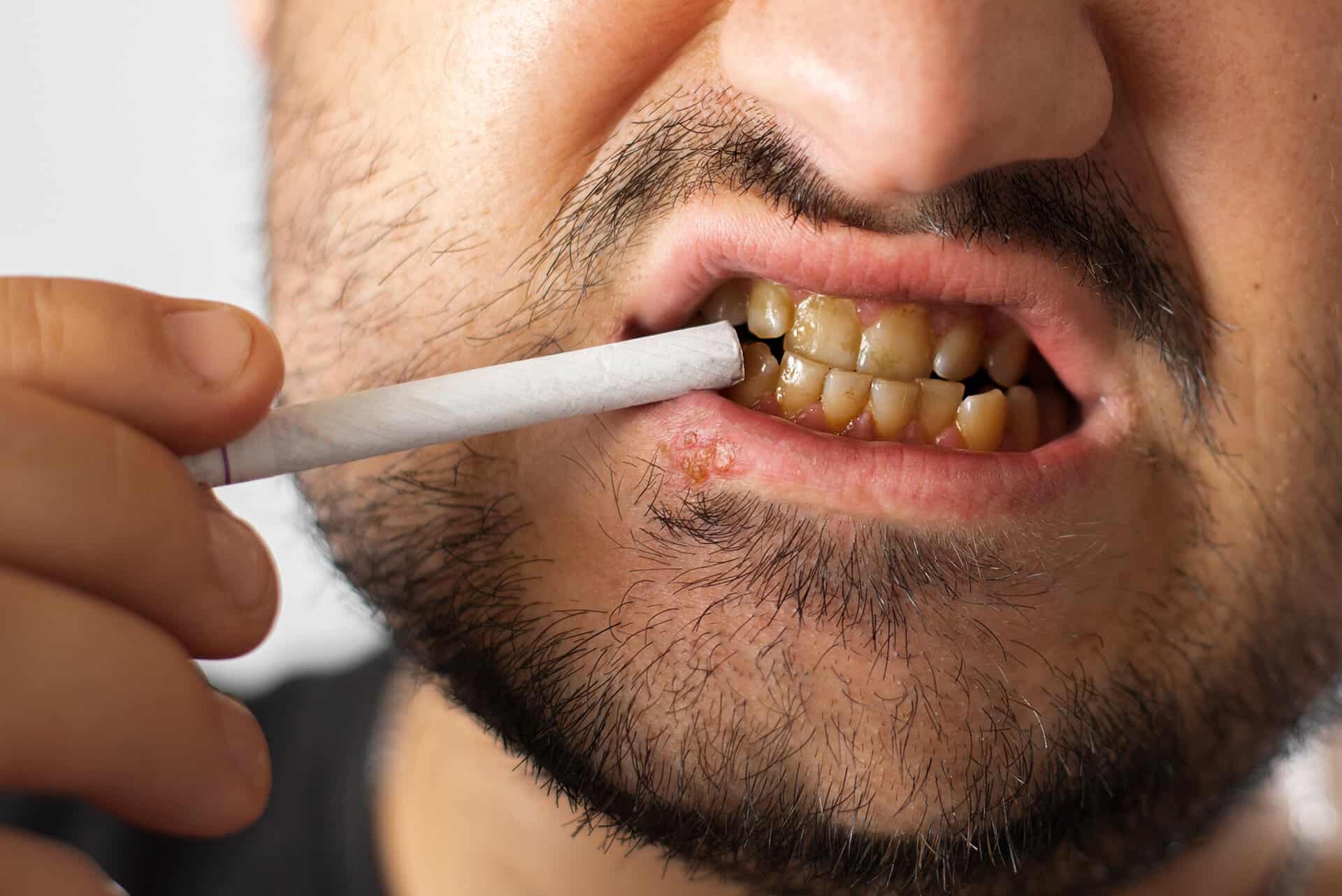
Smoking in all its forms and drinking alcohol not only lead to a decline in general health, but also have a serious impact on oral health. One of the common symptoms of both smoking and alcoholism is bad breath. In such cases, there is also a greater likelihood of developing conditions such as periodontitis which, as we have already mentioned, is an infectious process that can also cause halitosis.
Respiratory problems.
In addition to the oral cavity, there are certain respiratory conditions that cause symptoms such as bad breath. These conditions include: rhinosinusitis, an inflammation of the mucous membrane lining the nose, sinuses or throat; rhinorrhoea, a continuous runny nose; nasal obstruction caused by malformations or diseases leading to infections; a deviated nasal septum that narrows the nasal passages; mouth breathing, which affects the composition and quantity of bacteria present in saliva; tonsillitis; bronchitis; pneumonia; lung abscesses; lung carcinomas, etc.
Digestive problems.
Although they are not so common, gastritis, gastroduodenal ulcers, inflammatory bowel disease, chronic acid reflux (gastro-oesophageal reflux disease or GERD), Zenker’s diverticulum (protrusion of the mucosal layers at the pharyngoesophageal junction) or hiatal hernia, amongst other digestive system problems, can be associated with bad breath.
The use of certain medicines.
The active ingredients in some prescription medicines, when broken down and absorbed into the bloodstream, can also cause bad breath as a side effect. Furthermore, there are also medicines that affect saliva production and, as mentioned, dry mouth can lead to halitosis.
The consumption of certain foods.
As you are no doubt aware, garlic, onions and certain spices, as well as cheese and eggs, can cause bad breath. Firstly, the odour from these foods can travel back up the oesophagus during digestion and be released when you speak or breathe. Secondly, even after digestion is complete, the unpleasant smell can persist as it enters the bloodstream and reaches the lungs, from where it is exhaled.
On the other hand, coffee can also cause bad breath. This is because drinking too much of it can lead to a dry mouth and, consequently, bad breath. However, whilst the problem goes away once these foods have been eliminated from the body, it is important to bear in mind that they can cause halitosis if consumed on a regular basis.
Symptoms of halitosis
Halitosis usually manifests itself primarily as an unpleasant and persistent odour in the breath, which can be detected both by the person affected and by those around them. Among the most common symptoms are bad breath that does not go away after brushing, a dry mouth, and an unpleasant taste that may accompany the odour. In addition, a whitish coating on the tongue is frequently observed, resulting from the accumulation of bacteria and food debris.
In many cases, halitosis can be a symptom of conditions such as gingivitis, tooth decay or xerostomia, which is dry mouth caused by low saliva production. The build-up of bacterial plaque due to poor oral hygiene also contributes to the onset of these symptoms. It is therefore essential to pay attention to any changes in breath or the appearance of the tongue and to visit the dentist for a proper diagnosis and treatment. Maintaining good oral, dental and tongue hygiene is key to preventing these symptoms and controlling bad breath.
Complications of halitosis
Halitosis not only affects oral health, but can also have a significant impact on the social and emotional lives of those who suffer from it. Persistent bad breath can lead to feelings of insecurity, a loss of confidence and anxiety in everyday situations, making personal and professional relationships difficult. Furthermore, halitosis can be a sign of more serious conditions, such as kidney failure or diabetes, and should therefore not be ignored.
A dry mouth, or xerostomia, combined with bad breath, increases the risk of tooth decay and other oral conditions, as a lack of saliva hinders the mouth’s natural cleansing process. If left untreated, the build-up of plaque and bacteria can lead to more serious problems for the teeth and gums.
To prevent these complications, it is essential to follow a proper oral hygiene routine, which includes brushing your teeth and tongue, flossing, and staying well-hydrated to stimulate saliva production. Avoiding foods that contribute to bad breath and consulting a dental specialist if any symptoms persist are key measures to protect the patient’s well-being and quality of life. Personalised treatment and advice from a dentist will help to manage halitosis and prevent its long-term consequences.
How can you prevent bad breath?
To help prevent bad breath or halitosis, particularly in cases where the cause lies within the mouth or is due to certain habits, we recommend:
- Practise good oral hygiene at home by using a toothbrush and dental floss correctly, as well as cleaning your tongue regularly. In addition, using mouthwash as a complement to your oral hygiene routine can help reduce the volatile sulphur compounds responsible for bad breath. Some mouthwashes contain cetylpyridinium chloride, an effective ingredient that helps reduce bacterial plaque and bad breath. Using mouthwash merely to mask bad breath will not tackle the root of the problem, which is why it is also important to:
- Attend regular dental check-ups in Mallorca. These check-ups help to prevent and detect oral health problems at an early stage. Maintaining optimal oral health is essential not only for preserving the health of your teeth and gums – that is, preventing problems and diseases – but also for helping to maintain a balance in the quantity and quality of the bacteria that cause bad breath.
- Have professional dental cleanings. In addition to oral hygiene at home, it is important to have a professional dental cleaning in Mallorca at the frequency recommended by your dentist. This will help to effectively remove the bacterial plaque that inevitably builds up between your teeth and gums and can cause bad breath, as well as other health issues.
- Avoid habits such as smoking or drinking alcohol, as well as certain high-protein, low-calorie or low-carbohydrate diets (especially if they are not supervised). It is advisable to follow a balanced diet.
- Avoid foods such as garlic, onions, certain spices, cheese and eggs, as well as excessive coffee consumption.
- Try to breathe through your nose at all times and drink plenty of water, especially if you suffer from a dry mouth.
If preventive measures are not enough, it is advisable to consult a specialist for a personalised treatment for halitosis.
How is halitosis treated?
If these recommendations for preventing bad breath or halitosis have not worked, you will need to see a specialist to determine the cause of the condition and consider the most appropriate treatment for halitosis. If the problem is oral in origin, the dentist will determine the most appropriate dental treatment based on the condition causing the problem, such as tooth decay or periodontitis, using methods and products such as mouthwashes and sprays. If this is not the case, another type of specialist will need to determine the cause of the problem and treat it. It is important to consult a specialist if home remedies do not relieve bad breath, especially if an underlying condition or poor oral hygiene is suspected.